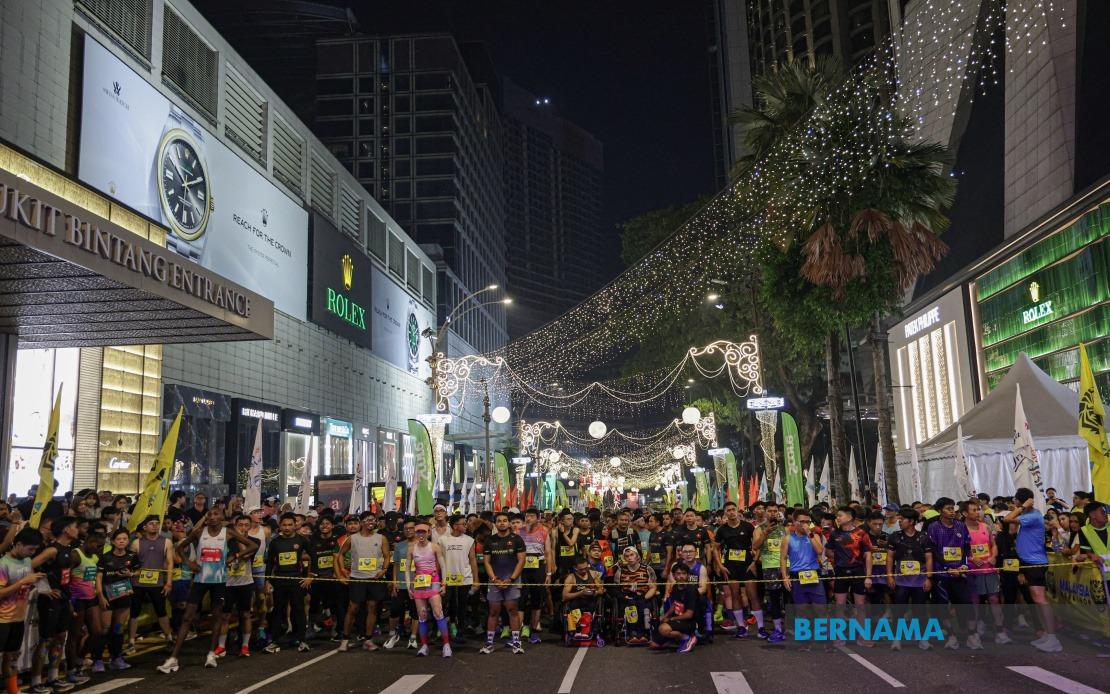
The Malaysia Marathon 2026 launched in the early hours of August 30, transforming central Kuala Lumpur into a hub of athletic activity as 25,000 local and international participants converged to celebrate the nation's 69th National Day. The ceremonial start of the 42-kilometer Full Marathon category took place just after midnight, with Datuk Seri Tiong King Sing, the Minister of Tourism, Arts and Culture, officiating the flag-off near Pavilion Kuala Lumpur. This inaugural staging of what promises to become a marquee national sporting event reflects Malaysia's growing appetite for large-scale marathon competitions and its strategic positioning within the global athletics calendar, having secured recognition from World Athletics, the international governing body for track and field.
The event's structure reflected careful logistical planning designed to accommodate participants of varying fitness levels and competitive aspirations. The elite and amateur runners in the Full Marathon division—numbering 2,000 competitors—started at 12:30 am, establishing the pace for the evening's proceedings. The subsequent 21-kilometer Half Marathon category commenced at 2:00 am with 8,000 participants, demonstrating the substantial appetite among Malaysian runners for competitive middle-distance running. These staggered start times allowed organizers to manage crowd flow while maintaining the celebratory atmosphere throughout the night and into the morning hours.
A particularly noteworthy departure from conventional marathon practice emerged in the choice of finishing line. Rather than concluding at Dataran Merdeka, the traditional ceremonial heart of Malaysian National Day celebrations, all categories culminated at the Kuala Lumpur City Centre (KLCC) precinct. This repositioning reflects evolving approaches to urban event management and the integration of commercial landmarks with national patriotic observances. The KLCC, as one of Southeast Asia's most recognizable skylines, offers both symbolic significance as a representation of modern Malaysia and practical advantages in terms of accessibility and infrastructure for managing large post-race gatherings.
The 10-kilometer category, scheduled to commence at 3:30 am, attracted 5,000 registrants, while the 5-kilometer Fun Run event—positioned as an entry point for recreational participants—began at 7:30 am with 10,000 runners. This tiered approach ensured that the event transcended traditional competitive running demographics, extending participation opportunities to families, corporate teams, and casual fitness enthusiasts. The Fun Run's later morning start timing, aligned with a more accessible hour, facilitated broader community engagement and permitted spectators to witness multiple waves of runners.
Among the technological innovations accompanying the 2026 marathon stood a remarkable symbolic element: an HONOR-made humanoid robot competed within the 10-kilometer category. This robotic participant, running alongside athletes from diverse nations including Japan and Nigeria, represented a convergence of Malaysia's aspirations toward technological advancement and the universality of athletic competition. The humanoid's participation transcended mere novelty, signifying how international sporting events increasingly incorporate emerging technologies as markers of national progress and technological sophistication.
The Full Marathon route presented formidable physical demands, particularly the 900-meter elevation gain encountered along the Ampang-Kuala Lumpur Elevated Highway (AKLEH). This challenging topography transformed the race into a genuine endurance test, distinguishing the Malaysia Marathon 2026 from flatter urban marathon courses commonly found in regional competitions. The terrain demanded substantial cardiovascular preparation and strategic pacing, elevating the competitive character of the event and attracting serious marathon athletes capable of managing sustained climbing across extended distances.
Operationally, the Kuala Lumpur Police Department implemented comprehensive traffic management protocols spanning from late evening through the following afternoon. Phased road closures and systematic traffic diversions encompassed major arterial routes including Jalan Bukit Bintang, Jalan Ampang, Jalan Sultan Ismail, and Jalan Raja Chulan, alongside closure of both the AKLEH and SUKE highways during peak race hours. This coordinated approach acknowledged the inevitable disruption accompanying a large-scale event of this magnitude while prioritizing runner safety and maintaining essential traffic flow for non-participant commuters and businesses throughout the city.
The Malaysia Marathon 2026 represents a significant evolution in Malaysia's sporting calendar, demonstrating the nation's capacity to organize large, internationally-recognized athletic competitions that integrate national celebration with contemporary sporting ambitions. The event's substantial participant base—25,000 across all categories—positions it among Southeast Asia's largest marathon gatherings and reflects growing health consciousness and running culture throughout Malaysia and the broader region. The integration of multiple distance categories, from elite-focused full marathons to accessible recreational fun runs, creates an inclusive competitive environment accessible to diverse demographic and fitness segments.
For Malaysian and regional observers, the marathon's success carries implications extending beyond sporting achievement. The event showcases how national celebrations increasingly incorporate athletic competition as an organizing principle, displacing or supplementing purely ceremonial observances. The international participation, particularly athletes from established running nations alongside competitors from emerging running communities, underscores Malaysia's positioning within global sporting networks. Furthermore, the technological incorporation through the humanoid robot participant signals how Southeast Asian nations increasingly position themselves as sites of innovation and technological demonstration, bridging traditional athletic competition with forward-looking technological narratives.
Looking ahead, the Malaysia Marathon 2026 establishes benchmarks for future iterations and likely influences how other Southeast Asian nations structure comparable national celebrations. The event's World Athletics recognition provides credibility within international competitive hierarchies, potentially attracting elite athletes seeking high-profile competition venues. As Malaysian running culture matures and urban populations increasingly embrace marathon participation as both fitness pursuit and social activity, events of this scale and sophistication appear positioned to become recurring fixtures within the national sporting calendar, particularly when aligned with significant civic commemoration.

