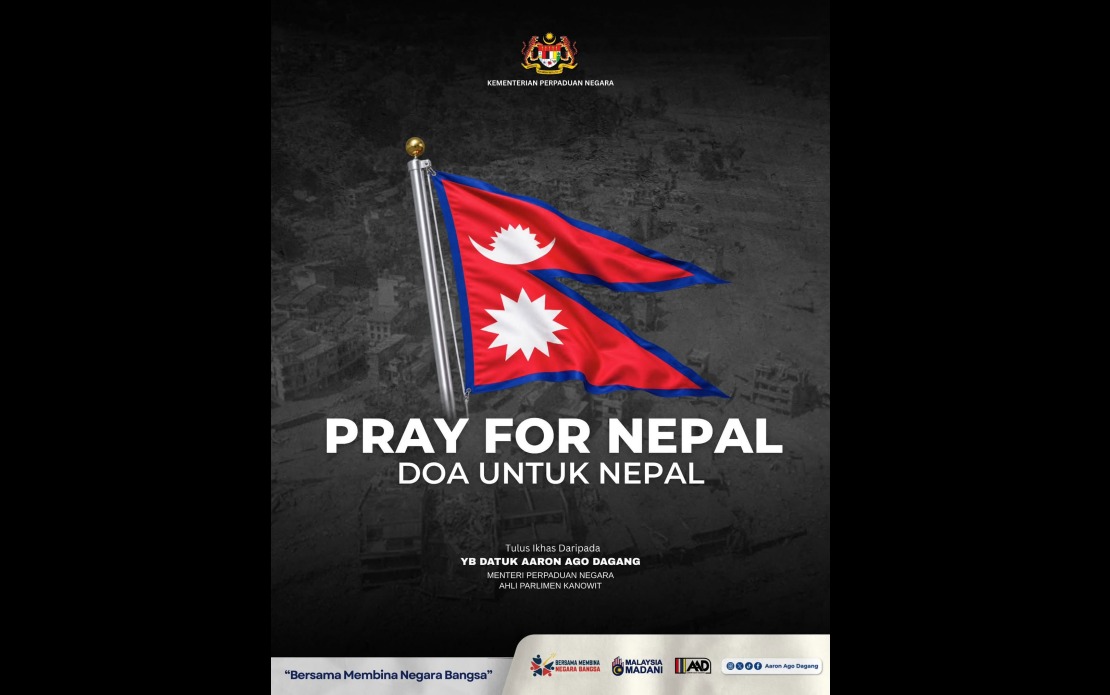
Nepal's Rasuwa district faced a catastrophic flooding event that has prompted immediate diplomatic and humanitarian attention from Malaysia's government. Minister of National Unity Datuk Aaron Ago Dagang has publicly conveyed the nation's compassionate response through social media, urging Malaysians to extend their prayers and support to the Nepali people navigating the aftermath of this natural disaster. The minister's statement represents an official acknowledgment of the cross-border humanitarian dimensions of the crisis, emphasising shared regional values of solidarity during times of acute distress.
The immediate concern for Malaysian policymakers centres on the welfare of citizens present in Nepal at the time of the disaster. According to reports compiled by the Foreign Ministry, 57 Malaysian nationals had not been reached as of 11 pm on August 27, based on communications received from family members, friends, and employers within Malaysia. These figures underscore the logistical challenges inherent in disaster response across international borders, where communication infrastructure may be compromised and the full extent of the situation remains fluid. The unaccounted individuals represent a spectrum of Malaysians—possibly including temporary workers, students, tourists, and business professionals—whose locations and safety status became priorities for both their concerned relatives and official government agencies.
Recognising the urgency of the situation, Prime Minister Datuk Seri Anwar Ibrahim issued directives to all relevant government departments to undertake systematic identification and contact efforts immediately following the disaster. This comprehensive approach engages multiple agencies including the National Security Council (MKN) and the Ministry of Foreign Affairs, coordinating their resources and intelligence networks to locate and assess the status of affected citizens. Such coordinated action reflects established protocols for Malaysian responses to overseas disasters, where multiple departments work in parallel to gather information, establish communication channels, and facilitate assistance where needed.
The scale of Nepal's flooding underscores the region's vulnerability to seasonal climate patterns and geological conditions that regularly produce natural disasters of significant magnitude. The Rasuwa district, located in the mountainous central region north of Kathmandu, has particular susceptibility to flash flooding during monsoon seasons when precipitation concentrates in narrow valleys. For Malaysian readers familiar with similar vulnerability in domestic contexts—particularly across peninsula states prone to seasonal floods—the parallels highlight how developing nations across South Asia share comparable environmental and infrastructure challenges. Nepal's capacity to respond to such disasters is constrained by resource limitations and infrastructure development gaps that differ substantially from Malaysia's disaster management infrastructure, potentially complicating search and rescue operations and affecting the speed of recovery efforts.
The diplomatic language employed by Malaysia's government reflects a careful balance between genuine humanitarian concern and the practical requirements of crisis communication. By framing the situation as one requiring collective prayer and solidarity, Minister Aaron's statement acknowledges that disaster response transcends governmental action alone, encompassing community support networks and spiritual dimensions that resonate across Malaysian society's diverse religious and cultural composition. This inclusive framing also serves to maintain strong bilateral relations with Nepal while demonstrating to Malaysian citizens that their government actively monitors their welfare abroad.
The Foreign Ministry's decision to release specific figures regarding unaccounted Malaysians serves multiple purposes within Malaysia's information ecosystem. Transparency about the scale of the challenge allows families to understand that their concerns are widely shared and that government resources are mobilised proportionately. Simultaneously, the figures convey to the international community that Malaysia maintains active registries of its citizens and takes their security seriously—a position reinforced by the systematic deployment of government resources to locate and assist them. These releases typically emerge from compilation of reports from family contacts, suggesting that official databases may not capture all Malaysians present in Nepal at any given moment, particularly those engaged in informal employment or temporary residence arrangements.
For Malaysian businesses and employers with operations or personnel in Nepal, the flooding event creates immediate practical challenges alongside humanitarian concerns. Companies must now verify the status of staff members, coordinate with families seeking information, and potentially adjust operations if significant personnel losses or disruptions occur. The indirect economic impacts on Malaysian interests in Nepal—whether through disrupted supply chains, damaged infrastructure affecting business operations, or diverted management attention—represent secondary consequences that ripple through Malaysian commercial networks despite occurring thousands of kilometres away.
The response framework activated by Malaysia's government demonstrates how middle-income countries maintain mechanisms for protecting citizens caught in overseas emergencies. Unlike smaller nations that might lack dedicated overseas disaster response capacity, Malaysia possesses institutional mechanisms through the Foreign Ministry and embassy networks to coordinate search operations, facilitate communications, and coordinate assistance with host country authorities. Nepal's government, simultaneously managing its own humanitarian crisis response, typically welcomes such foreign assistance as it amplifies overall rescue and recovery capacity during overwhelming situations.
Regional implications of this disaster extend beyond bilateral Malaysia-Nepal relations into broader Southeast Asian considerations of disaster preparedness and regional mutual assistance frameworks. The incident reinforces the importance of robust diplomatic networks, functional communication protocols, and pre-established coordination mechanisms between nations—assets that prove invaluable when sudden emergencies strike. For Malaysia's policymakers, each overseas disaster becomes a practical test of government systems designed to protect citizens abroad, generating lessons applicable to future contingencies affecting the region.
As the situation develops in Nepal, the Malaysian government's continued attention to locating its unaccounted citizens remains the immediate priority. The convergence of Prime Minister Anwar's directive, Minister Aaron's public expressions of solidarity, and the Foreign Ministry's systematic identification efforts demonstrates multi-level governmental engagement appropriate to a situation affecting both Malaysian nationals and bilateral relations with a valued South Asian neighbour. The coming days will determine whether the 57 unaccounted Malaysians can be located and whether Malaysian assistance proves helpful in Nepal's broader recovery efforts.

