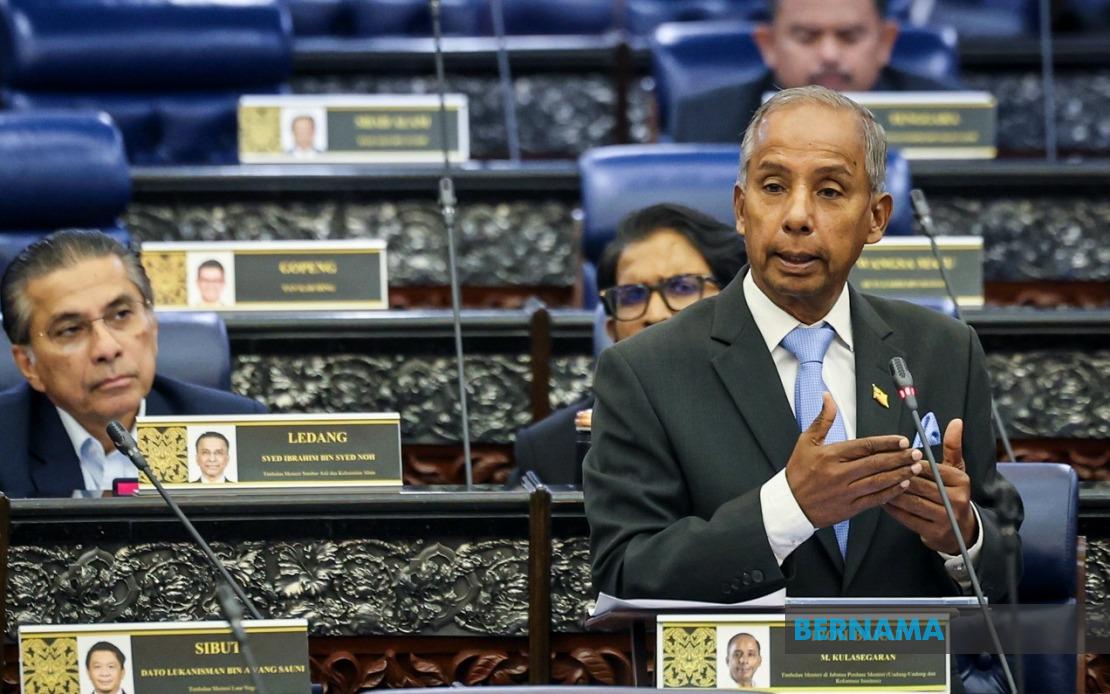
The Malaysian government is undertaking a comprehensive review of Section 97 of the Child Act 2001 with the aim of introducing clearly defined detention periods for individuals who committed offences while under 18 years of age. The initiative represents a significant shift in how the country approaches the detention of child offenders, seeking equilibrium between the demands of justice for victims, the protection of society, and the rehabilitation prospects of young perpetrators.
Deputy Minister in the Prime Minister's Department (Law and Institutional Reform) M. Kulasegaran disclosed the review during parliamentary Question Time, explaining that a specially constituted committee has been working on the matter since the abolition of mandatory capital punishment and life imprisonment for child offenders in 2023. That landmark decision essentially removed the possibility of imposing death sentences or indefinite imprisonment on individuals who had not yet reached adulthood when they committed their crimes, necessitating alternative frameworks for managing such cases.
The deputy minister's intervention in parliament came in response to concerns raised by opposition legislator Dr Abd Ghani Ahmad regarding the practical implementation of Section 97 while fulfilling Malaysia's international obligations under the Convention on the Rights of the Child. This international instrument, which Malaysia has ratified, emphasises rehabilitation and the best interests of the child as guiding principles in juvenile justice systems, creating tension with domestic law enforcement priorities and victim compensation.
A striking illustration of the urgency behind this legislative review emerged from Kulasegaran's personal encounters during recent prison visits to Semporna and Sandakan facilities. He encountered an individual who has now spent nearly a quarter-century in detention despite entering the prison system as a teenager at age 17. The detainee's lengthy and indeterminate confinement has rendered him fundamentally disconnected from contemporary society—he possesses no familiarity with modern technology such as smartphones and has no experiential understanding of life in the world beyond prison walls. Such cases underscore the profound human cost of indefinite detention frameworks and the practical challenges they create for eventual reintegration.
Currently, 40 individuals remain detained under Section 97 provisions, representing a manageable cohort but one whose circumstances demand urgent policy attention. These detainees occupy a legal limbo created by the previous statutory language, which mandated that courts order detention at the pleasure of the King or the Yang di-Pertua Negeri depending on the jurisdiction where the offence occurred. This discretionary detention structure, while theoretically allowing for periodic review, has in practice resulted in extended periods of incarceration without transparent release criteria or rehabilitation benchmarks.
The absence of fixed detention periods has created systemic inconsistencies across Malaysia's correctional facilities, with some young offenders receiving vastly different treatment depending on which state authority holds custodial responsibility. Kulasegaran emphasised the government's commitment to establishing legal consistency not merely for administrative efficiency but as a fundamental requirement of fair and principled justice administration. Harmonising detention frameworks across federal and state systems would address a longstanding equity problem wherein identically convicted individuals serve markedly different sentences based on geographical circumstance.
The proposed amendments must navigate complex competing interests. Victims' representatives and public safety advocates argue for robust containment of dangerous offenders, yet the evidence from international juvenile justice research demonstrates that rehabilitative approaches significantly reduce recidivism compared to purely punitive models. Malaysia's commitment to the Convention on the Rights of the Child requires that detention decisions prioritise the child's welfare and development potential rather than treating juvenile offenders identically to adults.
The committee's approach reflects broader regional shifts in how Southeast Asian jurisdictions conceptualise juvenile crime. Thailand, Indonesia, and the Philippines have each grappled with balancing victim justice against the developmental and constitutional rights of child offenders, and Malaysia can draw valuable lessons from their varied experiences. Singapore's structured approach to juvenile sentencing, with defined maximum periods and mandatory rehabilitation programs, offers a regional template that respects both public safety and offender development.
Implementing clearer detention periods presents technical challenges that the committee must address carefully. Legislators must determine appropriate maximum detention lengths based on offence severity, establish mechanisms for periodic review and conditional release, and create pathways for rehabilitation programming that genuinely prepare young offenders for social reintegration. The absence of such frameworks in current Section 97 practice has left custodial authorities managing indefinite sentences without clear rehabilitation objectives or release criteria.
For Malaysia's broader criminal justice system, this review signals growing recognition that juvenile and adult justice systems require fundamentally different philosophical foundations. The principles underlying the Child Act recognise that young people possess greater developmental capacity for change, reduced culpability due to incomplete cognitive and emotional development, and rights to privacy and protection from stigmatisation. These principles must translate into concrete legislative language rather than remaining aspirational ideals.
The timing of this review, occurring two years after the capital punishment reform, suggests the government is thinking systematically about modernising sentencing frameworks across demographic categories. Establishing precedents for determined detention periods in the juvenile context may eventually influence approaches to adult sentencing reform and alternative sanctions, particularly as Malaysia continues positioning itself as a rule-of-law oriented nation committed to international human rights standards.
Kulasegaran's commitment that proposed amendments will balance interests of justice, public safety and child welfare indicates the committee is pursuing a nuanced framework rather than swinging toward either extreme. Malaysian policymakers appear committed to avoiding both the approach of indefinite detention and the opposite risk of releasing dangerous individuals too early without adequate rehabilitation or risk assessment. The solution likely involves tiered sentencing bands, rehabilitation milestones, and judicial discretion constrained within defined parameters—a model that many Commonwealth jurisdictions have successfully implemented.

