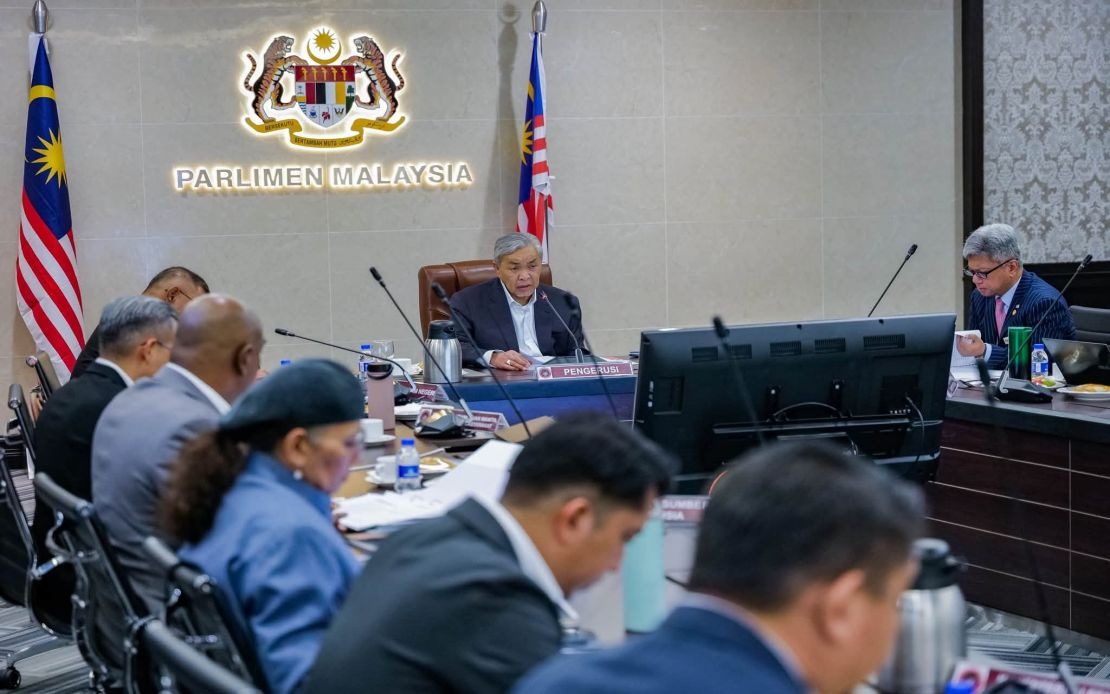
Deputy Prime Minister Datuk Seri Dr Ahmad Zahid Hamidi has stressed that Malaysia requires a more robust refugee management system capable of addressing the twin imperatives of humanitarian obligation and national security protection. Speaking after chairing the High-Level Committee on the Management of Refugees and Asylum Seekers, he underscored the urgency of developing comprehensive policies that safeguard the country's interests while responding to the plight of displaced populations across the world.
The global displacement crisis has reached unprecedented proportions, with more than 122 million individuals forcibly displaced due to ongoing conflicts and widespread instability. This staggering figure reflects the magnitude of the challenge confronting nations worldwide, including Malaysia, which sits at the intersection of multiple migration corridors and humanitarian corridors. The sheer scale of global displacement means that managing refugee flows has become a critical governance issue rather than merely a peripheral policy matter.
Ahmad Zahid's statement reflects a growing recognition within Malaysia's leadership that refugee management extends far beyond administrative processing and logistical coordination. The Deputy Prime Minister framed this as fundamentally a matter of national interest, emphasising that refugee policies must simultaneously uphold Malaysia's sovereignty, maintain public order, and protect the safety of Malaysian citizens. This framing acknowledges the legitimate security concerns that accompany large-scale refugee movements while not entirely dismissing humanitarian considerations.
Malaysia's refugee population and asylum seeker numbers have grown substantially over recent years, with the country hosting significant communities from Myanmar, Palestine, Syria, and other conflict zones. The government's challenge lies in managing these populations equitably without overwhelming domestic resources or creating security vulnerabilities. The need for clearer policies and more systematic management mechanisms reflects ongoing tensions between compassion and pragmatism in refugee administration.
During the sixth meeting of the High-Level Committee, officials reviewed how existing policies are being implemented and assessed whether Malaysia's refugee framework remains aligned with national priorities. This periodic review process signals the government's intention to maintain oversight and adapt approaches as circumstances evolve. Rather than adopting a static approach to refugee management, the committee appears committed to continuous evaluation of whether current mechanisms adequately serve both humanitarian and security objectives.
A particular focus of the committee's recent discussions centred on the implementation of the Refugee Registration Document, commonly referred to as the DPP. This identification system plays a crucial role in Malaysia's refugee management architecture, allowing authorities to track and monitor refugee populations while providing documentation that grants certain legal protections and access to services. Improving the efficiency and reliability of this registration system is essential for maintaining order and ensuring resources reach intended beneficiaries.
The committee also addressed the coordination of guidelines governing refugee access to education and healthcare services. These are sensitive areas where humanitarian needs intersect with resource constraints and public perception. By streamlining guidelines and ensuring legal compliance, the government aims to make administration more straightforward for relevant agencies while establishing clearer standards that affected communities can understand. Better coordination among health and education providers should reduce bureaucratic friction and improve service delivery.
For Malaysia specifically, the refugee question carries particular weight given the country's geographic location, existing diverse population, and limited capacity for large-scale population resettlement. Unlike wealthy developed nations with extensive social infrastructure, Malaysia must calibrate its refugee policies with careful attention to domestic labour market impacts, housing availability, and public service capacity. The Deputy Prime Minister's emphasis on balancing humanitarian duties with national interests reflects this constrained reality.
The emphasis on legal compliance and systematic administration suggests that Malaysia is moving toward more rigorous, rules-based refugee governance. This approach potentially offers benefits beyond security considerations—it can reduce corruption, ensure fairer treatment of applicants, and create predictability that benefits both refugees and authorities. Clear rules allow administrative staff to make consistent decisions and allow refugees to understand their rights and obligations more readily.
Ahmad Zahid's remarks also implicitly acknowledge international pressure on Malaysia regarding refugee treatment. The country has faced criticism from human rights organisations concerning conditions in detention centres and the deportation of asylum seekers to countries where they face persecution. By publicly emphasising Malaysia's commitment to balancing humanitarian responsibilities with security, the Deputy Prime Minister appears to be signalling that the government takes these concerns seriously while maintaining that national interest considerations cannot be ignored.
The international refugee crisis shows no signs of abating. Conflicts in Myanmar, Palestine, Syria, Ukraine, and Afghanistan continue generating waves of displacement. Malaysia, as a regional hub with established refugee communities and relative stability compared to neighbouring conflict zones, will likely continue facing sustained pressure from both displaced populations seeking sanctuary and international actors advocating for protection. Strengthening Malaysia's management framework becomes increasingly important as pressure builds.
Moving forward, the effectiveness of Malaysia's refugee policy will depend on whether the government can genuinely achieve the balance Ahmad Zahid describes. This requires adequate funding for administration and services, training for officials in both protection principles and security assessment, and political will to resist polarisation around refugee issues. It also demands maintaining public support through transparent communication about both the humanitarian rationale and security measures underlying policy decisions.

