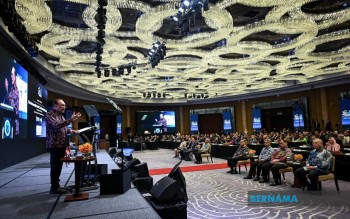
Prime Minister Datuk Seri Anwar Ibrahim has made a compelling case for Malaysia to develop its own sovereign cloud infrastructure, framing it as essential protection against data exploitation in an era of deepening digital dependency across Southeast Asia. Speaking at the 39th Asia-Pacific Roundtable in Kuala Lumpur on July 2, Anwar articulated a nuanced position that acknowledges the realities of globalisation while asserting Malaysia's need to carve out protected digital spaces for its most sensitive information.
The Prime Minister's intervention addresses growing anxiety surrounding the reach of foreign technology companies and their governments into Malaysian data systems. His specific reference to the Cloud Act and the Trump administration's assertion that United States-based companies retain rights to access data globally underscores a concrete threat that Malaysian policymakers perceive. Rather than resorting to blanket restrictions on foreign technology companies, which would risk Malaysia's competitiveness and attractiveness to investors from the United States, China, and Germany, Anwar proposed a surgical approach: erect protective barriers specifically for critical security and personal information while allowing the broader digital economy to flourish.
The notion of a sovereign cloud carries significant implications for Southeast Asia's digital future. As regional economies become increasingly wired to interconnected infrastructure and cloud-dependent systems, the question of where data physically resides and which jurisdiction controls access to it has transformed from a technical consideration into a matter of strategic importance. Malaysia's position as a regional hub for technology and finance makes this particularly acute. Banks, government agencies, and multinational corporations operating from Malaysian soil generate vast datasets that could become vulnerable if stored entirely in foreign-controlled cloud systems.
Anwar's proposal essentially envisions firewalls—both technological and regulatory—that would allow Malaysia to maintain defensive positions around truly sensitive information while accepting that complete digital isolation is neither feasible nor desirable. This mirrors approaches being explored or implemented by other middle-income nations seeking to balance economic openness with data sovereignty concerns. The challenge lies in engineering such a system without creating onerous compliance burdens that discourage foreign technology firms from operating in Malaysia or cause Malaysian companies to relocate their digital operations elsewhere.
The Prime Minister acknowledged the inherent tensions in this balancing act. While emphasising Malaysia's commitment to free information exchange, democratic values, and openness that characterises a pluralistic society, Anwar simultaneously highlighted the darker side of unrestricted digital access. He pointed to documented abuses spanning political manipulation, economic espionage, personal data harvesting, and sexual exploitation facilitated through social media and digital platforms. These concerns are not hypothetical for Malaysia, where concerns about election integrity, financial fraud, and protection of minors online have become increasingly prominent public issues.
Building legitimate safeguards that protect Malaysians without sliding into authoritarianism or censorship represents one of the most delicate policy challenges facing Anwar's administration. The sovereign cloud concept offers one tool in this broader toolkit, but Anwar's framing suggests he recognises that technical infrastructure alone cannot solve what are fundamentally governance questions. Young people in particular need protection from exposure to harmful content and exploitative practices online, a responsibility Anwar explicitly assigned to government.
The investment dimension of Malaysia's digital infrastructure strategy cannot be overlooked. The Prime Minister stressed that Malaysia remains attractive to capital from major technology and manufacturing powers, suggesting that demonstrating capacity to protect data and maintain strategic autonomy could paradoxically enhance rather than diminish Malaysia's appeal as an investment destination. Multinational companies increasingly seek host countries that can provide both regulatory stability and technological sophistication. A well-designed sovereign cloud operated to international standards could differentiate Malaysia as a trustworthy partner.
Anwar's broader strategic context emphasises ASEAN centrality as crucial not merely to foreign policy but to Malaysia's economic positioning in a multipolar world. This reflects recognition that as Southeast Asian economies compete for investment and talent in digital sectors, no single nation possesses sufficient scale or resources to establish truly independent technological ecosystems. Malaysia's strength as a middle power, Anwar argued, derives not from posturing as a great power but from deepening integration with regional partners while maintaining balanced relationships with all major powers. Applied to digital infrastructure, this suggests that Malaysia might anchor its sovereign cloud capabilities within a broader ASEAN digital cooperation framework.
The practical implementation of such a policy will require substantial technical expertise, capital investment, and international coordination. Whether Malaysia pursues this primarily as a national initiative, partners with other ASEAN nations on a regional sovereign cloud, or collaborates with trusted technology partners in allied democracies remains unclear from Anwar's initial statement. Each pathway carries different implications for cost, capability, and political sustainability.
Moreover, the temporal dimension matters significantly. Digital technologies evolve rapidly, and infrastructure decisions made today may become obsolete or counterproductive within years. Malaysia's sovereign cloud initiative must therefore incorporate flexibility and upgrade capacity rather than attempting to create a static solution. This argues for phased implementation beginning with the most critical sectors—financial services, government operations, healthcare, and infrastructure management.
Anwar's positioning also reflects increasing sophistication among Southeast Asian leaders about technological sovereignty. Rather than accepting digital colonialism through wholesale outsourcing to foreign platforms or pursuing self-defeating autarky, emerging market policymakers increasingly seek middle ground solutions that defend strategic interests while participating fully in global digital economies. Malaysia's approach, if successfully implemented, could offer a model worth studying for other regional and developing nations grappling with similar dilemmas between openness and protection in the digital age.

