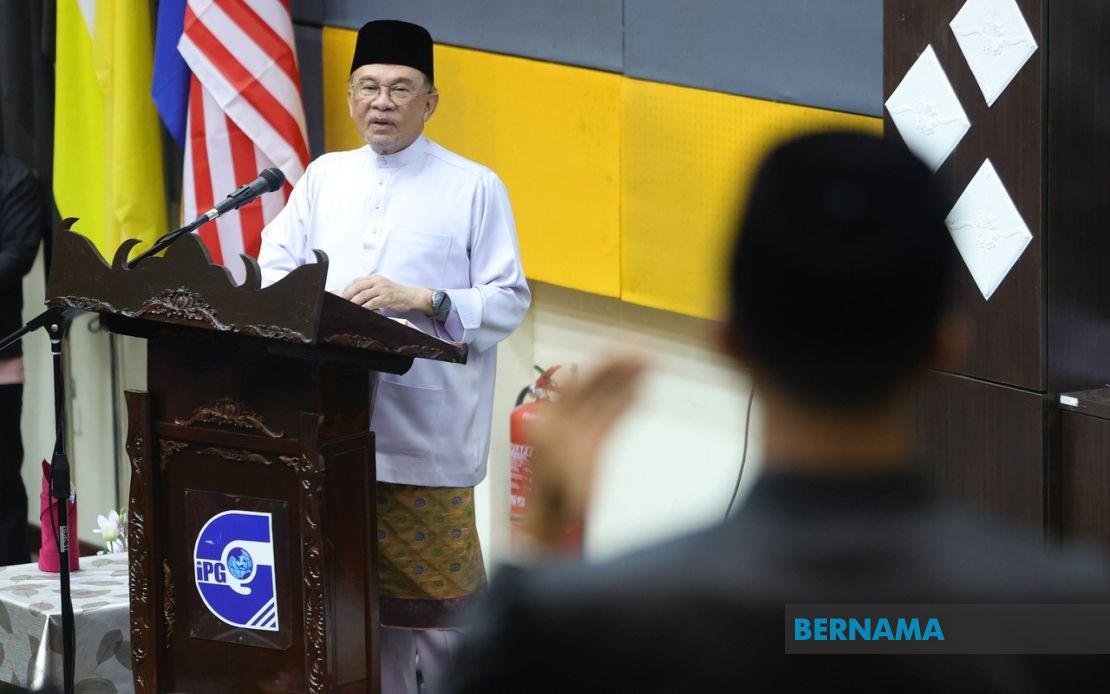
Malaysia's education system stands at a crossroads where technological advancement and moral development must progress in tandem, according to Prime Minister Datuk Seri Anwar Ibrahim. Speaking at an event in Nilai on July 17, he outlined a vision for the nation's teaching workforce that extends beyond conventional STEM mastery to encompass a holistic educational philosophy. The challenge facing policymakers, he suggested, lies in preparing educators capable of navigating artificial intelligence, advanced engineering disciplines, and other cutting-edge fields whilst simultaneously fostering ethical reasoning and character development among their students.
Anwar's framing of this dual imperative reflects mounting global anxieties about technological disruption outpacing humanity's capacity for wisdom and moral judgment. As nations compete intensely to produce graduates equipped for knowledge economies, Malaysia cannot afford complacency in either dimension. The Prime Minister's assertion that existing curricula and conventional pedagogical approaches no longer suffice underscores recognition that incremental adjustments will prove insufficient. Education systems across Southeast Asia face similar pressures, yet Malaysia's position as a middle-income nation with aspirations toward high-income status demands particularly robust preparation of its educator cadre.
The metaphor Anwar employed—"reach for the skies while keeping our roots on the ground"—encapsulates a recurrent tension in developing economies. Nations risk either becoming technology followers who import solutions without understanding their implications, or alternatively, prioritising tradition to such an extent that they cede competitive advantage in innovation-driven sectors. Malaysia's multiracial and multifaith composition adds another layer of complexity. Teachers trained exclusively in technical competencies but lacking grounding in ethical frameworks and cross-cultural understanding could inadvertently exacerbate social fragmentation rather than strengthen national cohesion.
The Prime Minister's warning against allowing hatred and prejudice to infiltrate educational spaces carries particular resonance in contemporary Malaysia. Religious and communal tensions periodically surface across the nation, and schools remain critical institutional spaces where intercommunal understanding either flourishes or deteriorates. When teachers model intolerance or permit divisive sentiments within classrooms, education becomes a vehicle for social division rather than nation-building. Conversely, educators genuinely committed to human values can cultivate the empathy and perspective-taking capacities necessary for diverse populations to coexist peacefully and productively.
Anwar's emphasis on tolerance and mutual respect as prerequisites for progressive society challenges educators to model behaviours they wish to instil. This requirement extends beyond curriculum content to encompass classroom dynamics, institutional policies, and the lived example teachers provide. In a nation where religious literacy and interfaith dialogue remain contested terrain, teachers equipped with both technical mastery and genuine commitment to pluralism become invaluable assets. The Prime Minister's linkage of educational quality to societal progress suggests that upgrading teacher capabilities directly impacts Malaysia's trajectory toward sustained development and regional competitiveness.
Implementing this vision requires substantial investment in teacher recruitment, training, and professional development. Institutions responsible for educator preparation must themselves undergo transformation, integrating emerging technological competencies with expanded offerings in ethics, comparative religion, intercultural communication, and moral philosophy. The presence of Education Minister Fadhlina Sidek and IPGKPT director Dr Kartini Abdul Mutalib at the event signals governmental commitment, yet translating rhetoric into institutional change demands sustained resource allocation and carefully designed programme architecture.
The implications extend beyond Malaysia's borders. Southeast Asian neighbours grapple with similar challenges as they seek development pathways that do not sacrifice cultural identity or social cohesion on the altar of technological advancement. Malaysia's approach to educator development could serve as a regional model, demonstrating that technical excellence and ethical grounding represent complementary rather than competing objectives. Conversely, failure to cultivate teachers embodying this synthesis risks producing professionals technically competent but morally adrift—precisely the outcome the Prime Minister warned against.
Context matters significantly here. Global discourse on artificial intelligence governance, algorithmic bias, and technology's social implications has intensified precisely because early adopters failed to adequately integrate ethical considerations into deployment. Malaysia has the opportunity to learn from these experiences, ensuring its educators understand not merely how to utilise emerging technologies but also their potential consequences for different communities. Teachers who grasp AI's capacity for both liberation and discrimination, who understand how technology can amplify existing inequalities or help redress them, bring invaluable perspective to classrooms.
The challenge of developing such educators within Malaysia's current system should not be underestimated. Teacher training institutions must recruit faculty with dual expertise—individuals comfortable discussing both quantum computing and Quranic ethics, both machine learning and moral relativism. Curricula must become more interdisciplinary, breaking down traditional silos between STEM and humanities. Professional development programmes must evolve continuously as technologies advance and social implications become clearer. None of this occurs without deliberate planning, adequate funding, and genuine institutional commitment.
Anwar's vision ultimately reflects understanding that education shapes not merely individual capabilities but national character and social fabric. Teachers operating at the intersection of technological fluency and ethical wisdom become architects of Malaysia's future. Whether the education system can produce such educators at the scale and pace required remains an open question, but the articulation of this aspiration by the nation's political leadership provides essential impetus for systemic change.

