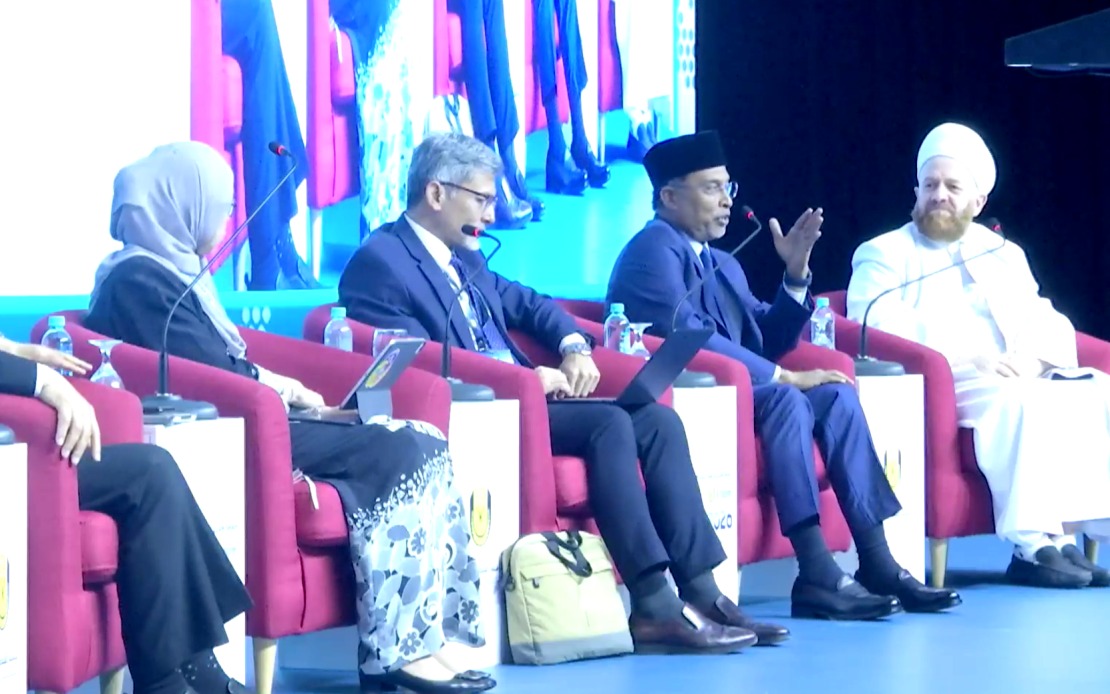
Malaysia's approach to artificial intelligence in higher education must place ethics and moral values at the forefront, according to Higher Education Minister Datuk Seri Dr Zambry Abd Kadir, who warned that technological advancement alone cannot prepare the nation's workforce for future challenges. Speaking at the 8th World Conference on Islamic Thought and Civilisation in Ipoh, Zambry emphasized that integrating AI and cutting-edge technologies into university programmes is essential for developing the human and intellectual capital necessary to tackle mounting global uncertainties. His comments underscore a growing recognition among Malaysian policymakers that technological competence divorced from ethical grounding poses significant risks for both individuals and society.
The Ministry of Higher Education has responded to these concerns by crafting an ambitious 10-year strategic blueprint spanning 2026 to 2035. This framework aims to orchestrate balanced development across three critical dimensions: technological innovation, human capital formation, and the cultivation of moral and ethical values. Rather than pursuing breakneck technological adoption, the blueprint reflects a deliberate attempt to synchronize advancement with broader educational goals centred on character development and societal responsibility. This approach acknowledges that Malaysia's competitive advantage in the global economy will ultimately depend not solely on technical prowess but on producing graduates who can deploy technology responsibly and thoughtfully.
Zambry articulated a particular concern about the limitations of artificial intelligence when deployed without ethical guardrails. While AI systems can deliver precise computational answers and expedited solutions to complex problems, he argued, they remain fundamentally incapable of shaping the moral character and conscience that individuals require to navigate ethical dilemmas. This distinction proves crucial for Malaysian universities as they adopt AI-driven teaching methods, predictive analytics for student support, and automated assessment tools. The challenge facing higher education institutions is ensuring that as they harness these technologies to enhance learning outcomes, they simultaneously strengthen students' capacity for independent moral reasoning and ethical judgment. Without this dual focus, universities risk producing technically skilled graduates who lack the wisdom to apply their knowledge for societal benefit.
The minister's vision extends beyond conventional STEM disciplines to embrace the broader STEAM framework, which incorporates arts and liberal studies alongside science, technology, engineering and mathematics. This pedagogical shift reflects recognition that addressing complex 21st-century challenges—from algorithmic bias in AI systems to the societal implications of automation—requires perspectives drawn from humanities, social sciences, and creative disciplines. By requiring engineering students to study beyond their specialization, institutions like Universiti Teknologi Petronas model how technical education can be enriched with exposure to broader intellectual traditions. Such interdisciplinary exposure cultivates the critical thinking capacity essential for professionals who must balance technical capability with social responsibility.
For Malaysian readers and regional policymakers, Zambry's framework carries significant implications. As Southeast Asian economies increasingly compete for positions in global technology value chains, the temptation exists to prioritize rapid skill development in AI and related fields over slower processes of character formation and ethical education. Yet the minister's emphasis on moral and intellectual development reflects an understanding that sustainable competitive advantage emerges from having graduates who can not only build advanced systems but make principled decisions about their deployment. This is particularly relevant for Malaysia, which aspires to become a regional hub for AI research and development while maintaining its reputation as a multicultural, values-oriented society.
The integration of AI into Malaysian higher education also raises questions about curriculum design and educator preparation. Universities must identify which existing programmes require revision to incorporate AI literacy while preserving their foundational emphasis on ethics and values. Educators themselves need professional development to understand both the technological capabilities and limitations of AI, as well as the philosophical questions it raises. The 10-year blueprint thus represents not merely a technological roadmap but a comprehensive reimagining of what higher education should accomplish in an age of rapid innovation.
Zambry's remarks carry particular weight given Malaysia's position as a Muslim-majority nation with a significant secular intellectual tradition. The reference to the World Conference on Islamic Thought and Civilisation suggests that integrating AI within an ethical framework draws on both universal principles of responsible innovation and Islamic perspectives on knowledge, stewardship, and moral conduct. This positioning potentially offers Malaysia a distinctive voice in global conversations about AI governance and responsible innovation, distinguishing the nation's approach from purely technocratic models.
The challenge ahead involves translating this philosophical commitment into concrete institutional changes. Universities must develop assessment methods that evaluate not only students' technical competence but their ethical reasoning and moral character. Curricula must be redesigned to weave ethical considerations throughout AI courses rather than treating them as supplementary modules. Perhaps most importantly, the academic culture itself must shift to model the values of integrity and conscience that the blueprint espouses, ensuring that faculty and administrators embody the ethical principles they seek to instil in students.
As Malaysian higher education evolves, the balance between technological innovation and moral development will likely determine whether graduates are equipped merely to use advanced tools or to use them wisely. Zambry's vision suggests that Malaysia is attempting to forge a path that embraces technological progress without abandoning the ethical foundations that give that progress meaning and legitimacy. Whether universities can successfully navigate this demanding balance will have implications far beyond Malaysia, potentially offering regional and global lessons about educating professionals in an era of transformative artificial intelligence.

