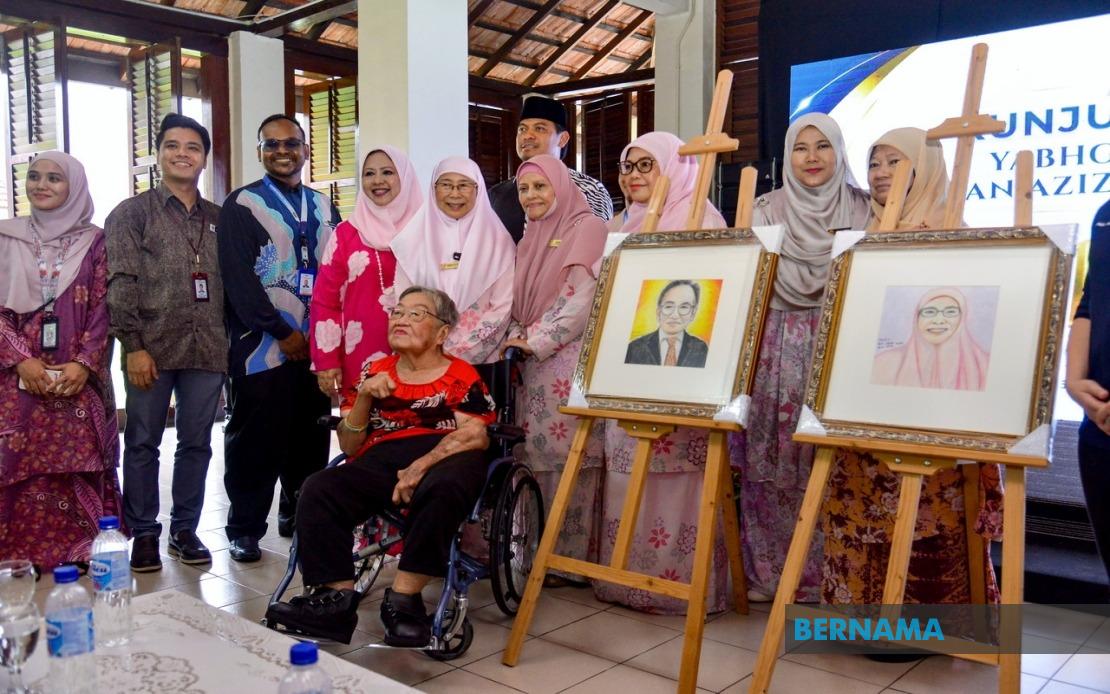
The National Leprosy Control Centre at Sungai Buloh Hospital reached a significant milestone this year, and calls are growing to protect it as a tangible representation of Malaysia's medical achievement. During a visit on August 19, Datuk Seri Dr Wan Azizah Wan Ismail, wife of the Prime Minister, stressed the importance of safeguarding the facility that was constructed in 1926 as a lasting testament to the nation's healthcare evolution and the collective effort to combat infectious disease.
Built nearly a century ago, the centre holds symbolic weight in Malaysia's journey towards better public health. It stands as a physical reminder of how the country approached treatment and containment of leprosy across generations, documenting not only medical progress but also changing social attitudes towards those afflicted. The facility's longevity—through various political transitions and healthcare reforms—underscores its institutional significance within the Malaysian medical landscape.
Dr Wan Azizah, who leads KASIH Malaysia, a charitable welfare organisation focused on supporting vulnerable populations, emphasised that preservation should extend beyond merely maintaining buildings. Instead, she advocated for a balanced approach that respects historical integrity while simultaneously upgrading clinical services and infrastructure to meet contemporary healthcare standards. This nuanced stance acknowledges that heritage conservation need not mean stasis; rather, it involves thoughtful evolution that honours the past while serving present and future communities.
Malaysia's achievement in controlling leprosy demonstrates the effectiveness of sustained public health commitment. The country achieved leprosy elimination status in 1994, a classification that reflects prevalence dropping below the WHO threshold. Current epidemiological data places Malaysia's leprosy prevalence at 0.15 cases per 10,000 population, substantially beneath international targets. This trajectory represents decades of systematic effort, from early isolation strategies through modern pharmaceutical interventions.
Before attaining elimination status, the Sungai Buloh centre functioned as the world's second-largest leprosy isolation facility, treating thousands and serving as a hub for medical research and training. The centre's historical importance extends beyond simple patient numbers; it represents a period when isolation was the primary containment strategy, offering insight into how medical practice and public health philosophy have transformed over a century. Contemporary understanding now recognises that leprosy, caused by Mycobacterium leprae, is neither highly contagious nor untreatable, a scientific clarity that has fundamentally altered how patients are perceived and managed.
The centre's versatility became evident during the COVID-19 pandemic, when it was repurposed to accommodate patients during the acute phase of the health crisis in 2020. This adaptation illustrated how heritage facilities can remain functionally relevant, contributing to current public health needs whilst maintaining their historical character. Such flexibility suggests that preservation does not require the facility to become a static museum, but rather a living institution capable of responding to contemporary medical demands.
Social stigma surrounding leprosy has gradually diminished as public understanding has improved, a cultural shift that the Prime Minister's wife explicitly acknowledged. Earlier perceptions of leprosy as a mysterious, highly transmissible affliction of the morally compromised have given way to scientific understanding grounded in epidemiology and clinical evidence. The centre can serve an educational function, demonstrating how medical knowledge and social attitudes evolve, thereby contributing to continued stigma reduction through historical literacy.
During her visit, Dr Wan Azizah engaged directly with PKKN staff and residents, an approach that personalises heritage preservation beyond administrative discussion. She contributed daily necessities and received a portrait from a resident artist, gestures that humanise the institutional narrative and acknowledge the lived experiences of those who have spent years at the facility. Such meaningful engagement suggests that preservation encompasses recognising the dignity and contributions of individuals who have passed through the centre.
The question of how Malaysia treats its medical heritage carries implications beyond a single institution. It signals the country's commitment to acknowledging scientific progress, honouring those who suffered and contributed during less enlightened eras, and maintaining institutional memory as the healthcare system continues evolving. The PKKN's future shapes how Malaysia relates to its public health history and how it educates future generations about epidemiological achievement.
Preservation efforts, if pursued strategically, could transform the centre into a specialised facility combining clinical services with historical documentation and educational programming. This model would allow continued medical provision whilst establishing archives, conducting oral histories, and developing exhibitions that contextualise Malaysia's leprosy control narrative within regional and global health history. Such an approach would maximise the centre's utility to multiple stakeholders—current patients, healthcare professionals, students, and the broader public interested in medical history.
The call to preserve the National Leprosy Control Centre reflects broader questions about institutional legacy in rapidly developing nations. As Malaysia modernises its healthcare infrastructure, maintaining selective heritage facilities becomes a matter of intentional choice rather than default. Dr Wan Azizah's advocacy positions heritage preservation not as nostalgia but as strategic recognition that institutions bearing historical significance warrant thoughtful stewardship. The centre's next chapter depends on whether policymakers embrace this perspective and allocate resources accordingly.
Looking forward, the centre's viability will depend on sustained government support, professional staffing, and capital investment in both clinical and heritage infrastructure. International collaboration with leprosy research and treatment centres globally could enhance the facility's medical credibility whilst positioning it as a regional knowledge hub. Such development would ensure the PKKN remains contemporarily relevant whilst fulfilling its role as custodian of Malaysia's medical heritage, demonstrating that preservation and progress need not be opposing forces.

