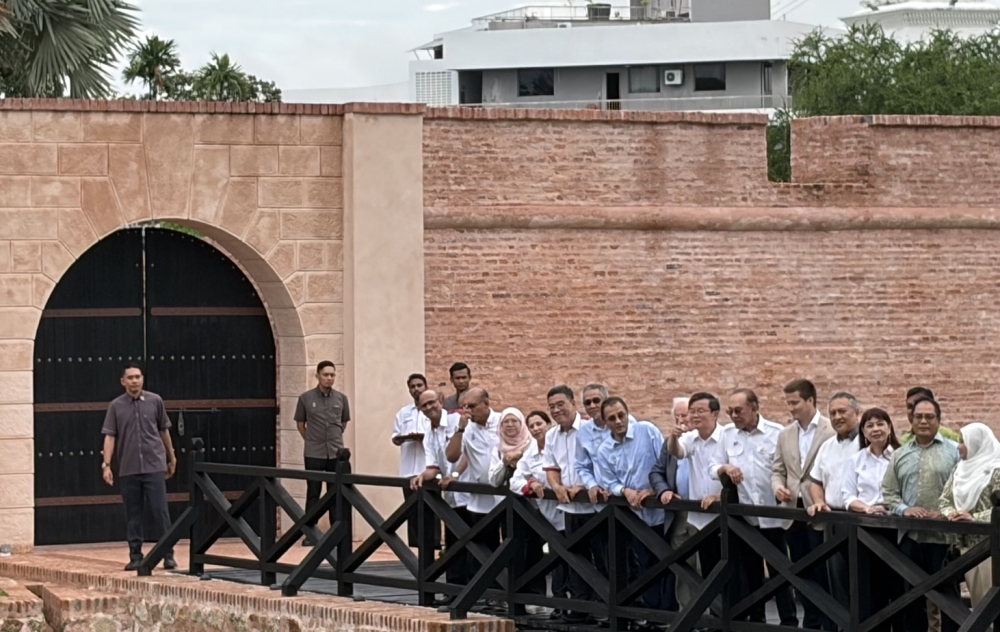
Prime Minister Datuk Seri Anwar Ibrahim has made a forceful case for Malaysia to reshape how its own history is understood and presented to future generations. Speaking in George Town on July 25, Anwar stressed that the nation cannot afford to passively accept historical accounts shaped by foreign perspectives or colonial-era interpretations. Instead, he argues, Malaysians must actively engage in reconstructing their historical narrative to reflect their own values, experiences, and understanding of pivotal moments that defined the country.
Anwar's remarks reflect a growing recognition within Malaysian leadership that controlling one's own historical narrative is fundamental to national identity and sovereignty. The Prime Minister's position acknowledges a long-standing tension in Southeast Asian scholarship: the extent to which colonial powers and external actors have dominated the telling of regional history. By calling for historical reconstruction, Anwar suggests that Malaysia has been insufficiently proactive in ensuring its own voice shapes how Malaysians—and the world—understand their past.
This initiative has profound implications for how Malaysian institutions approach education, media, and cultural discourse. Schools across the country teach history curricula that, while updated since independence in 1957, still retain elements influenced by earlier foreign interpretations. Universities and research institutions similarly grapple with balancing academic rigour against the need to centre Malaysian perspectives. Anwar's call suggests the government may be considering more comprehensive reforms to how history is studied, researched, and disseminated at all levels of society.
The emphasis on reconstructing Malaysia's narrative also connects to broader regional movements in Southeast Asia where countries are reasserting control over their historical interpretations. Vietnam, Thailand, and Indonesia have all undertaken significant projects to reframe their histories in ways that emphasise local agency and national accomplishment rather than external domination or influence. Malaysia's effort would align with this regional trend while differentiating the country's approach to preserving and presenting its multicultural heritage.
For Malaysian readers and policymakers, the practical challenge lies in determining which aspects of history require reconstruction and how to do so without distorting facts or marginalising minority perspectives. Malaysia's history is uniquely complex, encompassing multiple communities, kingdoms, colonial administrations, and independence struggles. Any genuine historical reconstruction must accommodate these layers of experience rather than impose a single, monolithic narrative that risks alienating significant portions of the population.
Anwar's intervention also raises questions about institutional capacity and academic freedom. Reconstructing history at a national scale requires historians, archivists, educators, and cultural experts working within an environment where scholarship is valued over political convenience. The Prime Minister's remarks suggest the government recognises this need, though implementation will test whether political leadership can support historical inquiry even when findings prove uncomfortable or challenge established assumptions.
The timing of Anwar's statement carries additional weight given Malaysia's ongoing efforts to strengthen social cohesion and national unity. A shared, locally-grounded understanding of history can serve as a foundation for communities to recognise their interconnected past and common future. Conversely, competing historical narratives or foreign-dominated accounts can deepen divisions by making it difficult for Malaysians to see themselves in their own story. By reclaiming the authority to tell Malaysia's history, the government signals intent to foster greater national ownership of collective memory.
For international relations, Malaysia's emphasis on historical reconstruction reflects a subtle assertion of intellectual sovereignty. Engaging with Malaysia's own historians, archivists, and researchers—rather than relying primarily on Western academic interpretations—elevates Malaysian expertise onto the global stage. This positioning aligns Malaysia with other developing nations that have successfully established themselves as authorities on their own histories, thereby gaining greater influence in international dialogue about the past and its relevance to present-day geopolitics.
The practical mechanisms through which Malaysia will undertake this reconstruction remain unclear from Anwar's initial remarks. Whether this will involve establishing dedicated research institutions, revising school curricula, funding new historical projects, or creating platforms for Malaysian historians to publish their work globally has yet to be detailed. The success of such initiatives will largely depend on sustained political and financial commitment, institutional cooperation, and the willingness of the academic community to engage meaningfully with the process.
Anwar's call also invites reflection on how Malaysia positions itself within Asia and the world. A country that confidently articulates its own history, grounded in local knowledge and perspectives, projects strength and cultural confidence. This matters not only domestically but also in Malaysia's regional standing and soft power. As Southeast Asian nations compete for influence and recognition, the ability to authoritatively present one's own history becomes a valuable asset in shaping regional and global understanding.
Moving forward, stakeholders across education, culture, research, and politics will need to collaborate in defining what historical reconstruction means in practice for Malaysia. This extends beyond simply rewriting textbooks; it encompasses fostering a culture where Malaysian perspectives on history are researched, valued, and disseminated globally. For a nation as diverse and historically layered as Malaysia, achieving this while maintaining academic integrity and inclusivity represents both an opportunity and a considerable challenge that will shape national discourse for years to come.

