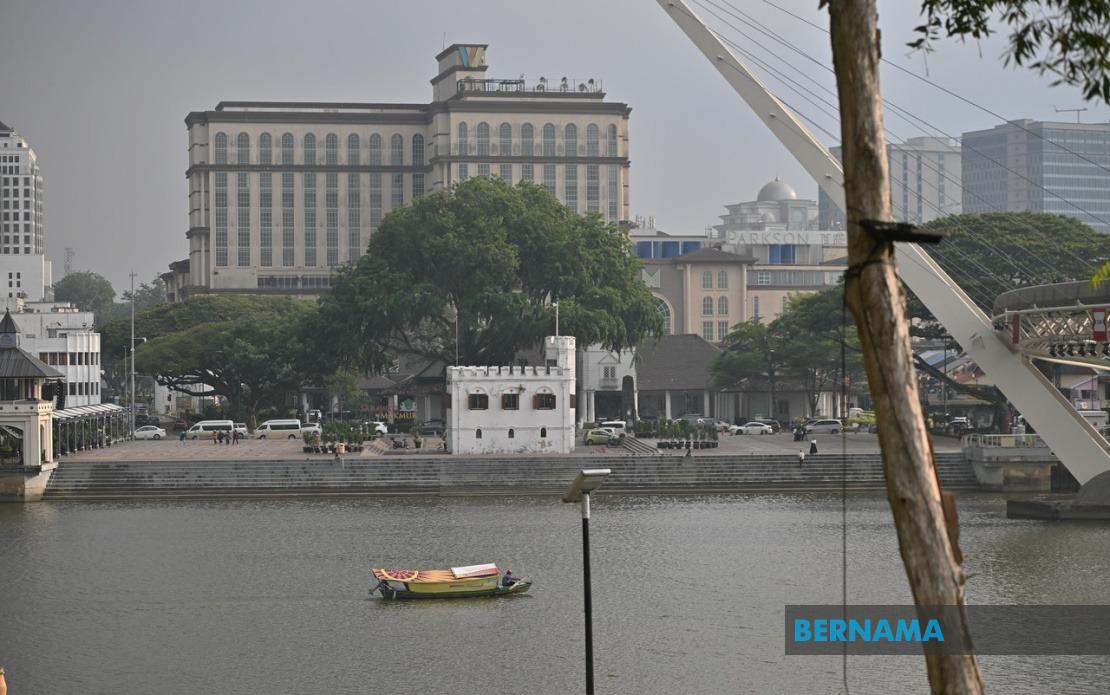
Malaysia faces mounting pressure to abandon its historically reactive approach to transboundary haze and adopt a comprehensive preventive strategy, according to Tan Sri Lee Lam Thye, chairman of the Alliance for a Safe Community. The warning comes as unhealthy air quality has returned to several regions, with six schools in Tebedu, Sarawak, forced to close after air pollutant readings surpassed dangerous levels. Lee's intervention underscores growing frustration among civil society leaders that despite decades of recurring haze episodes, the nation continues to be caught off-guard by seasonal air quality crises that threaten public health and economic productivity.
The deteriorating conditions across Sarawak and Peninsular Malaysia should function as a critical reminder that the country's current management framework remains inadequate, Lee argued. He emphasized that Sarawak's situation warrants particular vigilance given how prolonged hot and dry weather rapidly accelerates fire spread and enables smoke to drift across international borders with minimal warning. This observation reflects a fundamental gap in Malaysia's preparedness infrastructure: while the mechanisms for response exist, the capacity to anticipate and prevent crises before they materialize remains underdeveloped. The cyclical nature of these events—occurring year after year with predictable regularity—suggests systemic failures in implementation rather than mere bad luck or unavoidable environmental circumstances.
To address these shortcomings, Lee presented a five-point framework designed to transform how Malaysia engages with haze management. The cornerstone of his proposal involves immediately activating the National Haze Action Plan whenever early warning indicators signal rising risk levels, moving away from the current pattern where formal responses often commence only after air quality has already deteriorated significantly. This threshold-based approach would enable authorities to mobilize resources and coordinate response efforts before public health emergencies fully materialize, reducing the scope of damage and economic disruption. By establishing clear trigger points tied to measurable atmospheric indicators, Malaysia could create a more systematic and predictable response mechanism that transcends political calendars and bureaucratic inertia.
Enhanced monitoring capabilities form the second pillar of Lee's strategy, requiring intensified surveillance of fire hotspots, fire-prone geographical areas, wind patterns, and air quality metrics in real time. Such granular data collection would provide decision-makers with actionable intelligence weeks or months ahead of potential haze events, enabling preemptive interventions in source regions. The sophistication of modern satellite technology and atmospheric modeling means that Malaysia and its neighbors now possess unprecedented capacity to predict transboundary pollution patterns—yet this technological advantage remains underutilized in practical policymaking. Strengthening the institutional machinery to translate data into coordinated action represents one of the most cost-effective investments the government could make in regional air quality management.
A critical dimension of Lee's proposal centers on revitalizing Malaysia's commitment to the ASEAN Agreement on Transboundary Haze Pollution, which all member states ratified in 2015. While this diplomatic framework ostensibly provides the legal and institutional foundation for regional cooperation, Lee contends that implementation remains tepid and inconsistent. The gap between formal agreement and meaningful ground-level action reflects broader challenges in ASEAN governance, where consensus-based decision-making and respect for national sovereignty often dilute the effectiveness of collective initiatives. Bridging this implementation deficit requires not merely strengthening the agreement itself but establishing mechanisms for faster decision-making, enhanced accountability for non-compliance, and more direct involvement of environmental agencies rather than purely diplomatic channels.
Beyond the regional dimensions, Lee insists that Malaysia cannot deflect responsibility for haze exclusively onto neighboring countries. Illegal open burning, uncontrolled peat fires, agricultural land clearing, and poorly managed development projects within Malaysian territory contribute substantially to air pollution and transboundary haze formation. This domestic accountability angle introduces an uncomfortable truth: Malaysia's haze problem is partly self-inflicted, and remedying it requires uncomfortable interventions that may conflict with economic interests or development ambitions. The willingness to address local sources of pollution alongside regional coordination will ultimately determine whether preventive strategies prove effective or remain merely aspirational policy rhetoric.
Public preparedness constitutes another essential component of Lee's vision, requiring schools, hospitals, workplaces, and government agencies to maintain comprehensive protocols for haze emergencies. Beyond procedural preparations, communities need access to timely and accurate air quality information enabling informed decisions about outdoor activities, work schedules, and health precautions. The current information ecosystem frequently involves delays in disseminating air pollutant data, inconsistent messaging across different agencies, and limited public awareness about actual health risks. Establishing clear communication channels and universal standards for air quality reporting would empower citizens to protect themselves while simultaneously creating political pressure for government action when pollution levels spike.
Lee's most pointed criticism targets the prevailing cultural and institutional mindset that treats haze as an annual inconvenience rather than a serious systemic risk requiring permanent governance attention. This framing shift proves psychologically and politically significant: inconveniences are tolerated and managed reactively, whereas genuine disasters demand proactive prevention and sustained resource allocation. By rebranding transboundary haze from a seasonal weather phenomenon to a recurring regional disaster comparable to floods or earthquakes, Lee seeks to catalyze the institutional reorganization necessary for effective long-term response. Current governance structures, budgeting cycles, and inter-agency coordination mechanisms were not designed to address persistent transnational environmental challenges requiring constant vigilance and coordination.
The economic case for prevention strengthens Lee's arguments considerably. Managing haze crises after they develop imposes enormous costs on healthcare systems, lost productivity from school and workplace closures, damage to tourism industries, and declining agricultural yields. These reactive costs dwarf the investments required for monitoring systems, border region cooperation mechanisms, and domestic land-use management improvements. Yet political decision-making often privileges immediate budgetary considerations over long-term cost-benefit analyses, particularly when prevention benefits accrue gradually and diffusely rather than producing visible, immediately dramatic results. Making this economic argument effectively requires sustained advocacy from civil society leaders willing to quantify the true price of inadequate preparedness.
The regional dimension of Malaysia's haze problem extends beyond Indonesia to encompass broader ASEAN dynamics. Several member states face similar transboundary pollution challenges, and stronger collective action could establish precedents for addressing other regional environmental threats. However, such cooperation remains hindered by varying national capacities, competing economic priorities, and diplomatic sensitivities around national sovereignty over land management. Malaysia's experience positions it uniquely to champion regional environmental governance improvements, yet doing so requires diplomatic skill and willingness to accept constraints on national decision-making autonomy. Whether political leaders demonstrate such commitment remains uncertain, particularly given the short-term visibility of haze impacts compared to gradual climate change.
Implementing Lee's framework would require sustained coordination among multiple government agencies, from environmental departments to agricultural authorities to regional administrators in Sarawak and Sabah. Current institutional silos often prevent effective joined-up governance, with different agencies pursuing parallel objectives without integrated planning. Creating truly preventive capacity demands organizational restructuring, clearer mandate definitions, and sufficient budget allocations to maintain year-round vigilance rather than crisis-mode spending concentrated in haze season. The civil service capacity to manage such complex, multi-jurisdictional coordination remains questionable given existing administrative challenges, suggesting that sustained political commitment from the ministerial level would prove essential.
Looking forward, Malaysia's trajectory on transboundary haze reflects broader questions about governance maturity and regional environmental stewardship. Adopting Lee's preventive framework would signal recognition that traditional reactive approaches have failed consistently, and that addressing transnational environmental challenges requires institutional innovation and behavioral change. The stakes extend beyond air quality statistics to encompass public health, economic competitiveness, and Malaysia's credibility as a responsible regional actor. Whether political and administrative leadership embraces this reorientation, or settles for incremental adjustments to insufficient existing systems, will determine whether future generations experience the same cyclical haze crises that have plagued the region for decades.

