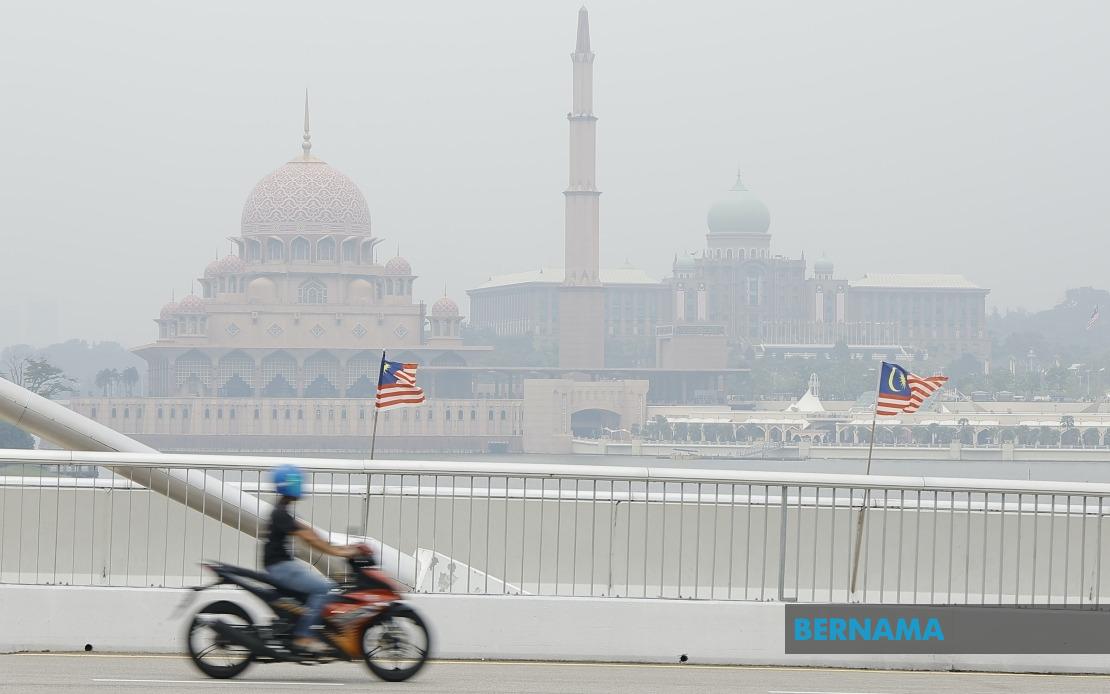
Malaysia should abandon its reactive approach to managing haze episodes and instead invest in a sophisticated early warning system that can predict air pollution days before it threatens public health. This call comes from Associate Professor Dr Azman Azid, director of UniSZA's Besut Campus and a specialist in air quality and environmental research, who argues that existing data infrastructure already provides the foundation needed to implement such a system.
The timing of this proposal is significant given recent health impacts from deteriorating air quality. Data from Malaysia's Ministry of Health revealed a striking 259 per cent surge in asthma cases between the 32nd and 33rd epidemiological weeks, climbing from 61 documented cases to 219. This dramatic increase underscores a critical gap in current policy: authorities focus intensively on monitoring the Air Pollutant Index and tracking smoke movements while largely overlooking the cascading health consequences unfolding in hospitals and clinics across the country.
Azman emphasises that Malaysia's transition from crisis management to crisis prevention represents not merely an incremental policy adjustment but a fundamental philosophical shift in how the nation approaches environmental hazards. The distinction matters considerably. Current protocols emphasise detection and response—watching API readings climb and then issuing warnings after pollution is already widespread. A forecasting system would operate on a fundamentally different timeline, identifying risk trajectories 48 to 72 hours before harmful concentrations materialise.
The technical architecture for such a system already exists in fragmented form across government agencies. Hotspot data can pinpoint fire locations; satellite imagery reveals developing smoke plumes; meteorological information indicates wind patterns; and atmospheric trajectory models predict how air masses will migrate across borders and regional airspace. Fine particulate matter measurements, specifically PM2.5 concentrations, provide the most accurate indicators of health risk. The challenge, Azman suggests, lies not in developing new monitoring capabilities but in orchestrating genuine integration across currently siloed datasets.
Implementing this framework would enable downstream institutions to prepare meaningfully for impending haze episodes. If meteorological models predicted a significant PM2.5 increase within two to three days, hospitals and primary health clinics could augment staffing levels, stock critical medications, and prepare respiratory wards before patient surges materialise. Schools could reschedule outdoor activities and athletic events, protecting vulnerable student populations from unnecessary exposure. This proactive positioning differs fundamentally from the current approach where institutions react only after people fall ill.
The API system, which remains the primary public-facing air quality indicator, need not disappear under this reformed approach. Azman characterises the relationship as complementary rather than competitive—a haze forecasting system would provide strategic advance warning while API readings continue delivering real-time air quality snapshots. The analogy to weather forecasting proves instructive: meteorological agencies do not abandon current temperature and precipitation reporting simply because they issue extended forecasts. Both temporal perspectives serve distinct but complementary functions in public planning.
Regional complexity adds another dimension to this challenge. Malaysia sits within the ASEAN framework addressing transboundary haze pollution, an agreement acknowledging that air pollution routines cannot respect political boundaries. Smoke originating in Indonesian peatland fires or agricultural burning inevitably drifts across maritime borders toward Malaysian population centres. Azman argues that ASEAN cooperation, while nominally established, remains underdeveloped in critical operational domains. Member states continue sharing basic data and coordinating post-crisis responses, but they have not yet progressed toward genuine prevention mechanisms such as joint fire-source mapping, coordinated smoke trajectory forecasting, technology transfer, or integrated firefighting assistance.
Domestic enforcement mechanisms also require strengthening alongside technological investments. Malaysia maintains legislation governing open burning, uncontrolled brush fires, and peatland monitoring, yet implementation gaps persist. Tighter regulatory enforcement and more rigorous surveillance of high-risk areas—particularly peatland zones prone to smouldering combustion that produces particularly hazardous particulate matter—must accompany any forecasting system.
Addressing haze comprehensively demands multifaceted action extending beyond technology and administration. Fire prevention infrastructure, scientifically grounded peatland management practices, atmospheric modelling capacity, regional diplomatic coordination, and critically, sustainable land use patterns all contribute to long-term solutions. Azman acknowledges that Malaysia cannot shield itself entirely from incoming smoke plumes given geographic and climatic realities. However, reducing regional fire incidence, improving forecasting accuracy, and prioritising population health protection represent achievable intermediate objectives.
The financial and institutional investments required to establish such a system, while substantial, pale against the documented public health costs. Respiratory disease hospitalisation, medications, lost productivity, and educational disruption imposed by recurring haze episodes create cumulative economic burdens exceeding the costs of prevention infrastructure. Moreover, the psychological and social dimensions—public anxiety during hazardous episodes, cancelled outdoor activities, restricted movement—impose quality-of-life costs difficult to quantify but deeply felt by affected communities.
For Malaysia specifically, embracing early warning capabilities positions the nation as a regional leader in environmental crisis prevention. As Southeast Asian economies increasingly recognise that air quality directly impacts productivity, tourism competitiveness, and social stability, Malaysian expertise in forecasting and prevention could inform broader ASEAN approaches. The technology and methodological frameworks developed domestically could become exportable knowledge assets throughout the region.
Implementing Dr Azman's recommendations requires political will to redirect resources from post-crisis management toward prevention infrastructure, institutional cooperation to overcome data silos, and diplomatic engagement to upgrade ASEAN mechanisms. The convergence of available technology, documented health impacts, and demonstrated demand suggests the window for action remains open. Malaysia can leverage existing capabilities to transform how it addresses recurring haze episodes, shifting the national paradigm from managing crises after they develop to preventing them before they threaten public welfare.

