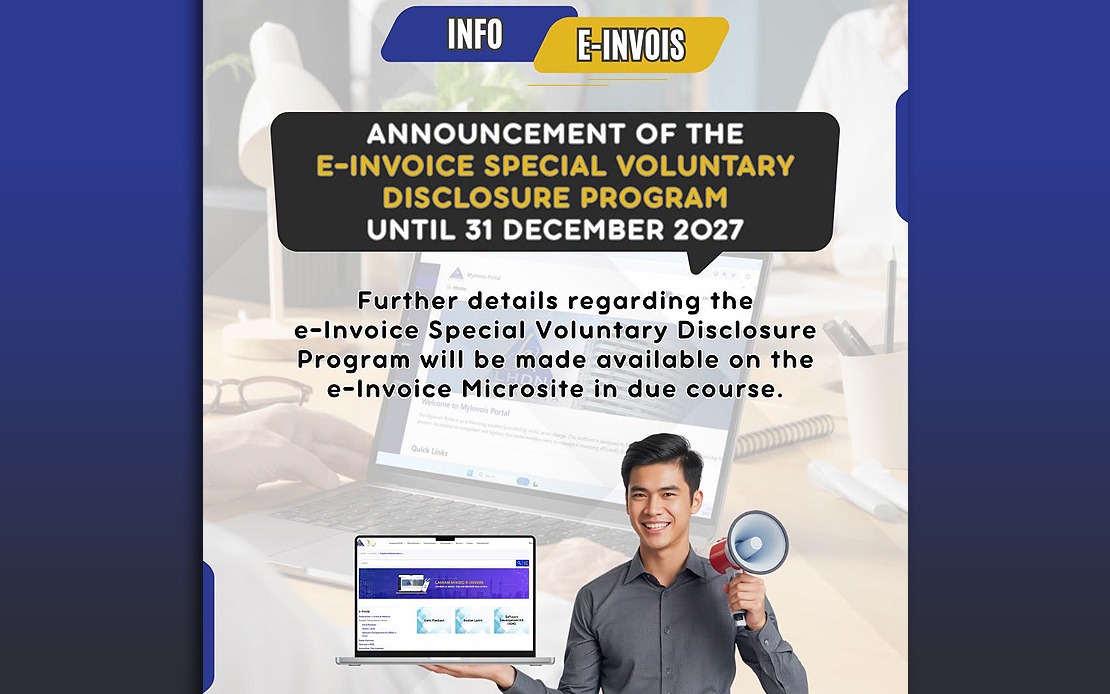
Prime Minister Datuk Seri Anwar Ibrahim announced a new e-Invoice Special Voluntary Disclosure Programme that will remain open until the end of 2027, positioning it as a critical relief measure for Malaysia's business community. Running through December 31, 2027, the initiative reflects government recognition that many enterprises—particularly smaller operators—have struggled with the transition to mandatory digital invoicing, and seeks to reduce the financial burden of compliance while encouraging fuller participation in the country's digitisation drive.
The Inland Revenue Board has clarified that the amnesty applies to three distinct groups of taxpayers. The first encompasses businesses that failed to submit electronic invoices for specific transactions that should have been covered. The second category includes those who did submit invoices but containing errors or failing to meet the IRB's technical specifications. The third group comprises businesses that have entirely missed e-invoice submissions across multiple periods since the original mandatory implementation date. This broad-based approach suggests the IRB recognised that compliance failures stem from diverse obstacles, ranging from technical misunderstandings to resource constraints and system integration difficulties.
The voluntary disclosure mechanism is designed as a carrot-and-stick approach tailored to Malaysia's business ecosystem. During the amnesty period, taxpayers who come forward to correct their records will face zero penalties from the IRB—a significant departure from normal enforcement practice. This eliminates the financial jeopardy that typically deters businesses from self-reporting compliance lapses. The IRB has emphasised that submissions must still be accurate and align with the General and Specific e-Invoice Guidelines, meaning the amnesty is not a backdoor for continued non-compliance but rather a one-time opportunity to get records straight.
For Malaysia's micro, small, and medium enterprises—which collectively represent the backbone of the country's economy and employment—this programme addresses a persistent pain point. Many MSMEs lack dedicated compliance staff and struggle with the technical infrastructure required for e-invoicing. The amnesty provides a runway to update systems without incurring punitive costs, thereby lowering barriers to full digitalisation. This is particularly relevant for traditional trading businesses, family-run enterprises, and informal sector operators who have been slower to adopt digital tools compared to larger corporations.
Crucially, the government has sweetened the incentive package beyond mere penalty forgiveness. Datuk Seri Anwar Ibrahim announced that tax incentives have been accelerated for businesses demonstrating full compliance with e-invoice requirements. Specifically, companies can now claim capital allowances in a single year for expenses incurred in purchasing information and communication technology equipment and costs associated with developing or modifying computer software used in e-invoice implementation. This accelerated deduction reduces the after-tax cost of compliance infrastructure, making the investment in digitalisation more financially attractive and shortening the payback period.
The timing of this amnesty programme carries strategic weight within Malaysia's broader economic agenda. As the country seeks to modernise its tax system and improve revenue collection efficiency, voluntary disclosure programmes serve dual purposes: they widen the tax base by bringing previously non-compliant businesses into the formal system, while simultaneously building goodwill and demonstrating that government recognises compliance challenges. For policymakers, this represents a calibrated approach that balances enforcement with pragmatism—acknowledging that harsh penalties often drive businesses further underground rather than toward compliance.
The IRB has established multiple channels through which taxpayers can seek guidance and submit voluntary disclosures. The e-Invoice helpdesk telephone line at 03-8682 8000 provides direct support, while the MyInvois Live Chat system offers real-time assistance for technical queries. Regional IRB offices nationwide are also equipped to handle submissions in person. This multi-channel approach is essential for reaching smaller businesses that may lack sophistication in navigating digital platforms or may prefer face-to-face interactions when managing tax matters. The provision of dedicated support signals that the IRB intends the amnesty to be genuinely accessible rather than a formal offer that businesses struggle to execute.
From a Southeast Asian perspective, Malaysia's approach offers lessons for the region's broader digitisation agenda. As countries throughout ASEAN implement e-invoicing and digital tax systems, they must grapple with varying levels of business preparedness and technical capacity. Amnesty programmes that combine penalty relief with targeted tax incentives appear more effective at driving compliance than punitive-only enforcement, particularly in economies with large informal and MSME sectors. The three-year timeline also provides realistic adjustment periods rather than expecting instant compliance across diverse business populations.
The programme's design reveals sophisticated understanding of compliance behaviour. By offering penalty-free correction opportunities, the IRB removes the cost-benefit calculation that leads businesses to ignore non-compliance. An enterprise facing potential penalties may decide that the risk of detection is low enough to justify continued non-compliance; however, an amnesty eliminates penalties while maintaining the prospect of future enforcement. This transforms the equation, making voluntary disclosure rational even for risk-averse businesses.
For businesses considering participation, the combination of zero penalties, expedited capital allowances, and readily available support creates a compelling case for action. The amnesty effectively provides a fresh start for companies that may have inadvertently or deliberately fallen behind on e-invoice obligations. Given that the programme runs until the end of 2027, businesses have a substantial window—approximately three and a half years from the announcement date—to audit their records, engage with the IRB, and correct any shortcomings.
The initiative also signals the government's commitment to maintaining e-invoicing as central to Malaysia's digital economy strategy. Rather than weakening enforcement, the amnesty is positioned as a bridge to fuller compliance, implicitly warning that after 2027, enforcement will likely become stricter. This creates urgency without imposing immediate panic, encouraging businesses to act during the amnesty window. The sequencing of incentives—both carrot and implied future stick—reflects mature thinking about how compliance systems actually function in practice.
Looking ahead, the success of this programme will be measured not only by the number of businesses that come forward but by the durability of their subsequent compliance. If the amnesty successfully brings businesses into the formal e-invoicing system and they maintain proper practices afterward, it will validate the government's approach. Conversely, if businesses use the amnesty to clean up records only to relapse into non-compliance, future policy adjustments will be necessary. For now, the IRB's gesture represents a pragmatic recognition that compliance is a journey requiring government support alongside business responsibility.

