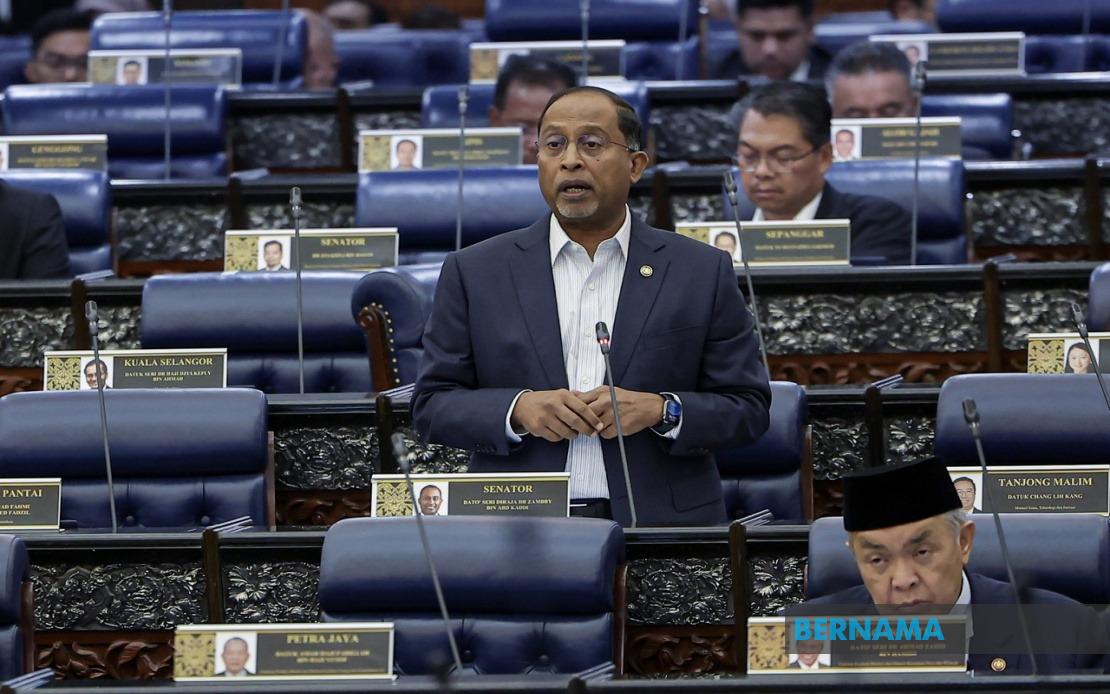
Malaysia's higher education sector is undergoing a fundamental repositioning, with the Ministry of Higher Education (MOHE) placing greater emphasis on transforming academic research into commercially viable products and services. In a parliamentary address on June 22, Higher Education Minister Datuk Seri Dr Zambry Abd Kadir outlined how public universities are being redirected toward impact-driven research methodologies that prioritise real-world applications over traditional academic publication metrics. This strategic pivot reflects growing recognition that research excellence alone does not translate into economic competitiveness without robust mechanisms to move innovations from the laboratory to the marketplace.
The shift from publication-centric to impact-centric research represents a significant departure from Malaysia's previous innovation paradigm. For decades, universities measured success primarily through the quantity and prestige of academic papers produced by their researchers, a model that incentivised theoretical advancement but often left discoveries shelved with limited commercial potential. The new approach explicitly requires researchers to consider industry demand and societal challenges when designing projects, fundamentally altering how public universities allocate resources and evaluate performance. This realignment is particularly important for Malaysia, which has invested heavily in higher education infrastructure but has struggled to convert that intellectual capital into sustained innovation-based competitive advantage relative to regional peers such as Singapore and South Korea.
Under this restructured framework, Malaysia's five designated research universities are being positioned as anchors for world-class investigation in strategically critical domains. Food security, green technology, artificial intelligence, and advanced engineering have been identified as priority areas where Malaysia possesses comparative advantages or faces acute competitive pressures. The concentration of effort in these sectors reflects both defensive considerations—protecting against food import dependencies and climate vulnerabilities—and offensive strategic positioning as Asia's technology hub. By focusing research firepower on these domains, MOHE aims to ensure that public investment yields innovations with demonstrable market value and the potential to attract international venture capital and multinational partnerships.
The commercial track record over the past three years provides concrete evidence that the institutional framework for university-industry engagement is beginning to function more effectively. More than 200 products developed within Malaysia's public universities have successfully reached commercialisation, while 286 distinct technologies and knowledge assets were licensed to industry partners between 2022 and 2024. These figures, though modest when benchmarked against larger research economies, represent meaningful progress in closing the notorious innovation valley of death where promising academic discoveries typically fail to transition into viable enterprises. The consistency of these numbers across three consecutive years suggests the commercialisation infrastructure is maturing rather than relying on occasional outlier successes.
Several institutional innovations have been deliberately engineered to accelerate the journey from research concept to market deployment. The Malaysian Laboratories for Academia-Business Collaboration (MyLAB) initiative creates dedicated physical and administrative spaces where university researchers and corporate innovators work in genuine partnership, breaking down the traditional barriers between campus and industry. The Industry Matching Grant programme directly subsidises collaborations that would otherwise be economically unviable, essentially sharing risk between government and private enterprise to catalyse joint projects. The Public-Private Research Network (PPRN) expands this collaborative infrastructure by creating semi-formal relationships across multiple institutions simultaneously, generating economies of scale and knowledge spillovers that individual bilateral agreements cannot achieve. Collectively, these mechanisms function as institutional scaffolding designed to reduce the friction costs of university-industry interaction.
A fundamental tension underlying these initiatives is the reduction of government dependency in university research funding. As federal budgets face competing pressures—demographic ageing, infrastructure demands, social expenditure—the ministry recognises that sustained research excellence cannot rely indefinitely on state subsidy. By creating channels through which private industry directly supports university research aligned with commercial objectives, MOHE is restructuring the financial ecosystem for innovation. This approach carries both benefits and risks: industry collaboration introduces market discipline and pragmatism to research agendas, but it also risks skewing the portfolio away from blue-sky basic research that generates the foundational knowledge underpinning future breakthroughs. Malaysia must navigate this tension carefully to avoid becoming a jurisdiction that excels at incremental innovation while losing capacity for transformative discovery.
The evaluation framework itself has been restructured to reinforce these new priorities. The Malaysian Research Assessment, which measures institutional performance across the university sector, now incorporates metrics capturing research impact and commercialisation alongside traditional measures of publication output. This shift in measurement systems sends powerful signals throughout academic hierarchies: promotion and recognition now rewards researchers who translate their findings into economic value, not merely those who publish prolifically. Performance incentives shape behaviour more powerfully than any policy exhortation, and this realignment of assessment mechanisms may prove more consequential than any individual initiative in reorienting university culture toward commercialisation.
The planned University Research, Innovation and Investment Summit scheduled for September represents an attempt to consolidate the supply-side improvements in university research capacity with demand-side interest from the investment community. By convening industry representatives and venture capital providers within the academic environment, the summit aims to facilitate the discovery process through which promising research finds appropriate private sector partners and funding. Such brokerage events are particularly valuable in markets where information asymmetries persist between academic researchers unfamiliar with entrepreneurship norms and investors unfamiliar with university technology pipelines. The event also serves a nation-branding function, attempting to position Malaysia as a genuine technology innovation destination worthy of regional venture capital flows currently concentrated in Singapore and other established hubs.
For Malaysia's regional position, the success of this university-industry alignment matters significantly. Southeast Asian economies increasingly compete not on labour costs but on the ability to generate and commercialise intellectual property. Singapore, with its smaller domestic market, has built substantial competitive advantage through focused research investment and rapid technology transfer; Taiwan and South Korea have achieved similar positioning through different models. Malaysia possesses larger population and domestic demand than Singapore, potentially offering a more diverse innovation ecosystem if universities can effectively engage that demand through commercialisation. However, success requires sustained institutional commitment, adequate funding, and patience—university-industry partnerships mature slowly, and the lag between policy implementation and measurable economic impact typically extends across electoral cycles and ministerial tenures. The current policy direction is sound and aligned with regional best practice, but execution and persistence over multiple years will ultimately determine whether these initiatives catalyse genuine transformation in Malaysia's innovation landscape.