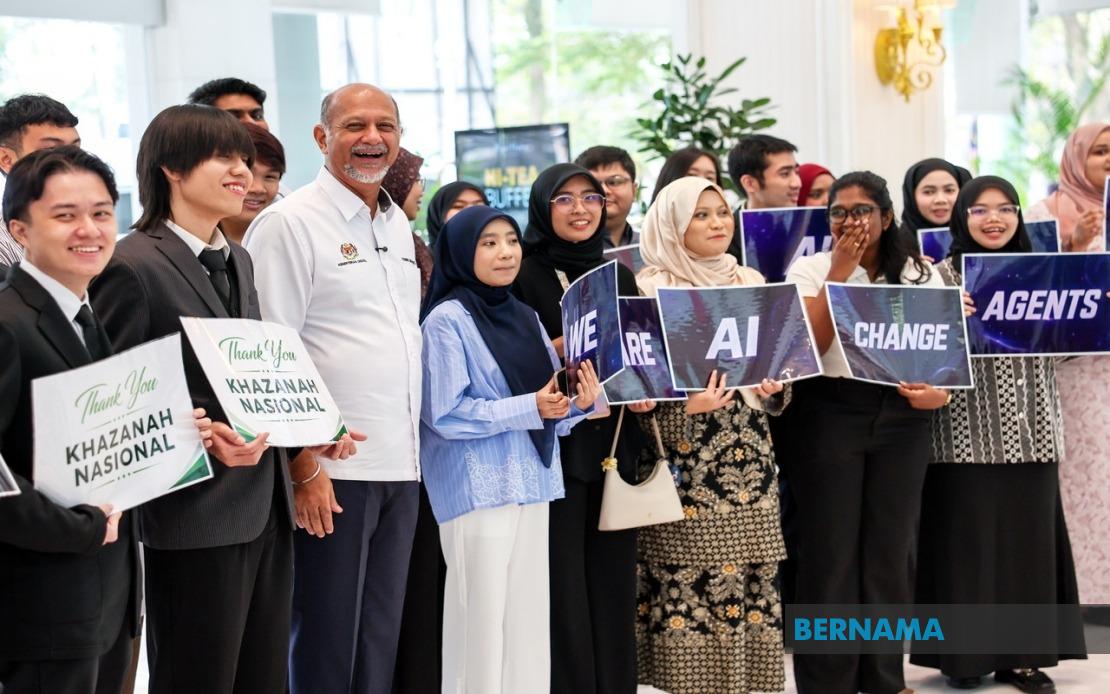
Malaysia's approach to artificial intelligence has entered a critical turning point. Digital Minister Gobind Singh Deo declared that the government is abandoning the traditional practice of responding to technological crises after they emerge, instead embracing a forward-looking strategy designed to identify and neutralise risks before they materialise into problems. The announcement, made at the AI-Ready Malaysia Summit 2026 in Petaling Jaya, signals a fundamental recalibration of how the nation intends to navigate the increasingly complex landscape of emerging technologies that threaten to disrupt economies, labour markets, and social structures across the region.
The urgency of this shift cannot be overstated. For decades, governments worldwide—including Malaysia—have operated within a reactive framework, waiting for technological disruptions to cause visible damage before mobilising legislative and enforcement mechanisms to contain the fallout. This approach, while administratively simpler, has consistently proven ineffective when confronted with the accelerating pace of innovation. By the time regulations are drafted, debated, and implemented, the technology landscape has already shifted dramatically, rendering many policies obsolete or inadequate. Gobind acknowledged this institutional weakness, arguing that such sluggish responsiveness is incompatible with an era where artificial intelligence systems can be developed, deployed, and scaled globally within months.
At the heart of Malaysia's recalibration sits AI Malaysia, a newly established entity tasked with functioning as the country's central command for artificial intelligence development and governance. The organisation represents far more than a bureaucratic shuffle; it embodies the government's commitment to anticipatory policymaking—the practice of developing legislative frameworks, regulatory guidelines, and technical standards before crises force hasty and often poorly conceived interventions. This proactive orientation extends beyond merely waiting to react; it demands systematic foresight, involving scenario planning, stakeholder consultation, and the development of contingency measures that can be rapidly deployed when challenges materialise.
The government has identified six critical sectors where AI-driven disruption poses both opportunities and existential threats: agriculture, transport, and healthcare foremost among them. Each sector presents unique vulnerabilities. In agriculture, the introduction of AI-powered systems for crop monitoring and yield prediction could dramatically reshape farming practices, potentially displacing rural workers while increasing productivity. Transport faces parallel challenges as autonomous vehicles threaten employment for millions of drivers across the region. Healthcare systems grapple with questions of algorithmic bias, data privacy, and equitable access to AI-assisted diagnostics. By concentrating on these six domains, AI Malaysia demonstrates recognition that a one-size-fits-all regulatory framework cannot adequately address the distinct challenges posed by artificial intelligence across diverse economic sectors.
The transition from reactivity to proactivity also hinges on developing legislative preparedness. Rather than awaiting technological incidents that demand urgent legislative responses, the government is now engaged in formulating bills and policies designed to provide robust legal foundations for AI deployment before widespread adoption occurs. This approach allows policymakers to incorporate diverse stakeholder perspectives, conduct proper impact assessments, and ensure that regulations reflect both innovation imperatives and public protection principles. For Malaysia, which aspires to become an AI nation by 2030, this temporal advantage could prove decisive in attracting artificial intelligence investment and talent that might otherwise gravitate toward jurisdictions with clearer regulatory clarity.
Crucially, Gobind emphasised that technological leadership cannot be achieved through top-down policy alone. Public awareness and understanding of artificial intelligence capabilities and limitations form essential prerequisites for sustainable adoption. The government recognises that citizens cannot be coerced into embracing unfamiliar technologies; rather, they must comprehend how AI systems function and what tangible benefits they deliver to daily life and livelihood. This educational imperative extends beyond formal training programmes to encompass media literacy, public communication campaigns, and accessible demonstrations of AI applications in familiar contexts.
Accessibility represents the second pillar of Malaysia's adoption strategy. Technology ecosystems that concentrate benefits among wealthy urban populations or large corporations inherently generate social resistance and political backlash. The government has committed to ensuring that AI tools and services remain affordable, geographically distributed, and usable by Malaysians across all socioeconomic strata. This commitment carries particular significance for Southeast Asia's diverse population, where significant wealth gaps and urban-rural divides risk creating technological underclasses excluded from AI-driven productivity gains and economic opportunities.
The implications for Malaysia's regional standing are substantial. While countries like Singapore, South Korea, and China have aggressively positioned themselves as AI hubs, Malaysia has historically occupied a secondary tier in technology leadership. A genuinely proactive AI governance framework could enable Malaysia to leapfrog previous technological generations in ways that reactive approaches never permitted. The nation possesses advantages: a relatively educated workforce, growing investment in technology infrastructure, and geographic positioning as a bridge between major Asian economies. Yet these advantages remain dormant without the institutional capacity and forward-looking vision that AI Malaysia is designed to provide.
Moreover, Malaysia's proactive stance offers lessons for other Southeast Asian nations wrestling with similar technology governance challenges. Thailand, Indonesia, and the Philippines confront comparable pressures to integrate artificial intelligence while protecting workers, consumers, and social cohesion. Malaysia's willingness to invest in anticipatory frameworks rather than perpetually chasing crises through reactive legislation could establish a regional model for technology governance that balances innovation and protection more effectively than alternatives employed elsewhere.
Yet implementing proactive technology governance faces formidable obstacles. Government institutions often lack the expertise to anticipate technological developments several years in advance, creating risks that even well-intentioned frameworks miss genuine threats or inadvertently stifle beneficial innovation through excessive precaution. The composition of AI Malaysia's leadership and advisory boards will prove critical; if dominated by government bureaucrats disconnected from technology sector realities, the body risks developing policies that favour regulatory convenience over genuine public benefit. Equally, rapid technological change means that even the most carefully developed frameworks risk obsolescence before implementation concludes.
The success of Malaysia's pivot from reactivity to proactivity ultimately hinges on sustained institutional commitment and adequate resource allocation. Establishing vision statements and organisational structures represents merely the initial step; actual implementation requires continuous funding, technical expertise, and political will to enforce difficult decisions that inevitably disappoint some constituencies. As the nation moves toward its 2030 AI aspiration, the government must demonstrate that this proactive approach translates into tangible improvements in technology governance, not merely rhetorical repositioning that leaves underlying problems unaddressed.

