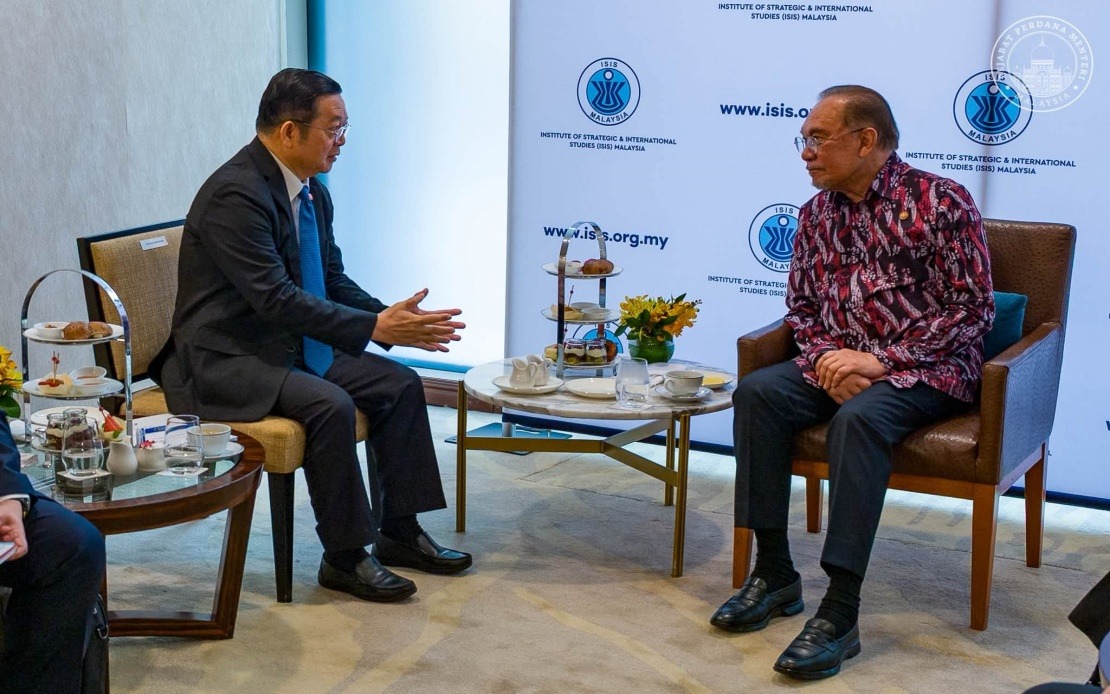
Prime Minister Datuk Seri Anwar Ibrahim has reiterated Malaysia's resolve to remain a constructive force within ASEAN, working to strengthen the regional bloc as a resilient and inclusive community capable of delivering on the aspirations of its 700 million people. The commitment was underscored during a meeting with ASEAN Secretary-General Dr Kao Kim Hourn, who paid a courtesy call on the Prime Minister at the margins of the 39th Asia-Pacific Roundtable held in Kuala Lumpur. The gathering provided a significant platform for Anwar, who holds the dual role of Prime Minister and Finance Minister, to articulate Malaysia's vision for the region at a critical juncture.
The timing of this reaffirmation comes as ASEAN grapples with multifaceted pressures that threaten regional stability and economic growth. The meeting between Anwar and Dr Kao Kim Hourn served as more than ceremonial protocol; it represented a substantive engagement on pressing matters facing Southeast Asia. The two officials used the opportunity to discuss the trajectory of regional developments and identify priority areas where ASEAN collective action remains essential. This type of high-level dialogue underscores the importance both Kuala Lumpur and the ASEAN Secretariat place on maintaining strategic momentum within the bloc.
Myanmars political crisis continues to dominate ASEAN's agenda, representing an internal challenge that tests the bloc's unity and coherence. The military coup and subsequent instability have created humanitarian concerns and geopolitical complications that ripple across the region. Malaysia, as a frontline state with significant ethnic and cultural ties to Myanmar, carries particular responsibility in encouraging dialogue and de-escalation within ASEAN frameworks. The situation remains fluid, with efforts to restore democratic governance and regional stability requiring sustained diplomatic engagement from all member states.
The South China Sea dispute emerged prominently in discussions, reflecting its persistent significance as a flashpoint for regional tensions. With multiple claimants and competing strategic interests, the waters remain a test of ASEAN's ability to manage disagreements without fracturing. Malaysia's positioning as a claimant state with substantial maritime interests makes its constructive approach particularly valuable. The Code of Conduct negotiations, now in their final stages, continue to demand careful balancing of national interests with regional consensus-building.
Artificial intelligence and its implications for the region constituted a forward-looking element of their discussions, signalling ASEAN's recognition that technological transformation demands regional coordination. As AI reshapes economies and labour markets across Southeast Asia, ensuring equitable development benefits and managing potential disruptions requires coordinated policy frameworks. Malaysia's emphasis on this topic reflects its aspirations to position the country as a technology-enabled economy within the digital age.
Timor-Leste's recent accession to full ASEAN membership marked a historic expansion of the bloc, and discussions around the post-accession phase indicated ongoing attention to integration and capacity-building. The eastern expansion strengthens ASEAN's geographic footprint and strategic reach, though it also introduces new complexities in consensus-building and resource allocation. Malaysia's engagement with this development demonstrates commitment to inclusive regional architecture.
The ASEAN Community Vision 2045 framework represents the bloc's long-term roadmap for deeper integration across political, security, economic, and socio-cultural dimensions. Implementation challenges remain substantial, requiring member states to balance sovereignty concerns with supranational cooperation aspirations. Anwar's emphasis on this vision reflects Malaysia's commitment to translating ambitious goals into tangible progress across multiple policy domains.
The conflict in West Asia and its regional ramifications also featured in their strategic review. Tensions in the Middle East carry direct implications for Southeast Asia through energy security, maritime trade disruptions, and potential spillover effects on regional stability. As a Muslim-majority region with significant economic interests in global oil and gas markets, ASEAN has compelling reasons to monitor these developments closely and coordinate responses where possible.
Underpinning all these specific issues, Anwar stressed the enduring importance of ASEAN's core principles: unity, centrality, and close cooperation. These foundational concepts have guided the bloc since its establishment and remain critical to maintaining cohesion amid divergent national interests. Unity does not demand uniformity but rather a commitment to consensus-seeking and respect for the ASEAN Way of non-interference and peaceful dispute resolution. Centrality emphasises ASEAN's role as the architect and anchor of regional multilateral frameworks, positioning the bloc as the primary vehicle for regional cooperation rather than allowing larger powers to dominate regional agenda-setting.
Malaysia's emphasis on ensuring the region remains peaceful, stable, and prosperous reflects understanding that regional prosperity depends fundamentally on security and predictability. Economic growth across Southeast Asia correlates directly with political stability and freedom from major military conflicts. As an upper-middle-income economy with substantial trade and investment ties throughout the region, Malaysia has tangible interests in maintaining this equilibrium. The country's role as chair of ASEAN in 2023 and ongoing engagement in regional institutions positions it as a significant voice in these discussions.
The Asia-Pacific Roundtable itself represents an important venue for track-one diplomacy among senior policymakers from across the region and beyond. By delivering the keynote address and participating actively in question-and-answer sessions, Anwar positioned Malaysia prominently in regional strategic conversations. This engagement also demonstrates Malaysia's commitment to being heard on consequential regional issues rather than remaining a passive observer of geopolitical developments.
Looking forward, Malaysia's continued investment in ASEAN solidarity carries implications for the broader Indo-Pacific region. As major powers compete for influence and partnerships, ASEAN's ability to maintain internal cohesion while engaging constructively with all parties remains critical. Malaysia's constructive posture contributes to this balance, avoiding zero-sum alignment while advocating for regional agency and self-determination in navigating great power competition.

