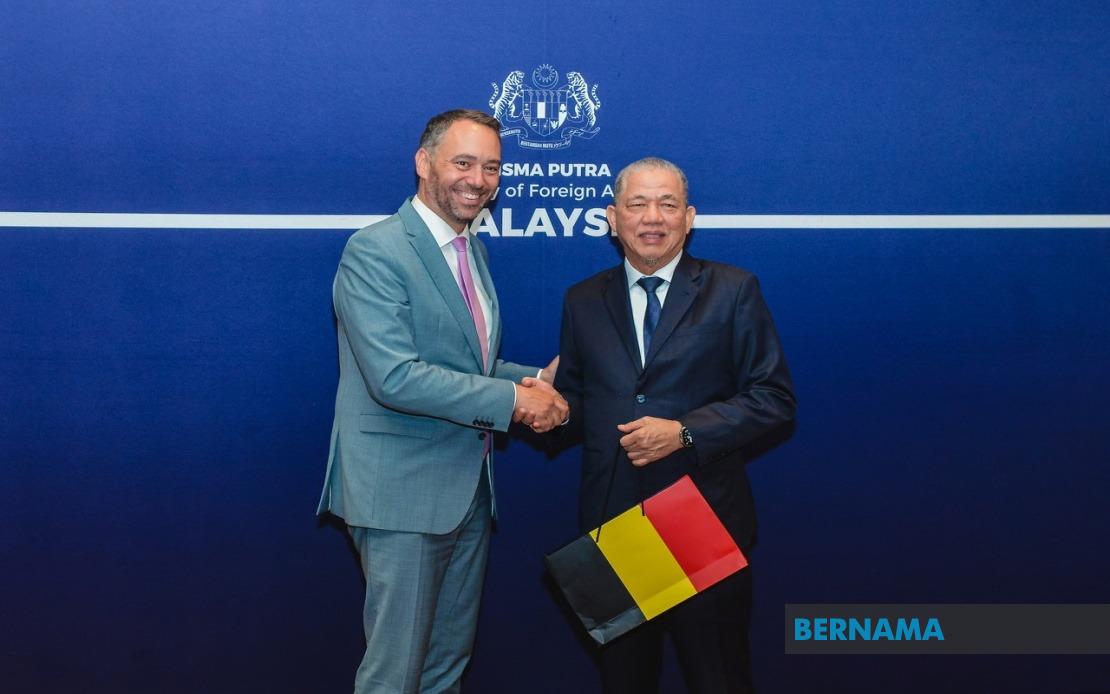
Deputy Prime Minister Datuk Seri Fadillah Yusof has given formal assurances to Belgium that Malaysia and ASEAN remain dedicated to keeping the South China Sea open to maritime commerce, with no restrictions or blockades anticipated. The pledge came during a bilateral meeting in Kuala Lumpur with Belgium's Deputy Prime Minister and Minister of Foreign Affairs Maxime Prévot, who was conducting his first official visit to Malaysia since assuming his cabinet position in February 2025. The timing of this assurance underscores regional anxieties about potential shipping disruptions, particularly as tensions elsewhere—notably in the Strait of Hormuz—have raised global concerns about freedom of navigation in critical waterways.
Fadillah's commitment reflects ASEAN's broader diplomatic positioning on one of the world's most strategically significant maritime corridors. The South China Sea, through which approximately one-third of global maritime trade transits, has been subject to competing territorial claims and military activities that occasionally trigger international alarm. By explicitly guaranteeing open access and rejecting any possibility of blockades, Malaysia signals that member states prioritise stability and commercial interests over nationalist posturing. This reassurance carries particular weight given Malaysia's geographic position and its influence within ASEAN as a nation with direct South China Sea interests and claims.
The Belgian delegation's visit reflects European strategic interest in Asian maritime security, a concern that extends well beyond the region's immediate geography. Belgium, as a gateway to European trade and a significant economic power within the European Union, has vested interests in maintaining unobstructed global shipping lanes. The conversation between Fadillah and Prévot appears to have touched on specific security scenarios, with the Belgian minister requesting Malaysia's assessment of whether disruptions similar to those experienced in the Strait of Hormuz might materialise in Southeast Asian waters. Such inquiries suggest that international shipping insurers, logistics companies, and governments are actively monitoring regional stability as they plan long-term trade routes and investment strategies.
Beyond security assurances, the bilateral engagement covered expansive ground intended to deepen Malaysia-Belgium cooperation across multiple sectors. Prévot indicated Belgium's interest in elevating commercial ties and signalled a willingness to reconsider the travel advisory status for Sabah, which has historically deterred European tourists and business visitors. Such administrative decisions, though they may appear routine, carry symbolic weight in bilateral relations and directly impact tourism revenue and investor confidence. The prospect of improved travel advisory ratings could unlock economic opportunities in Malaysian tourism and facilitate easier business travel for Belgian nationals conducting operations in Sabah.
A particularly intriguing dimension of the talks involved Malaysia's halal ecosystem and its potential international standardisation. Belgium has proposed that Malaysia's halal certification and standards framework be studied as a model for possible European Union adoption or alignment. This proposal recognises Malaysia's expertise and global leadership in halal industry development, positioning the country not merely as a producer of halal goods but as a standards-setter and knowledge provider for European markets. Expanded halal certification reciprocity between Malaysia and the EU could significantly benefit Malaysian food, pharmaceutical, and cosmetics exporters seeking market access to over 400 million European consumers.
Energy transition cooperation emerged as another substantive focus for future partnership. Belgium possesses considerable technological expertise in renewable energy and advanced materials manufacturing, sectors directly aligned with Malaysia's own Energy Transition and Water Transformation agenda. By encouraging Belgian corporate investment in these domains, Malaysia aims to access cutting-edge technology while creating high-value employment opportunities. The complementarity between Belgian innovation capacity and Malaysian resources and market scale suggests genuine potential for mutually beneficial collaboration in transitioning Malaysia's energy infrastructure toward lower-carbon sources.
The involvement of high-level officials including Foreign Ministry Secretary-General Tan Sri Amran Mohamed Zin and Belgium's Ambassador to Malaysia Peter Van Acker reflected the official significance accorded to this visit. Such diplomatic choreography—formal luncheons hosted by sitting deputy prime ministers, attendance by senior foreign ministry personnel—indicates that both governments view this engagement as strategically consequential rather than perfunctory. The presence of these figures signals Malaysia's commitment to maintaining robust European connections beyond the EU's dominant Western European powers.
Fadillah's repeated emphasis on ASEAN's collective commitment to peace, neutrality, and security represents a carefully calibrated diplomatic message. By invoking ASEAN principles rather than articulating Malaysian interests alone, the Deputy Prime Minister anchors Malaysia's position within the broader regional consensus. This framing matters because it addresses international anxieties about whether individual ASEAN states might deviate from collective positions due to bilateral pressures or strategic alignments. It also subtly reiterates ASEAN's centrality in Southeast Asian security architecture, a positioning contested by some regional actors.
The conversation touches on fundamental questions about how Southeast Asia navigates great power competition while maintaining its own agency and commercial interests. Malaysia's assurances to Belgium implicitly acknowledge that major trading powers harbour legitimate concerns about maritime security in Asia-Pacific waters. By providing explicit guarantees about open access, Malaysia demonstrates that ASEAN states can offer reassurance to international commerce while avoiding inflammatory rhetoric or zero-sum posturing that might exacerbate regional tensions. This measured approach differs markedly from more confrontational diplomatic styles that might generate counter-responses.
Looking forward, this visit may establish precedent for deeper EU-Malaysia engagement beyond traditional bilateral channels. Belgium's interest in halal standards, energy transition technology, and maritime security suggests European recognition that cooperation with Southeast Asian states requires understanding their domestic development priorities and economic interests. For Malaysia, strategic partnerships with European nations diversify diplomatic influence and create counterweights to over-reliance on single regional or extra-regional powers. The breadth of topics discussed—from security to commerce to standards harmonisation—indicates that Malaysia-Belgium relations possess sufficient depth to withstand inevitable disagreements and fluctuations in global geopolitical circumstances.

