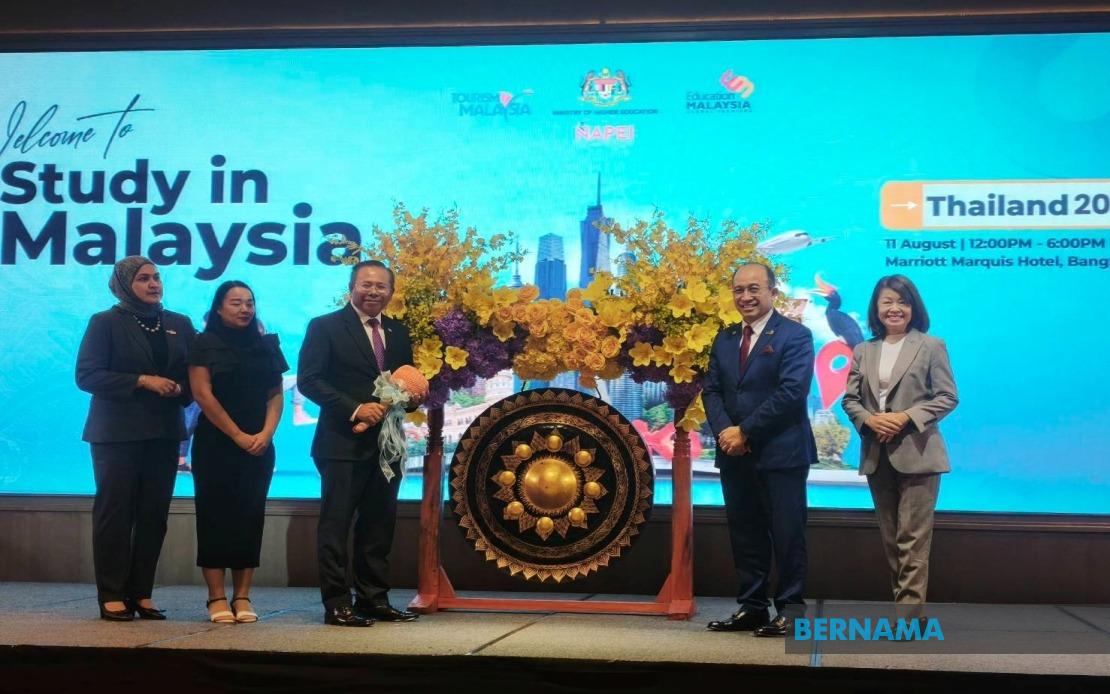
Malaysia is embarking on an ambitious campaign to dramatically expand Thai student enrolment, with Education Malaysia Global Services targeting a 20 per cent increase in cross-border higher education intake. The recruitment drive reflects growing recognition of Thailand as a strategic source market for Malaysian universities, particularly as institutions across Southeast Asia compete intensely for international student revenue and campus diversity.
At the centre of this effort is a partnership between EMGS and the Thai International Education Consultants Association, the kingdom's sole professional body representing 78 active education agents. This collaboration marks a shift towards engaging established Thai intermediaries rather than relying solely on direct institutional outreach, recognising that education agents wield considerable influence over student decision-making in Thailand's competitive tertiary market. By working through TIECA's network, EMGS aims to amplify messaging about Malaysian education across multiple channels simultaneously.
Current enrolment data underscores the magnitude of untapped potential. Education Malaysia Global Services reports that 634 Thai students were enrolled in Malaysian institutions during 2025, representing a modest upward trajectory from 360 the previous year. However, this base figure highlights significant room for expansion—neighbouring countries such as Vietnam and Indonesia send substantially larger student cohorts to Malaysia, suggesting that Thai participation remains underdeveloped relative to the nations' geographic and cultural proximity. More than 60 per cent of Thai students currently pursue undergraduate degrees, while approximately 40 per cent are engaged in postgraduate studies, indicating a preference for bachelor-level credentials among this demographic.
Malaysia's appeal to Thai students rests on three compelling foundations. Geographic proximity eliminates lengthy international flights and allows students to maintain stronger family connections, a factor particularly valued among parents concerned about their children studying abroad. Financial accessibility presents another decisive advantage—Malaysian university fees remain substantially lower than comparable institutions in Australia, the United States, or even Singapore, making advanced credentials achievable for middle-class Thai families seeking international qualifications without prohibitive expense. Educational quality, reinforced by international accreditation and employer recognition throughout Southeast Asia, provides the third pillar of attraction.
A significant but underutilised incentive involves Malaysia's Graduate Pass scheme, which permits international degree holders to remain in the country for one year following their studies to gain local employment experience in designated sectors. This pathway addresses a critical concern among prospective students: the transition from education to meaningful work experience and career advancement. For Thai graduates navigating competitive regional labour markets, a year of Malaysian workplace exposure can substantially strengthen career prospects, whether they ultimately return to Thailand or pursue opportunities elsewhere in Southeast Asia. Yet awareness of this opportunity remains limited among Thai student populations and their families.
The Education Malaysia Global Services roadshow, executed in collaboration with Tourism Malaysia and the National Association of Private Educational Institutions, deployed a multi-city strategy spanning Chiang Mai on August 9, Bangkok on August 11, and concluding in Hat Yai on August 13. This geographic sequencing ensured coverage of Thailand's major urban centres plus southern provincial regions where student populations may receive less international education marketing. Ambassador Datuk Wan Zaidi Wan Abdullah's formal launch of the Bangkok segment signalled Malaysia's diplomatic commitment to the initiative, elevating the recruitment effort beyond routine commercial activity to a matter of bilateral relations and cultural exchange.
During the campaign, Malaysia's Ambassador advanced a particularly strategic proposal: that Malaysian public and private universities establish dedicated scholarship programmes targeting Thai students. Such schemes would address perhaps the most significant barrier to expanded enrolment—the actual cost burden experienced by prospective students and their families. Scholarships functioning as demand-side subsidies could catalyse acceptance decisions among academically qualified candidates currently deterred by financial considerations. This represents institutional investment with measurable multiplier effects, as each scholarship-supported Thai student generates additional expenditure on accommodation, meals, and campus services.
The recruitment initiative must be contextualised within Malaysia's broader higher education internationalisation strategy. Malaysian universities increasingly rely on international student fees to supplement government funding and cross-subsidise domestic operations. Thai students present particularly attractive prospects because they typically arrive at Malaysian institutions with strong English proficiency, reducing remedial language instruction costs, and because cultural and religious similarities with Malaysia's Muslim-majority society facilitate smoother social integration compared with students from distant regions. Additionally, Thai graduates represent valuable long-term alumni networks within a neighbouring economy with growing bilateral business ties.
Coordination with the Thai Embassy in Malaysia signals institutional commitment to deepening education partnerships beyond transactional recruitment. Sustained diplomatic engagement fosters policy-level dialogue regarding recognition of Malaysian qualifications within Thailand's regulatory frameworks, portability of credits between institutions, and collaborative research initiatives—all factors that incrementally improve the attractiveness of Malaysian higher education. Such cooperation also addresses lingering anxieties among Thai families regarding credential recognition and employment prospects upon graduation.
The 20 per cent growth target, while ambitious, remains achievable within realistic timeframes given the current modest baseline. Increasing Thai enrolment from 360 to approximately 430 students annually would still represent a relatively small population cohort within Malaysian universities, meaning capacity constraints present minimal obstacles. The real challenge involves sustained messaging penetration and convincing Thai students that Malaysia offers competitive advantages relative to alternative destinations—particularly Thailand's own rapidly-expanding private university sector and the enduring prestige of Western degrees.
Successful execution of this strategy carries implications extending beyond simple numbers. Expanded Thai student presence enriches Malaysian campus environments through cultural and linguistic diversity, strengthens people-to-people connections between nations, and positions Malaysian universities as premier regional educational hubs. For Thai students themselves, Malaysian credentials offer internationally recognised qualifications at accessible price points, coupled with workplace experience opportunities unavailable in domestic institutions. The campaign thus represents a genuine alignment of institutional interests across both nations, creating mutual benefit that transcends conventional international competition dynamics.

