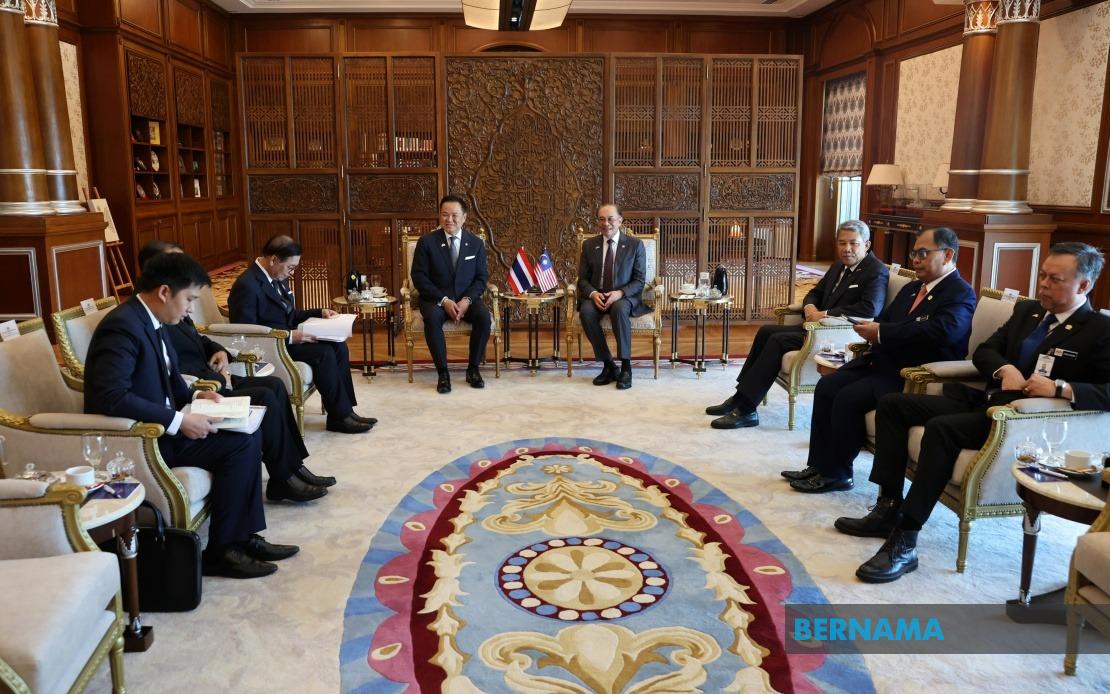
Malaysia has doubled down on its diplomatic approach to the protracted Myanmar conflict, with Prime Minister Datuk Seri Anwar Ibrahim using high-level bilateral talks to underscore the necessity of constructive engagement rather than punitive measures in addressing the crisis that has destabilised Southeast Asia since the 2021 military coup. Speaking alongside visiting Thai Prime Minister Anutin Charnvirakul at a joint press conference in Putrajaya, Anwar articulated Malaysia's conviction that Myanmar's political trajectory must ultimately be determined by its own citizens, a position that reflects Kuala Lumpur's broader advocacy for regional self-determination and non-interference within the ASEAN framework.
The Malaysian premier's remarks carry particular significance given Thailand's geographic proximity to Myanmar and its established diplomatic channels with both the junta and opposition elements within the country. By explicitly endorsing Thailand's capacity to facilitate dialogue, Anwar signalled Malaysia's recognition that Bangkok possesses unique leverage and credibility as a trusted intermediary in multilateral efforts to break the deadlock that has plagued the region. This acknowledgement reflects a pragmatic understanding that resolving the Myanmar situation will require contributions from countries with direct borders and historical ties to the country, positioning Thailand as indispensable to any meaningful breakthrough.
The Myanmar crisis has persistently challenged ASEAN's unity and credibility since the military's seizure of power more than three years ago. The bloc's endorsement of the Five-Point Consensus—a framework emphasising cessation of violence, humanitarian assistance, and dialogue—has proven difficult to implement, with the junta's resistance to external pressure and the fragmentation of opposition forces complicating mediation efforts. Malaysia's emphasis on effective engagement rather than confrontational approaches aligns with ASEAN's foundational principle of non-interference, though this stance has drawn criticism from democracy advocates who contend that dialogue without accountability merely legitimises military rule.
Anwar's comments also underscore a broader diplomatic calculation within Malaysia regarding regional architecture. By publicly endorsing Thailand's mediatory role, Malaysia reinforces ASEAN's collective responsibility for Myanmar's trajectory while delegating specific responsibilities based on geographic and relational proximity. This distribution of diplomatic labour reflects Southeast Asian states' acknowledgement that traditional multilateral forums alone have proven insufficient to catalyse change, necessitating bilateral and sub-regional initiatives that leverage individual nations' particular strengths and relationships.
The Malaysian Prime Minister further extended diplomatic courtesies regarding Thailand's separate territorial dispute with Cambodia, praising Bangkok's commitment to peacefully managing the border tensions that have periodically flared into military confrontations. Anwar's assurance that Malaysia trusts the wisdom of concerned leaders to resolve these issues reflects Kuala Lumpur's preference for behind-the-scenes facilitation over public pressure, a strategy consistent with ASEAN's consensus-seeking culture. By framing regional disputes as matters requiring patient dialogue and mutual restraint, Malaysia positions itself as a stabilising voice within the bloc.
Anutin's visit to Malaysia, his first bilateral mission since his March 2026 reappointment as Thai Premier, marks an important moment in Thailand-Malaysia relations. The two-day official engagement provides a platform for substantive discussions on shared security challenges, economic cooperation, and regional positioning at a time when geopolitical pressures are intensifying throughout Southeast Asia. The bilateral visit offers both nations an opportunity to coordinate responses to transnational threats and align their approaches to contentious regional issues, strengthening the bilateral axis that underpins broader ASEAN cohesion.
Of particular practical significance is the scheduled joint opening of cross-border infrastructure linking the Immigration, Customs, Quarantine and Security Complex in Bukit Kayu Hitam, Kedah with its counterpart in Sadao, Thailand. This symbolic and functional initiative demonstrates the complementary nature of Malaysia-Thailand cooperation on tangible matters affecting trade, tourism, and security. Enhanced border infrastructure facilitates legitimate movement of goods and people while improving authorities' capacity to interdict smuggling, human trafficking, and militant recruitment networks that exploit porous boundaries. The project exemplifies how bilateral cooperation on pragmatic issues can reinforce the diplomatic relationships necessary for addressing more complex regional challenges.
The emphasis on infrastructure and cross-border efficiency also carries implications for Myanmar. Should the crisis eventually ease and dialogue mechanisms gain traction, strengthened Malaysia-Thailand border arrangements could facilitate humanitarian assistance to Myanmar and eventually support post-conflict reconstruction efforts. Investment in these systems during times of relative stability creates mechanisms that can be repurposed when conditions permit deeper engagement with Myanmar and coordination of regional recovery initiatives.
Malaysia's diplomatic approach reflects a calculated judgment that isolation and pressure have failed to shift Myanmar's junta toward compromise. The preference for engagement, while potentially frustrating to those seeking more forceful international responses, aligns with Malaysia's historical experience and regional circumstances. As a Muslim-majority nation with substantial economic stakes in regional stability and limited capacity for coercive diplomacy, Malaysia's advocacy for dialogue reflects both ideological commitment to non-interference principles and pragmatic assessment of what diplomatic tools are available and likely to prove effective.
The conversation between Anwar and Anutin also occurs against the backdrop of broader great power competition intensifying throughout Southeast Asia. With external powers increasingly seeking to influence Myanmar's trajectory and align regional states to competing visions of order, ASEAN's ability to maintain agency and drive its own solutions has become more critical. By reinforcing bilateral partnerships and reaffirming shared commitment to dialogue-based approaches, Malaysia and Thailand signal their intent to shape regional outcomes through intra-ASEAN coordination rather than external prescription.
Looking forward, the effectiveness of Malaysia's engagement strategy will depend significantly on whether dialogue mechanisms can be sustained and whether incremental improvements in humanitarian access or prisoner releases might eventually create momentum toward broader political settlements. Thailand's willingness to leverage its bilateral relationships with Myanmar's military leadership will be essential to translating diplomatic rhetoric into concrete progress. Meanwhile, Malaysia must balance its commitment to engagement with the legitimate frustrations of nations hosting Myanmar's displaced populations and those concerned about the humanitarian toll of prolonged conflict.
The visit also reinforces that within ASEAN, burden-sharing on regional crises occurs through networks of bilateral relationships rather than exclusively through collective mechanisms. Thailand's central role reflects not just geography but also historical and cultural ties to Myanmar that Malaysia, despite its own substantial interests in regional stability, cannot replicate. Recognising these differential capacities and building diplomatic strategies accordingly represents a sophisticated understanding of how Southeast Asian multilateralism actually functions in practice, even when collective consensus proves elusive.

