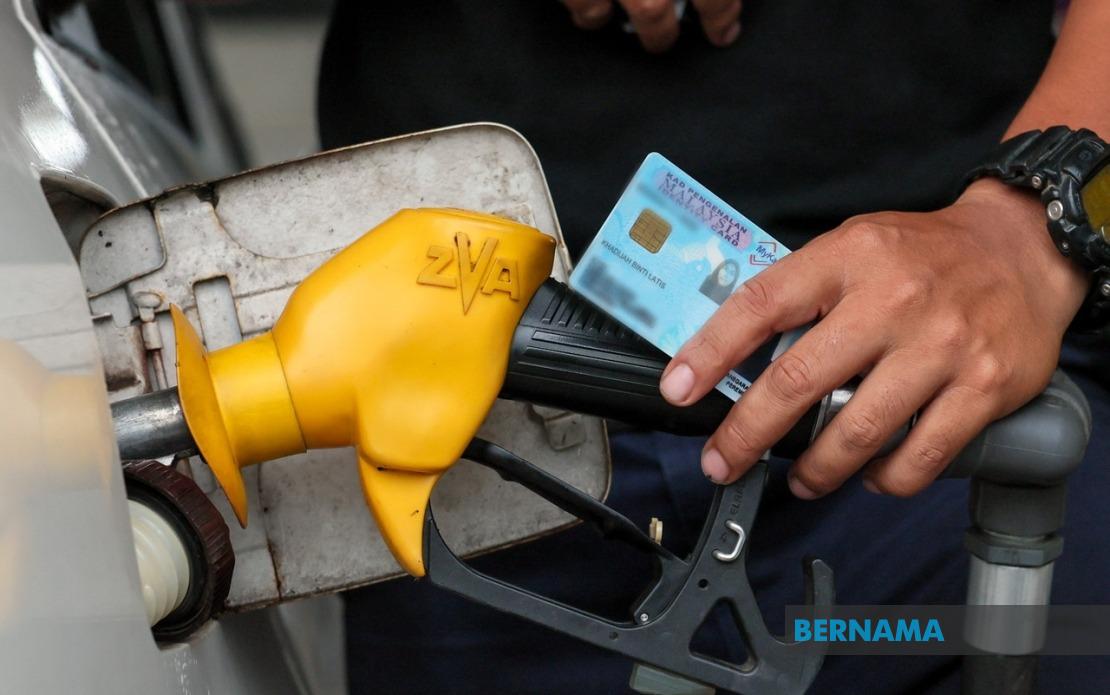
Prime Minister Datuk Seri Anwar Ibrahim announced during the 2026 National Day address in Putrajaya that the government has approved an increase in the monthly BUDI95 RON95 fuel quota back to 300 litres, up from the previous 200-litre allocation. The restoration takes immediate effect and is expected to provide tangible relief to more than 16 million Malaysians who depend on subsidised fuel for their transportation needs. Simultaneously, over half a million eligible owners of diesel-powered pickup trucks and jeeps will benefit from enhanced BUDI Diesel allocations of up to 400 litres monthly, a measure that recognises the distinct mobility requirements of commercial and semi-commercial vehicle operators across the nation.
The fuel quota adjustment carries particular significance for Malaysia's lower and middle-income households, categorised as B40 and M40 groups, where fuel expenditure represents a disproportionately large share of monthly disposable income. Unlike wealthier households that can absorb fuel price fluctuations without substantial budgetary strain, these income segments face genuine hardship when transport costs rise. In regions where public transportation infrastructure remains underdeveloped or inadequate, private vehicle ownership becomes a necessity rather than a luxury, making fuel subsidies an essential component of household financial planning.
Economics lecturer Herniza Roxanne Marcus from Universiti Teknologi MARA's Sabah campus emphasises that the additional quota flexibility addresses real-world mobility challenges across Malaysia's diverse geography. Sabah and other East Malaysian states exemplify areas where sparse public transport networks and significant travel distances between population centres necessitate reliance on personal vehicles. The expanded quota directly responds to these structural constraints, allowing families to maintain essential connections between home, workplace, and essential services without depleting subsidised fuel entitlements prematurely within each billing cycle.
The quarterly increase from 200 to 300 litres represents a fifty-percent boost to household fuel allocations, though Herniza cautions against expecting dramatic immediate impacts on overall inflation metrics. Nevertheless, the measure functions as a critical pressure valve on household budgets by preventing rapid escalation in transportation costs, which would otherwise cascade through retail supply chains and service economies. When delivery costs remain controlled through fuel subsidy stabilisation, downstream effects on grocery prices, restaurant meals, and tradesperson services diminish correspondingly, creating ripple benefits beyond the direct fuel savings.
Herniza contextualises the government's decision within broader fiscal management frameworks, noting that the quota restoration should not be interpreted as signalling a sudden improvement in Malaysia's budgetary position. Rather, the adjustment reflects governmental reassessment of subsidy levels in response to changing global energy market conditions and domestic consumption patterns. The previous reduction to 200 litres occurred during periods of acute geopolitical uncertainty and volatile international energy prices; as those pressures have moderated, policymakers have regained fiscal flexibility to rebalance subsidy allocations without compromising macroeconomic stability.
The timing and scope of quota expansion also signal governmental awareness that welfare protection and purchasing power maintenance remain essential counterweights to inflation and cost-of-living pressures. By enabling households to preserve more disposable income for food, education, and other critical expenses, the subsidy increase indirectly supports consumer spending across essential sectors. This mechanism proves especially important for vulnerable families already allocating minimum resources to discretionary purchases; preserving their purchasing capacity for basic necessities reinforces economic resilience within lower-income segments.
Real-world application of the quota increase is evident in cases such as journalist Rozainah Abdul Rahim, whose professional and personal obligations create sustained fuel demand that the previous 200-litre allocation could not reliably accommodate. Her weekly travel requirements spanning Port Dickson, Negeri Sembilan, and Kuala Lumpur, combined with daily professional assignments, regularly exhausted her monthly quota before month's end. Such scenarios are characteristic of professionals, small business operators, and mobile workers whose employment or circumstances demand frequent vehicle use beyond typical daily commuting patterns. For these groups, the expanded allocation removes the friction of premature quota depletion and associated out-of-pocket fuel expenses.
The practical relief extended by this measure reflects governmental recognition that cost-of-living challenges persist despite previous economic stabilisation efforts. Malaysians across multiple income tiers continue navigating compressed household budgets where fuel, food, education, and healthcare compete for limited monthly resources. Quota expansion, while modest in absolute percentage terms relative to total fuel consumption, delivers meaningful psychological and financial relief by reducing the frequency of budget anxiety surrounding fuel procurement and the necessity of premium-priced non-subsidised fuel purchases.
Regional perspectives matter considerably here, as East Malaysian states particularly benefit from subsidy expansions given their dependence on road transport and longer average journey distances compared to peninsula counterparts. Rural and semi-rural communities further benefit disproportionately, as their transportation alternatives remain severely constrained compared to urban areas with established public transit networks. The fifty-percent quota increase acknowledges these geographical disparities by universally expanding allocations rather than implementing regionally-differentiated schemes that could complicate administration and create equity perceptions.
Looking forward, the quota adjustment establishes a new baseline for household fuel planning and represents governmental intention to maintain subsidy support at elevated levels absent significant future market shocks or fiscal crises. The parallel increase in BUDI Diesel allocations demonstrates holistic policy consideration across vehicle categories and usage patterns, recognising that pickup trucks and jeeps serve productive and semi-commercial functions for rural entrepreneurs and tradespeople. This inclusive approach strengthens the subsidy programme's social equity dimension by extending benefits across economic strata and occupational categories.
The government's decision ultimately balances multiple imperatives: fiscal responsibility, inflation management, household welfare protection, and economic activity stimulation. Rather than representing unsustainable spending expansion, the quota restoration reflects recalibration based on improved market conditions and reassessment of subsidy sustainability. For millions of Malaysians already struggling with stagnant wages and rising basic service costs, the restored BUDI95 quota provides tangible monthly relief that, while imperfect, measurably reduces the pressure on household finances and preserves purchasing capacity for other essential expenditures.

