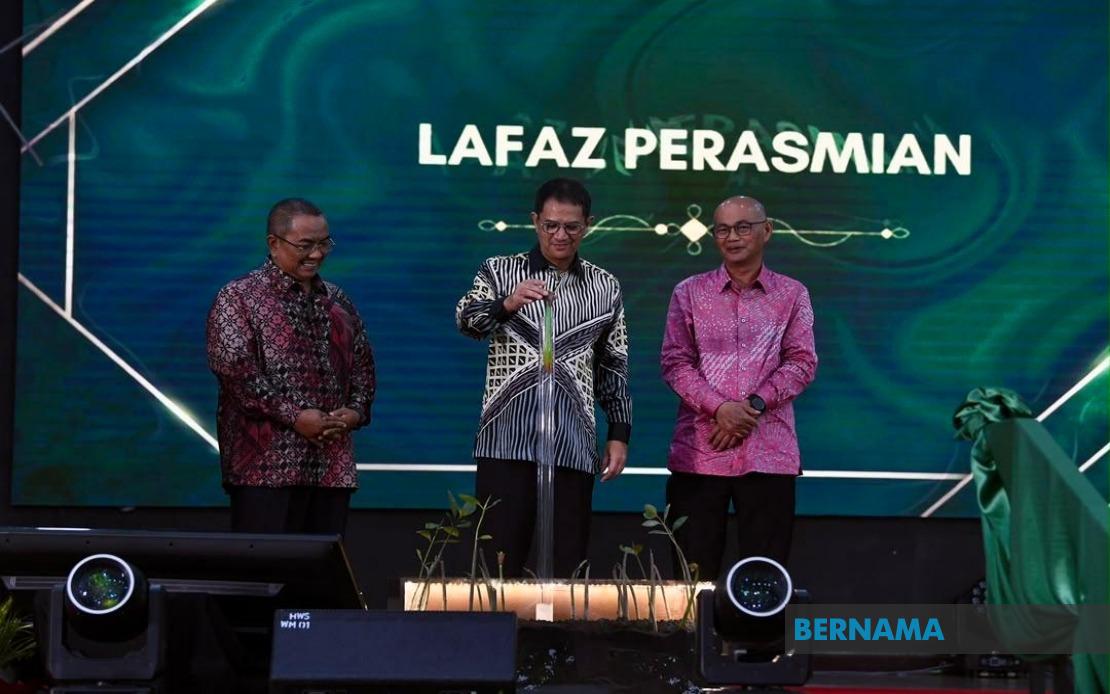
Malaysia's mangrove restoration efforts have achieved a significant milestone, with nearly 4,000 hectares of coastal forests successfully rehabilitated nationwide. The achievement, announced at the National-level International Day for the Conservation of the Mangrove Ecosystem 2026 celebration in Alor Setar, represents a substantial investment in environmental stewardship and represents a tangible outcome of the government's marine biodiversity strategy. According to Natural Resources and Environmental Sustainability (NRES) Minister Datuk Seri Arthur Joseph Kurup, the restoration initiative has involved the planting of more than 9.3 million mangrove trees and other ecologically compatible coastal species across the country.
The scale of financial commitment underscores the seriousness with which the government is approaching coastal conservation. The National Coastal Mangrove and Suitable Species Tree Planting Programme has received RM71.3 million in funding through 2025, allocated specifically for planting operations, ongoing maintenance activities, scientific research, ecosystem monitoring, and community education initiatives. This represents a deliberate, long-term approach rather than a one-off environmental gesture. Looking forward, an additional RM2 million has been earmarked under the 13th Malaysia Plan (13MP) for 2026, ensuring continuity of conservation work across Peninsular Malaysia, Sabah, and Sarawak—demonstrating that mangrove protection remains a federal priority across all regions.
The restoration programme exemplifies the evolving structure of contemporary Malaysian environmental governance, bringing together multiple state and federal agencies in coordinated action. The effort involves Forestry Peninsular Malaysia (JPSM), the Sabah Forestry Department, the Sarawak Forest Department, and the Forest Research Institute Malaysia (FRIM), creating a framework that transcends traditional administrative boundaries. This institutional integration reflects recognition that mangrove ecosystems operate as interconnected biological systems requiring coordinated management strategies rather than fragmented, region-specific interventions. The collaboration signals a shift towards more sophisticated environmental administration in Southeast Asia, where coastal protection cannot be achieved through isolated government action alone.
Community participation emerges as a critical pillar of the programme's sustainability and effectiveness. The involvement of non-governmental organisations and local communities is positioned not as supplementary but as essential to long-term conservation success. These groups contribute through environmental education initiatives, public awareness campaigns, and direct ecosystem protection activities. The event itself featured formal recognition of this contribution, with Kedah Raja Muda Tengku Sarafudin Badlishah Ibni Sultan Sallehuddin presenting certificates of appreciation to NGOs and community groups that have demonstrated commitment to mangrove conservation. This ceremonial acknowledgment reflects understanding that sustainable environmental management requires shifting responsibility beyond government structures to embed conservation practices within local social fabrics.
The thematic framing of the 2026 commemoration—"Mangrove Ecosystems Towards Blue Economy Sustainability"—reveals the economic dimensions underlying conservation efforts. Mangroves represent far more than environmental assets; they function as critical infrastructure for sustainable economic development. These ecosystems provide nursery grounds for commercially important fish species, support aquaculture industries, protect coastlines from erosion and storms, and sequester carbon at rates exceeding many terrestrial forests. By linking mangrove conservation to blue economy development, Malaysia positions environmental protection as economically rational rather than economically costly. This framing carries particular relevance for Southeast Asian policymakers navigating tensions between development imperatives and conservation objectives.
The National Mangrove and Coastal Ecosystem Seminar 2026, held alongside the celebration and jointly organised by JPSM and FRIM, provided a knowledge-sharing platform that distinguished this event from routine environmental commemorations. The seminar featured 12 research papers, 15 technical posters, and nine exhibition booths addressing mangrove management, research methodologies, and conservation practice. This structure created space for researchers, technical officers, government agencies, and diverse stakeholders to exchange evidence-based insights and share successful management strategies. Such forums prove increasingly valuable as mangrove conservation science evolves, particularly given the specific ecological challenges posed by coastal development pressures, climate change-induced sea level rise, and changing salinity patterns affecting different mangrove species across Malaysia's diverse coastal zones.
The restoration figures merit contextualisation within regional and global mangrove conservation efforts. Malaysia's commitment to rehabilitating nearly 4,000 hectares positions the country as a significant contributor to reversing decades of mangrove loss across Southeast Asia. Globally, mangrove forests have declined dramatically due to aquaculture expansion, coastal development, and agricultural conversion. Malaysia's sustained investment in restoration—coupled with regulatory frameworks protecting remaining natural mangrove forests—demonstrates commitment to reversing historical degradation. For Malaysian policymakers, this represents recognition that mangrove losses create compound environmental and economic costs through increased coastal vulnerability, reduced fish productivity, and diminished carbon sequestration capacity.
The geographical scope spanning Peninsular Malaysia, Sabah, and Sarawak reflects awareness that mangrove restoration requires location-specific approaches. Peninsular Malaysia's mangrove ecosystems, compressed between intensive agricultural zones and urbanised coastal areas, face distinct pressures from Sabah and Sarawak's relatively larger forest reserves. The inclusion of East Malaysian states signals that restoration investments extend beyond the peninsula's concentrated population centres, acknowledging that mangrove protection requires national coordination transcending political or geographic subdivisions. This integration proves particularly significant given Sabah and Sarawak's proportionally larger remaining mangrove resources and their critical role in regional ecosystem health.
The restoration programme's emphasis on suitable coastal species alongside mangrove plantings reflects ecological sophistication in restoration methodology. Pure mangrove monocultures, while simpler to establish and monitor, often lack the structural and species diversity characterising healthy natural forests. By incorporating ecologically compatible coastal species, the programme aims to restore functional ecosystems supporting diverse faunal communities rather than merely replanting mangrove trees. This approach aligns with contemporary restoration ecology principles emphasising ecosystem functionality over simple species count metrics.
Looking toward implementation challenges, the 2026 commitments and ongoing RM2 million annual allocations must navigate Indonesia's and other Southeast Asian nations' competing demands on limited environmental budgets. Mangrove restoration remains labour-intensive, requiring consistent maintenance across years before ecosystems achieve resilience. The involvement of local communities and NGOs helps distribute this burden, yet sustaining momentum requires consistent political priority and funding stability. For Malaysian readers following environmental policy, the commitment represents meaningful investment, yet success ultimately depends on execution consistency across multiple fiscal years and administrative cycles.
The event's official recognition and ministerial participation underscore mangrove conservation's integration into Malaysian environmental governance hierarchy. Rather than remaining peripheral to mainstream policy discussions, mangrove protection receives ceremonial acknowledgment and dedicated funding allocations. This elevation reflects growing recognition among Southeast Asian governments that coastal ecosystem health directly influences national prosperity, food security, and climate resilience. For regional observers, Malaysia's approach provides a model combining government capacity, institutional coordination, community engagement, and sustained financial commitment—elements increasingly recognised as prerequisite for effective environmental management in densely populated, developing economies navigating rapid coastal transformation.

