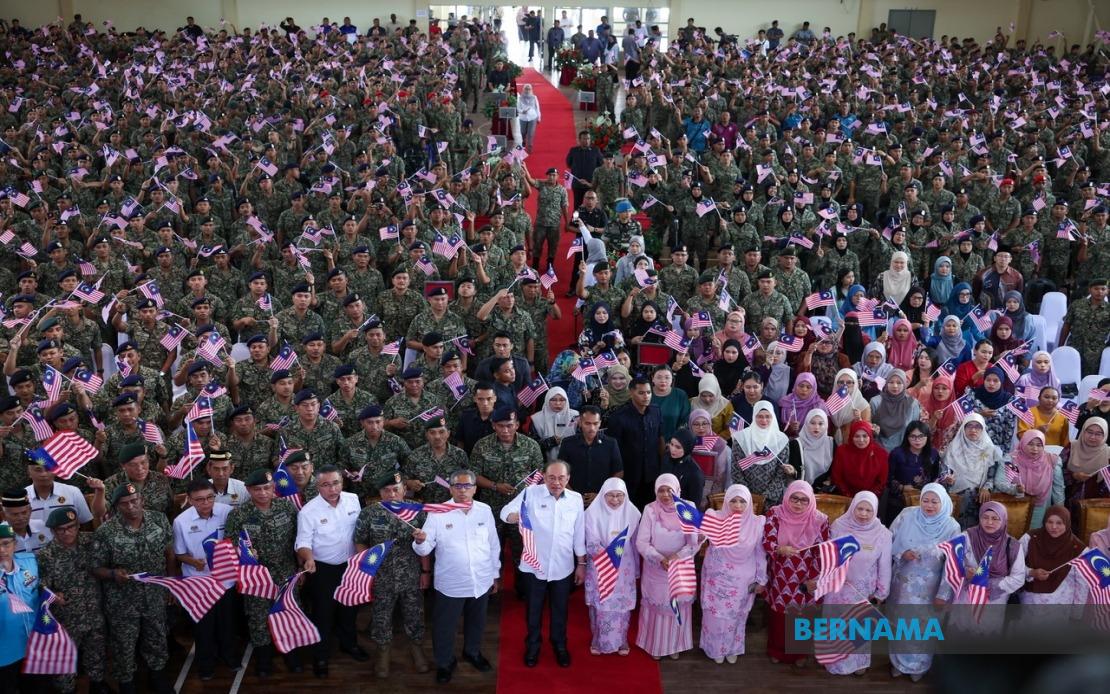
Prime Minister Datuk Seri Anwar Ibrahim has ordered a comprehensive review of how the Malaysian Armed Forces promotes its senior officers, responding to concerns that their advancement through the ranks proceeds more slowly than their counterparts in other government agencies. Speaking in Tampin on July 27, Anwar acknowledged that the current promotion framework for top military personnel requires scrutiny to prevent career stagnation and ensure equitable treatment within the civil and security services.
The government's decision to examine the promotion pathway reflects a broader effort to maintain morale and confidence within Malaysia's defence establishment at a time of regional security challenges. While the absolute number of senior officers affected by extended promotion timelines remains modest, Anwar emphasised that the principle of fair advancement carries symbolic weight for armed forces personnel who commit to national service. The review comes as the administration continues to implement structural reforms across the public sector, including the rollout of the revised Public Service Remuneration System (SSPA) which has already benefited military and civilian employees alike.
Anwar tasked Chief Secretary to the Government Tan Sri Shamsul Azri Abu Bakar with leading the assessment, asking him to evaluate whether the promotion process can be accelerated without creating unsustainable financial obligations. The government must balance its commitment to career development for military leaders against the fiscal constraints facing the national budget. Anwar indicated that any proposed changes would require careful financial modelling before implementation, suggesting that the government cannot simply fast-track promotions without understanding the cascading costs across salary grades and pension liabilities.
The initiative carries particular significance for Malaysia's defence sector, which faces persistent recruitment and retention challenges in an increasingly competitive job market. Military careers, traditionally viewed as secure and prestigious, have lost some appeal as private sector opportunities expand and overseas recruitment drives poach skilled personnel. By addressing promotion delays, the government signals its commitment to making armed forces service more attractive to officer-track candidates who might otherwise pursue civilian government roles or private employment. This is especially relevant for retaining experienced officers in middle ranks who might otherwise leave uniform before reaching senior positions.
The matter has already been discussed at policy level and will be formally decided at a meeting chaired by Anwar, indicating the prime ministerial priority attached to the issue. Present at discussions were Chief of Defence Forces General Tan Sri Malek Razak Sulaiman and Army Chief General Tan Sri Azhan Md Othman, alongside Deputy Defence Minister Adly Zahari, demonstrating alignment between civilian and military leadership on the need for reform. This high-level engagement suggests that service heads have been raising promotion delays as a retention and morale concern, and the government is treating their feedback seriously.
From a regional perspective, Malaysia's review of military promotion systems mirrors broader Southeast Asian concerns about defence force competitiveness and officer retention. Neighbouring countries including Singapore and Thailand have implemented competitive salary and advancement systems to retain quality personnel in increasingly complex security environments. Malaysia's decision reflects recognition that in an era of advancing military technology and evolving threats, career pathways must be attractive enough to retain officers with specialised expertise in cyber defence, intelligence, and modern warfare capabilities.
The timing of this initiative suggests that the government is preparing for potential changes to defence spending and military modernisation efforts. Streamlined promotion systems often accompany broader reforms to defence structures and force development strategies. By clearing bottlenecks in the officer career pipeline now, the government may be laying groundwork for larger organisational changes or enhanced recruitment drives in coming years. Such planning would be consistent with Malaysia's ongoing efforts to maintain military readiness amid regional strategic developments.
Anwar's emphasis that the armed forces should neither feel "left behind nor marginalised" within the civil service hierarchy reflects sensitivity to military institutional pride and the historically fraught relationship between political leadership and defence forces in Malaysia. By framing the promotion review as government action to elevate armed forces standing rather than merely addressing an administrative problem, the prime minister signals that military service retains valued status in his administration's vision. This messaging matters for officer morale and for maintaining the professional military tradition that has characterised Malaysia's armed forces.
The review also intersects with Malaysia's broader civil service reform agenda. The SSPA salary structure revision that included armed forces personnel represented significant government investment in public sector compensation. Aligning promotion timelines with salary improvements creates a coherent rewards package designed to improve service-wide retention and performance. Conversely, if promotions remain slow while salaries improve, officers may perceive mixed signals about their career prospects, potentially undermining the intended morale benefits of pay restructuring.
Implementation of any promotion system changes will likely require coordination with the Public Service Commission and the Defence Ministry to ensure consistency with broader civil service governance principles. Decisions made about senior military officer advancement could also influence expectations among other uniformed services including the Royal Malaysian Police and the Malaysian Maritime Enforcement Agency, suggesting that reform scope may need to extend beyond the armed forces. The government will need to balance sectoral fairness with the distinct operational and organisational characteristics of each security agency.
The government's commitment to finalising this review soon indicates that a decision is expected within weeks rather than months, suggesting that preliminary work has already identified potential options. Whether the government opts for incremental acceleration of existing promotion timelines or pursues more fundamental restructuring of the officer rank system remains to be seen, but Anwar's public commitment virtually guarantees some form of announced change. This announcement thus represents not merely a policy review, but a signal of imminent action on armed forces career development.

