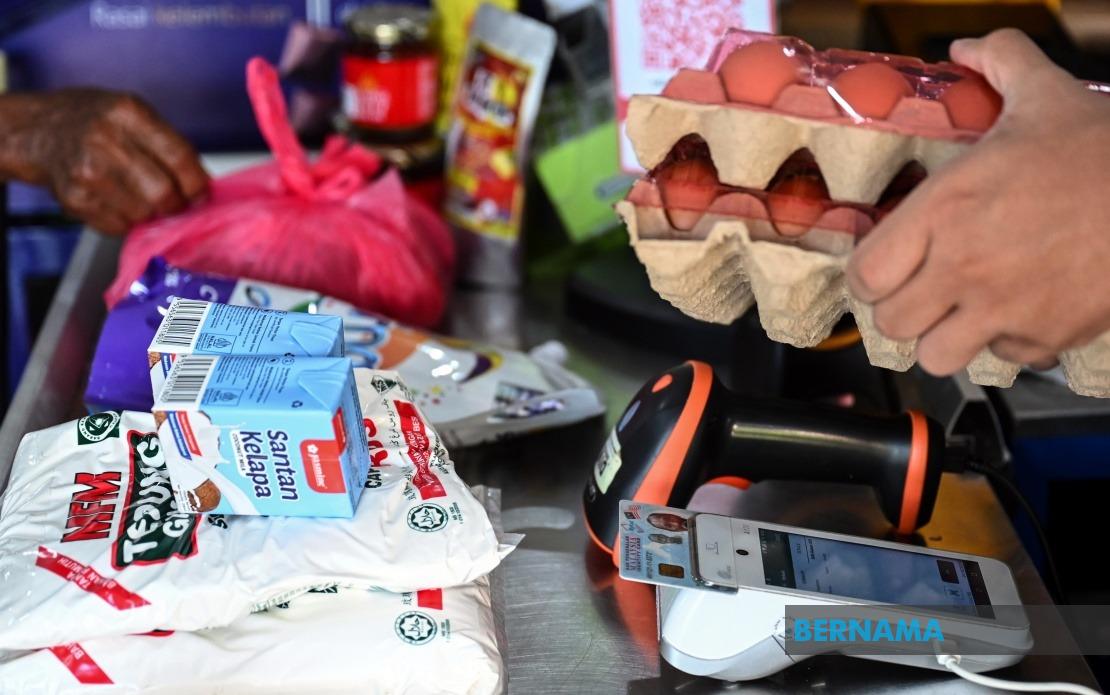
The Ministry of Finance has begun distributing Phase 3 payments of the Sumbangan Tunai Rahmah (STR) programme, with 5.3 million Malaysians set to receive staged disbursements totalling RM1.2 billion. The initiative represents a continuation of the government's expanded social safety net introduced this year, which fundamentally restructured how direct assistance reaches vulnerable segments of the population. The recipient base has grown considerably, expanding by 300,000 people since January when the programme covered five million beneficiaries, underscoring rising demand for government support amid persistent economic pressures.
The composition of recipients reflects the programme's targeted design. Approximately 3.9 million of those receiving Phase 3 payments are categorised as low- and middle-income households, while 1.4 million are single senior citizens aged above a qualifying threshold. This segmentation ensures that assistance addresses the circumstances of different demographic groups, recognising that income needs vary substantially between working-age families managing childcare costs and pensioners living on fixed incomes. The Ministry's granular approach to targeting demonstrates an evolution in how the government calibrates welfare distribution compared to previous universal cash transfer schemes.
Payment amounts under Phase 3 vary according to recipients' circumstances, with transfers ranging from RM150 to RM600 depending on household income levels and the number of dependent children. Single senior citizens receive a fixed amount of RM150, reflecting a standardised approach for this demographic. By August 2026, recipients across all categories can accumulate as much as RM3,300 by combining disbursements from Phases 1 through 3 of STR alongside monthly SARA (Semakan Amal Rakyat Aman) basic assistance payments, excluding separate one-time SARA distributions extended to all Malaysian citizens aged 18 and above. This layered structure demonstrates the government's intent to provide recurring support rather than isolated handouts.
The total disbursement commitment for the first three phases in 2026 has now reached RM3.6 billion, representing a substantial fiscal commitment to direct assistance. This figure acquires significance when contextualised against historical precedent: the combined allocation for STR and SARA throughout 2026 amounts to RM15 billion, the highest welfare spending in Federal budget history and nearly triple the Bantuan Rakyat 1Malaysia (BR1M) payments distributed in 2016. The comparison illustrates how dramatically the government has reoriented fiscal priorities toward household support, particularly given that 2026 allocations significantly exceed contemporary spending levels across previous administrations.
Prime Minister Datuk Seri Anwar Ibrahim emphasised that escalating assistance reflects ongoing economic challenges facing ordinary Malaysians. He acknowledged that despite government reform efforts and economic strengthening initiatives, cost-of-living pressures continue constraining household budgets across income levels. The Prime Minister framed the assistance expansion not as a permanent solution but as a complementary measure alongside structural economic reforms designed to raise incomes and improve living standards. This positioning suggests the government views direct transfers and economic productivity improvements as complementary rather than alternative policy responses, implying expectations that sustained welfare reliance should eventually diminish as underlying economic conditions improve.
The government has substantially expanded the household recipient base for STR, increasing from 3.7 million eligible households at the programme's outset to 3.9 million in Phase 3. This expansion suggests either that more households have become eligible due to changing circumstances or that administrative improvements and awareness campaigns have succeeded in bringing previously uncovered populations into the programme. Either interpretation indicates that household economic vulnerability has either persisted or deepened throughout the year, requiring broadened eligibility criteria to maintain equivalent coverage levels. The trend carries implications for medium-term government finances, as expanding beneficiary populations typically presage sustained spending pressures unless underlying economic conditions improve.
According to the Ministry, enhanced government financial restructuring and governance improvements have created fiscal space to channel additional state revenue toward welfare objectives. This narrative suggests that budgetary resources have been redirected from inefficiencies or lower-priority spending toward direct assistance, rather than implying net increases in government revenue. The framing reflects the government's emphasis on reallocation efficiency as a mechanism for expanding welfare capacity without proportionate revenue increases, a distinction relevant for evaluating long-term programme sustainability and fiscal constraints.
Payment mechanisms have been designed to accommodate recipients' banking access variations. Those maintaining bank accounts will receive Phase 3 transfers via automatic credit from today onwards, ensuring rapid fund availability. Conversely, recipients without formal banking relationships can collect payments in cash at any Bank Simpanan Nasional branch throughout the country, addressing financial inclusion gaps that persist among lower-income populations. This dual-channel approach acknowledges that parts of the eligible population remain unbanked or prefer cash transactions, preventing financial exclusion from disrupting assistance delivery.
The Ministry established continuous application and appeals windows throughout 2026, accessible via the official STR portal at bantuantunai.hasil.gov.my, to minimise programme leakage and capture previously ineligible applicants whose circumstances have changed. This ongoing intake process differs from traditional welfare programmes featuring fixed application windows, instead permitting year-round adjustments to beneficiary rolls. The approach theoretically improves targeting accuracy by allowing entry and exit as household circumstances evolve, though it simultaneously increases administrative complexity relative to fixed-cohort schemes.
Cyber fraud and scam risks accompanying cash transfer programmes have prompted official vigilance warnings. The Ministry cautioned recipients against counterfeit websites and fraudulent payment collection schemes, directing beneficiaries exclusively to the authorised STR portal and SARA website at sara.gov.my for verified information. This guidance acknowledges that expanding welfare payments attract opportunistic fraud targeting vulnerable populations unfamiliar with legitimate digital interfaces, a persistent challenge facing Malaysian social programmes. Public wariness represents an necessary but unquantifiable overhead cost of large-scale cash transfer administration.

