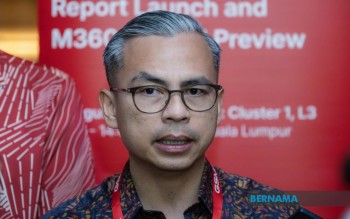
Malaysia has been selected to host M360 ASEAN 2026, marking a significant moment for the country's technology ambitions as Kuala Lumpur prepares to welcome the inaugural edition of this major regional telecommunications and digital innovation summit on September 9 and 10. Communications Minister Datuk Seri Fahmi Fadzil has underscored the strategic importance of this honour, highlighting how the event is expected to consolidate Malaysia's standing in telecommunications, artificial intelligence, and digital connectivity throughout Southeast Asia. The selection represents the first instance of M360 ASEAN being held anywhere in the ASEAN region, lending added prestige to Malaysia's role as a convener of regional technology dialogue.
Organised by the GSM Association, the summit will assemble a diverse array of participants from across the ASEAN bloc, including established telecommunications operators, technology vendors, industry experts, institutional investors, academic institutions, and government officials from member states. This convergence of stakeholders creates an opportunity for Malaysia to position itself at the forefront of regional discussions shaping the digital economy's future direction. Beyond mere convening power, the gathering provides a platform through which ASEAN nations can collectively deliberate on strategic approaches to digital expansion, with particular emphasis on broadening connectivity infrastructure and establishing governance frameworks for the responsible deployment of artificial intelligence technologies.
The economic significance of mobile technologies and services in the Asia-Pacific region cannot be overstated. According to projections included in GSMA research presented at the announcement, mobile-related technologies and services are anticipated to generate US$1.4 trillion in economic value across Asia-Pacific by 2030, representing a substantial 40 per cent increase from the current contribution of approximately US$1 trillion. This trajectory underscores the sector's critical importance to regional prosperity and employment generation, making strategic coordination among governments and industry players essential for maximising benefits while mitigating risks.
However, the economic opportunity exists alongside significant challenges that will require coordinated regional responses. GSMA's analysis identifies four converging priorities that will fundamentally shape how Southeast Asia navigates its next phase of digital development. The first priority concerns the accelerating integration of artificial intelligence across telecommunications and digital services—a transformation that promises efficiency gains but also raises questions about workforce displacement, algorithmic bias, and regulatory oversight. Malaysia's hosting of this summit provides an ideal forum for establishing regional consensus on AI governance principles that balance innovation incentives with accountability mechanisms.
The second priority identified by GSMA research reflects growing concerns about digital trust throughout the Asia-Pacific region. As digital services become increasingly embedded in financial systems, healthcare delivery, government administration, and personal communication, the security and reliability of digital infrastructure assume paramount importance. Breaches, cyberattacks, and data mismanagement incidents have eroded consumer confidence in some markets, creating pressure on operators and technology providers to demonstrate substantially improved protective measures and transparency practices.
The third priority addresses the resilience of digital infrastructure itself. The COVID-19 pandemic exposed vulnerabilities in regional connectivity systems, while climate-related disasters and geopolitical tensions have heightened awareness of infrastructure fragility. ASEAN nations require more robust, redundant networks capable of maintaining service continuity during emergencies while supporting exponential growth in data consumption. Malaysia's own experiences with infrastructure challenges position it well to contribute meaningful perspectives to regional discussions about building more resilient systems.
Digital sovereignty emerges as the fourth critical priority, reflecting widespread apprehension about dependency on foreign technology platforms, cloud services, and digital infrastructure providers. Governments across Southeast Asia increasingly seek to develop domestic capabilities for controlling data flows, establishing local computing resources, and maintaining strategic autonomy in technology governance. This concern intersects with broader geopolitical considerations around technological self-sufficiency and protection of national interests in an increasingly digital economy.
For Malaysia specifically, hosting M360 ASEAN 2026 represents an opportunity to advance its aspirations as a regional technology leader and Southeast Asian innovation hub. The summit provides visibility for Malaysian telecommunications operators, technology companies, and startups seeking to expand influence across ASEAN markets. Government representatives can showcase Malaysia's digital infrastructure investments and regulatory frameworks while establishing partnerships with counterparts from neighbouring nations. Furthermore, the event positions Malaysia as a thoughtful participant in shaping regional technology governance standards rather than merely adopting frameworks developed elsewhere.
The timing of the summit also carries strategic significance for Southeast Asia's digital trajectory. As ASEAN nations contend with rapid technological change, intensifying cybersecurity threats, and pressure to harness digital transformation for economic growth, coordinated regional dialogue becomes increasingly valuable. Rather than pursuing isolated national strategies, ASEAN members can benefit substantially from establishing shared principles, coordinating infrastructure investments, and harmonising regulatory approaches where appropriate. M360 ASEAN 2026 provides the institutional setting within which such collaboration can be negotiated and formalised.
Minister Fahmi's emphasis on the platform's utility for discussing digital sector direction reflects understanding that technology policy decisions made in the coming years will reverberate across the region for decades. The decisions nations make regarding AI regulation, data protection frameworks, infrastructure investment priorities, and digital sovereignty measures will collectively determine whether Southeast Asia captures the anticipated US$1.4 trillion in economic value or whether poorly coordinated approaches allow that value to concentrate elsewhere.
As Malaysia prepares to host this inaugural ASEAN summit, the country must ensure that discussions translate into concrete regional commitments and collaborative mechanisms. The event should generate not merely aspirational statements but actionable frameworks through which ASEAN members can coordinate on priority areas. For Malaysian readers and businesses, the summit represents both an opportunity to influence regional technology standards and a potential catalyst for domestic sector growth as international participants and investment flow into the host nation.

