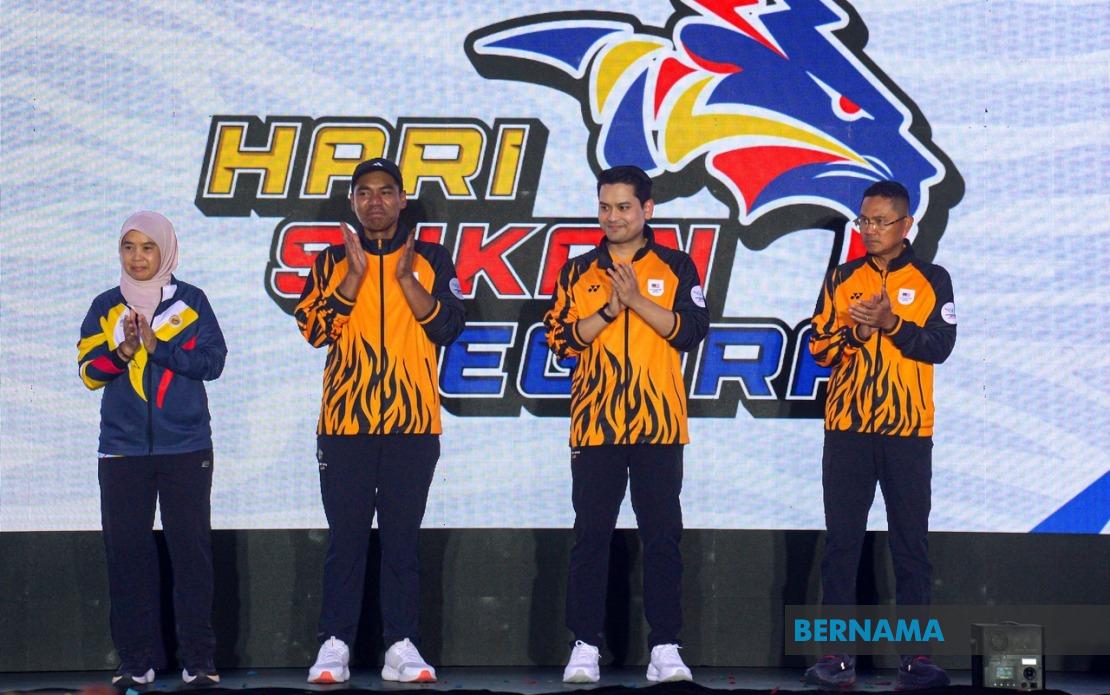
Malaysia is gearing up for an ambitious National Sports Day celebration in October 2026, with organisers targeting participation from over 5.3 million Malaysians across a spectrum of sporting and recreational programmes. The event, scheduled for October 9 to 11 at venues spanning district, state, and national levels, represents a significant push by the government to deepen public engagement with physical activity while modernising the sports landscape.
Youth and Sports Minister Dr Mohammed Taufiq Johari unveiled the HSN 2026 vision during a pre-launch ceremony at Menara KBS in Putrajaya, emphasising that this year's celebration marks a departure from previous iterations. The central theme—"Digital Technology and Artificial Intelligence"—signals the ministry's determination to position Malaysia's sports sector at the forefront of technological innovation. Rather than treating AI and digitalisation as peripheral concerns, the government intends to weave these elements into the very fabric of how Malaysians experience and participate in sports, acknowledging that technological fluency has become inseparable from contemporary athletic engagement.
The pre-launch event itself embodied this philosophy through extensive use of virtual reality technology, a deliberate choice to demonstrate the ministry's commitment to embedding digitalisation throughout the sports ecosystem. This approach extends beyond mere spectacle; it represents a conscious effort to normalise technological integration within sports culture and signal to the population that modern athletic participation increasingly intersects with digital tools and platforms. By showcasing VR at the pre-launch, organisers hope to capture public imagination and establish momentum heading toward the October launch.
A particularly nuanced aspect of the ministry's strategy concerns e-sports, a sector often positioned in tension with traditional conceptions of physical wellness. Dr Mohammed Taufiq articulated a distinctive vision wherein e-sports, despite its digital nature, becomes a gateway to broader health consciousness. The government recognises that video gaming communities represent an enormous demographic that has historically remained peripheral to conventional sports participation. By demonstrating how digital gaming platforms can complement rather than compete with physical activity, the ministry aims to convert a traditionally sedentary audience into active participants in Malaysia's wider sports culture.
The national-level launch, scheduled for October 10 at the National Stadium in Bukit Jalil, will be officiated by Prime Minister Datuk Seri Anwar Ibrahim, underscoring the government's elevation of sports as a strategic national priority. This ceremonial prominence reflects broader policy recognition that sporting participation yields dividends across multiple sectors—from public health outcomes and social cohesion to economic development and international standing. The choice of venue at Malaysia's premier sports facility carries symbolic weight, positioning HSN 2026 as a cornerstone event within the national calendar.
Beyond the immediate celebration itself, HSN 2026 functions as a critical stepping stone toward Malaysia's hosting of the 2027 SEA Games. The ministry has explicitly designed the event to cultivate enthusiasm and public support during the preparatory phase, recognising that successful Games require sustained momentum extending far beyond opening ceremonies. Collaboration between HSN organisers and the Malaysia SEA Games Organising Committee (MASOC) will see the launch of a SEA Games Roadshow, a touring initiative designed to build grassroots awareness and investment in the upcoming regional competition. This strategic linkage transforms HSN from a standalone celebration into a component of a broader narrative arc culminating in the 2027 Games.
The programming structure reflects sophisticated understanding of diverse participant demographics and motivations. The MADANI Fun Run and MADANI Fun Walk segments target individuals at varying fitness levels, eliminating barriers that might discourage participation from those intimidated by competitive athletics. The Active Malaysia segment emphasises accessibility and inclusivity, while the Sports Industry component recognises that economic stakeholders from commercial enterprises to grassroots coaches constitute essential constituencies. Integration of Rakan Muda Lifestyle elements signals particular attention to youth engagement, a demographic cohort whose sporting habits established during this period may yield lifelong dividends.
For Malaysian readers and regional observers, HSN 2026 represents more than a one-off celebration; it signals the government's intention to position the nation as a sports-forward economy embracing technological innovation. In a regional context where countries compete for soft power and international prestige, Malaysia's determination to showcase digital integration within sports carries implications for tourism, technology exports, and cultural positioning. The event demonstrates how Southeast Asian governments are adapting traditional national celebrations to reflect contemporary technological realities and aspirations.
The participation target of 5.3 million—representing roughly one-sixth of Malaysia's total population—establishes an ambitious but achievable benchmark. Reaching this figure would necessitate mobilisation at the grassroots level, requiring coordination among state and district administrators, community leaders, employers, and schools. Success would indicate genuine public buy-in rather than token participation, suggesting that Malaysians increasingly view sports engagement as compatible with modern, technology-enabled lifestyles rather than as antiquated or disconnected from contemporary concerns.
Looking ahead to October 2026, the event's true significance may ultimately rest less on headline participation numbers and more on whether it succeeds in shifting cultural narratives around sports participation. If HSN 2026 demonstrates that digital natives and competitive athletes, casual exercisers and elite performers, can converge within a unified celebration, the ministry will have achieved something more durable than temporary enthusiasm. Such a realignment would establish foundations for sustained sports engagement across demographics and socioeconomic strata, positioning Malaysia advantageously as it prepares to demonstrate its sporting credentials on the regional stage in 2027.

