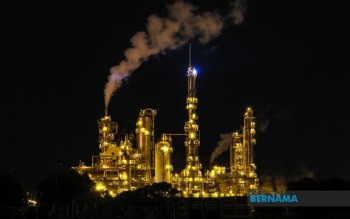
Prime Minister Datuk Seri Anwar Ibrahim has signalled the government's intention to investigate options for establishing a national petroleum reserve stock as a safeguard against mounting geopolitical instability. This initiative reflects growing concerns about regional energy security and Malaysia's vulnerability to supply disruptions. However, according to Mohd Sedek Jantan, director of investment strategy and country economist at IPPFA Sdn Bhd, policymakers must exercise caution in designing such a scheme to avoid fiscal overcommitment that could undermine Malaysia's ability to fund other critical areas of public welfare.
The fundamental challenge Malaysia faces differs substantially from that confronting wealthier industrialised nations with deeper sovereign coffers. Mohd Sedek argues that direct emulation of the strategic petroleum reserve models operated by the United States and Japan would be inappropriate given Malaysia's distinct fiscal constraints and energy risk profile. Rather than pursuing the largest possible stockpile, he contends that Malaysian policymakers should focus on calibrating reserve capacity to match both the country's financial means and its specific vulnerability to supply shocks. This distinction carries significant implications for how the government structures its energy security strategy moving forward.
The economist emphasised that any commitment to establish petroleum reserves must withstand rigorous economic scrutiny before implementation. Public funds remain finite, and competing demands for healthcare, education, and food security all merit serious consideration in budgetary allocation decisions. This reality shapes the parameters within which an energy reserve programme can operate sustainably. Rather than viewing reserve establishment as an isolated infrastructure project, Mohd Sedek advocates integrating such an initiative into a comprehensive assessment of Malaysia's broader economic security needs and resource constraints.
Interestingly, Mohd Sedek does not dismiss the concept of petroleum reserves outright. Instead, he reframes the debate by highlighting the significant economic risks associated with remaining unprepared during a major supply disruption. The costs of such a crisis—encompassing everything from energy price shocks to production disruptions across manufacturing and transportation sectors—could potentially exceed the initial investment required to establish an appropriately sized reserve. This cost-benefit framework suggests that strategic planning around energy resilience deserves serious policy attention, provided it is pursued judiciously.
His recommended approach emphasises a phased implementation pathway that prioritises upfront analytical work over immediate physical infrastructure development. The government should commission a comprehensive risk assessment designed to identify the optimal reserve volume for Malaysia's circumstances, evaluate different financing mechanisms, and establish clear operational frameworks before committing to capital expenditure on storage facilities. This sequence allows policymakers to build a robust economic case grounded in empirical analysis rather than proceeding from assumptions about what other countries have deemed necessary.
The economist also underscores the importance of incorporating private sector collaboration into reserve planning. Public-private partnerships could enhance the commercial viability of reserve operations, introduce efficiency improvements, and distribute financial risk across multiple stakeholders. Rather than treating a petroleum reserve as purely a government asset, structuring arrangements that allow private entities to participate in ownership or management could improve long-term fiscal sustainability and ensure the reserve operates according to sound commercial principles.
Scalability represents another critical dimension that Mohd Sedek identifies as essential for any successful reserve programme. Rather than constructing fixed-capacity storage infrastructure that becomes either inadequate or redundant as circumstances change, the government should design systems capable of expansion or contraction in response to shifting energy markets and geopolitical conditions. This flexibility would allow Malaysia to adjust its reserve position over time as fiscal capacity improves or as international energy dynamics evolve.
The timing of Mohd Sedek's commentary reflects a broader regional conversation about energy security amid heightened tensions in the Middle East and uncertainties surrounding maritime trade routes through the Strait of Malacca. Southeast Asian nations increasingly recognise that energy supply stability cannot be taken for granted, particularly given the region's dependence on petroleum imports and its exposure to potential disruptions along vital shipping corridors. For Malaysia specifically, which possesses domestic oil and gas production capacity but nonetheless imports petroleum products, the reserve question takes on particular relevance.
The economist's emphasis on conducting detailed economic analysis before implementation represents a counterweight to more ambitious proposals that might prioritise immediate action. In the Malaysian context, where fiscal pressures already constrain government spending on infrastructure, healthcare, and education, such prudence carries weight. A petroleum reserve programme that absorbs resources disproportionately to the security benefits it provides could ultimately undermine rather than enhance national resilience by crowding out investments in other areas of vulnerability.
Looking forward, Mohd Sedek suggests that Malaysia's policymakers should resist the temptation to adopt reserve policies simply because other nations have done so. Instead, the government should establish what he terms the "smartest and most cost-effective" reserve strategy tailored to Malaysian circumstances. This approach requires patience for the analytical phase and discipline in ensuring that only after a convincing economic case has been developed should the government progress toward physical implementation of reserve infrastructure. In this framework, the initial study phase becomes not a preliminary formality but a crucial determinant of whether and how Malaysia's petroleum reserve initiative ultimately succeeds.

