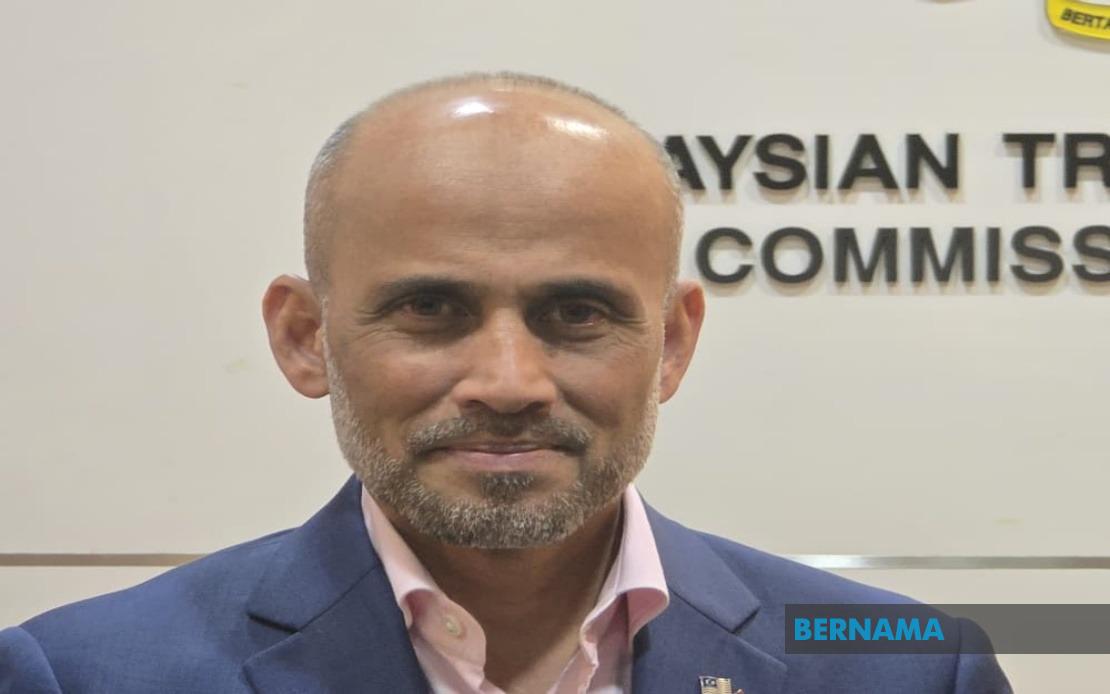
As Malaysia's High Commissioner to Singapore prepares to hand over his post after five years of service, Datuk Dr Azfar Mohamad Mustafar has painted a picture of a relationship that has matured and deepened despite unprecedented external pressures. Speaking ahead of his transition to Malaysia's diplomatic mission in London, Azfar reflected on how the two neighbouring nations have consistently found common ground and collaborative solutions during a period marked by the global pandemic and mounting geopolitical tensions that have tested bilateral partnerships across the world.
Azfar, who assumed his position in June 2021 just as the COVID-19 crisis was reshaping international relations, identified crisis management as a defining feature of his tenure. When he took office, the pandemic was still at its height, forcing both governments to implement stringent border controls that fundamentally disrupted the movement of the estimated hundreds of thousands of Malaysians who cross into Singapore daily for employment, business meetings, and trade activities. The closure of land borders created immediate administrative and consular complications that required swift diplomatic coordination to resolve. Rather than allowing practical difficulties to fester and create bilateral friction, the two governments worked in tandem to address bottlenecks and ensure that essential movement and commerce could continue under carefully managed conditions.
The pandemic period tested not merely the efficiency of diplomatic channels but the underlying commitment of both nations to prioritising pragmatic problem-solving over bureaucratic rigidity. During the lockdown phases, consular services that typically handle documentation, visa extensions, and emergency assistance faced unprecedented demand from Malaysians stranded in Singapore or unable to cross borders for legitimate work and family reasons. Azfar's emphasis on swift resolution of these issues underscores how bilateral goodwill can buffer against the friction that crisis situations often generate between neighbouring countries. The experience demonstrated that Malaysia and Singapore possessed sufficient institutional maturity and personal relationships at diplomatic levels to navigate genuine hardship without allowing temporary disruptions to erode long-term cooperation.
On the economic front, Azfar's assessment reveals a resilience that should reassure both business communities and policymakers in Kuala Lumpur. Trade and investment flows, which had contracted sharply in 2020 and early 2021, have rebounded substantially to reach pre-pandemic levels. This recovery is particularly significant because it suggests that the underlying commercial interdependence between the two economies remains robust and that business confidence has been restored. Singapore's continued position among Malaysia's largest trading partners reflects both the city-state's importance as a regional commercial hub and Malaysia's role as a significant source of raw materials, intermediate goods, and labour-intensive services that Singapore's economy depends upon.
What merits deeper attention is Singapore's evolving role as a source of foreign direct investment into Malaysia. Azfar specifically highlighted the anticipated acceleration of Singapore investment into Johor, particularly in connection with the Johor-Singapore Special Economic Zone (SEZ). This infrastructure project represents a deliberate attempt to formalise and expand cross-border economic integration by creating a designated zone where companies can operate under harmonised regulatory frameworks and reduced transaction costs. The SEZ concept acknowledges that proximity itself is an underutilised asset and that both nations stand to benefit substantially from policies that facilitate rather than obstruct the natural flow of capital, goods, and services across the shared border. For Malaysian policymakers, Singapore's investment appetite signals external validation of Johor's economic potential and may encourage additional intra-regional and international investors to commit resources to northern Malaysia.
Looking beyond bilateral commercial ties, Azfar reaffirmed Malaysia's commitment to supporting Singapore's assumption of the ASEAN chairmanship in 2025. This diplomatic backing carries substantive implications because the incoming chair sets the regional agenda and shapes how the ten-member bloc approaches major policy questions. Singapore has signalled its intention to prioritise economic integration, an objective that aligns closely with Malaysia's own strategic interests in expanding intra-ASEAN trade and investment. By pledging continued cooperation on this front, Malaysia is positioning itself as a constructive partner in Singapore's leadership term rather than adopting a reactive stance. This proactive diplomacy serves Malaysian interests by ensuring that regional integration initiatives reflect concerns of medium-sized economies like Malaysia, not merely the preferences of the largest players.
Among the specific collaborative initiatives gaining traction is the ASEAN Power Grid project, which Azfar identified as a priority area for joint work. This infrastructure endeavour represents a significant departure from traditional bilateral engagement because it entails coordinating power generation, transmission, and distribution across multiple national jurisdictions and regulatory systems. The grid's success will require harmonised technical standards, coordinated investment in cross-border transmission capacity, and agreed protocols for managing supply and demand across borders. For Malaysia and Singapore, leadership on this project offers an opportunity to demonstrate technical capability and diplomatic consensus-building that could influence how the broader ASEAN community approaches other transnational infrastructure challenges, whether in transportation, digital connectivity, or environmental management.
Azfar's career trajectory, which includes service as Ambassador to France from 2018 to 2021 before his Singapore posting, reflects the Malaysian Foreign Ministry's commitment to rotating experienced diplomats through strategically important missions. His appointment to the United Kingdom, effective July 1, represents recognition of his capability to manage complex relationships with major global powers. However, his emphasis on the accomplishments achieved during his Singapore tenure suggests he views this posting as among the most consequential of his career. This assessment likely reflects recognition that Malaysia-Singapore ties, despite their occasional friction over water agreements, maritime boundaries, and environmental issues, remain foundational to Malaysia's regional standing and economic prosperity in Southeast Asia.
The diplomatic outreach reflected in Azfar's reflections also carries implicit messages about Malaysia's broader regional strategy during a period of geopolitical realignment. By reaffirming commitment to ASEAN-led cooperation, supporting Singapore's leadership, and emphasising economic integration, Malaysia is positioning itself within the institutional frameworks that have historically provided Southeast Asian nations with collective weight in managing great power competition. This stance suggests Malaysian policymakers view ASEAN cohesion and Singapore's role within it as more strategically valuable than pursuing bilateral advantages at the expense of regional institutional health. Such thinking reflects lessons learned from earlier periods when bilateral disputes threatened to undermine ASEAN credibility on the world stage.
Looking ahead, the relationship between Malaysia and Singapore will likely be shaped by implementation challenges surrounding the SEZ, the success of Singapore's ASEAN chairmanship, and how effectively both nations manage traditional friction points. The outgoing High Commissioner's optimistic assessment provides a baseline against which future developments can be measured, but it also suggests that the diplomatic foundations laid during his tenure offer a solid platform for his successor to build upon. The transition to a new High Commissioner will test the durability of these relationships and the extent to which institutional mechanisms for bilateral cooperation can function effectively when individual personalities change.

