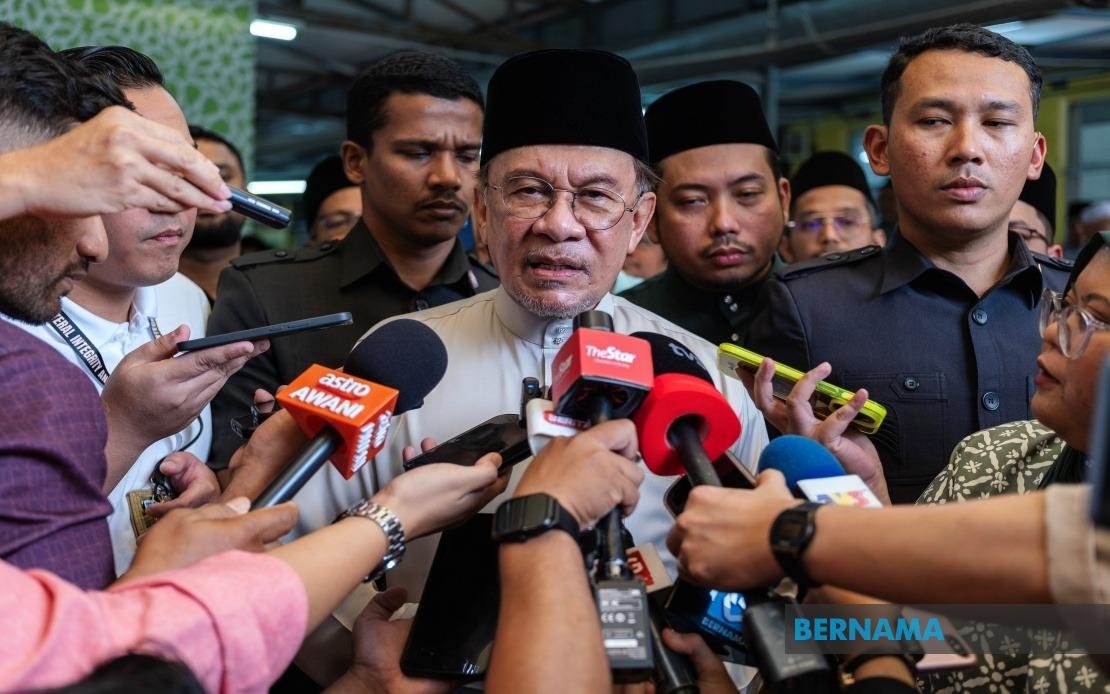
Prime Minister Datuk Seri Anwar Ibrahim has made clear that Malaysia will not alter its approach towards fugitive businessman Low Taek Jho, popularly known as Jho Low, regardless of any clemency decisions that the United States may contemplate. His remarks come at a moment of heightened international attention, with various media outlets suggesting that Jho Low could be among some 250 individuals under consideration for a potential presidential pardon by US President Donald Trump, timed to coincide with America's Fourth of July independence celebrations.
Anwar delivered his statement to journalists after attending Friday prayers at Masjid As-Sodiqin in Taman Kobena on July 3. His message was unequivocal: Malaysia's commitment to upholding the rule of law supersedes any external pressure or developments emanating from Washington. The Prime Minister's comments underscore the government's resolve to pursue its own judicial agenda independent of American foreign policy choices, a position that carries significant weight given Malaysia's historical involvement in complex financial investigations touching on Jho Low's alleged misappropriation of state funds.
The timing of Anwar's declaration proves particularly significant. Speculation about potential Trump pardons has gained momentum as the US approaches its bicentennial Fourth of July celebration, a traditional occasion when American presidents extend clemency to select individuals. Industry observers and international media have floated Jho Low's name among prospective beneficiaries, prompting Malaysian authorities to preemptively address the issue. By publicly reaffirming the nation's stance, Anwar has signalled to both domestic audiences and the international community that Malaysia will not accept external interference in its prosecution of major financial crimes.
Jho Low remains a pivotal figure in Malaysia's most significant corruption scandal in recent memory. The businessman faces allegations relating to the massive 1Malaysia Development Berhad (1MDB) affair, which implicated billions of ringgit in misappropriated funds. Despite his fugitive status, he continues to loom large over Malaysian political and financial discourse, with successive governments prioritizing his apprehension as a measure of their commitment to accountability and transparency. Any US pardon would fundamentally alter the landscape of enforcement and could potentially frustrate Malaysia's legal proceedings against him.
Anwar's specific language during the briefing warrants careful examination. He explicitly stated that Malaysia would "not be influenced, disturbed or affected by any US decision," language that suggests a deliberate effort to distance Malaysia from American judicial processes. This formulation reflects a broader principle in Malaysian foreign policy: while respecting international relationships, the nation asserts its sovereign right to prosecute crimes within its jurisdiction according to its own legal frameworks. The Prime Minister's confidence in this position suggests substantial internal consensus among Malaysia's leadership regarding the importance of maintaining pressure on Jho Low.
The implications for bilateral US-Malaysia relations remain nuanced. Malaysia and the United States maintain extensive defence, trade, and intelligence partnerships that could theoretically be affected by disagreements over individual cases. However, Anwar's diplomatic phrasing acknowledges US sovereignty while simultaneously rejecting any suggestion that American decisions should influence Malaysian enforcement priorities. This balance reflects the maturity of the bilateral relationship, which has weathered previous disagreements without fundamental rupture.
From a broader Southeast Asian perspective, Malaysia's stance carries weight beyond bilateral concerns. The region has become increasingly conscious of money laundering, transnational financial crime, and the movement of illicit capital across borders. Jho Low's case epitomizes these challenges, demonstrating how sophisticated networks can facilitate the movement of allegedly stolen funds across multiple jurisdictions. Malaysia's determination to pursue the case independently sends a message to neighbouring nations about commitment to financial integrity and the rule of law, even when facing pressure from major powers.
In related developments during the same briefing, Anwar acknowledged a proposed contribution of RM1 million from the United States directed towards restoration of Tugu Negara, Malaysia's National Monument, in celebration of next year's National Day. The Prime Minister indicated this initiative would receive discussion at the forthcoming Cabinet meeting. This announcement, though seemingly disconnected from the Jho Low question, underscores the compartmentalization of Malaysia's relationship with the US: the nations can collaborate on cultural and developmental initiatives while maintaining distinct positions on justice and accountability issues.
The proposed monument restoration reflects America's broader engagement strategy within Southeast Asia, where cultural and heritage initiatives complement security and economic partnerships. Malaysia's willingness to accept such contributions demonstrates openness to American cooperation in appropriate spheres, while simultaneously rejecting any quid pro quo expectations regarding sensitive legal matters. This distinction proves crucial for understanding how modern bilateral relationships navigate between cooperation and independence.
Looking forward, the situation surrounding Jho Low will likely continue to test Malaysian resolve. Should the Trump administration proceed with any pardon or clemency related to Jho Low, Malaysia may face difficult choices regarding enforcement of Interpol red notices and cooperation with US authorities on financial investigations. However, Anwar's clear public positioning suggests the government has already contemplated such scenarios and determined its priorities. The message delivered at the mosque appears designed to preempt any suggestion that Malaysia would accept external interference in domestic judicial processes.
The broader question of accountability in the 1MDB scandal remains central to Malaysia's political narrative. Despite the passage of years and changes in government, successive administrations have maintained focus on recovering allegedly misappropriated funds and pursuing those responsible. Jho Low's continued fugitive status represents an unfinished chapter in this saga. Anwar's reinforcement of Malaysia's position suggests the current government views resolution of the Jho Low case as integral to its credibility on governance and anti-corruption issues, domestically and regionally.

