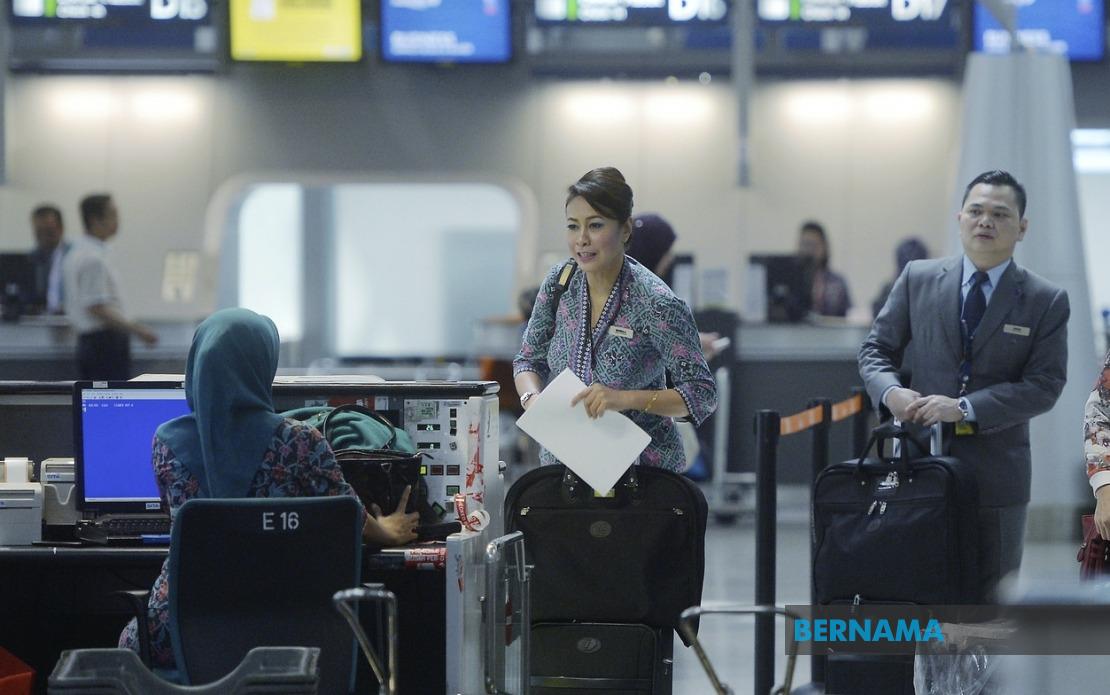
Malaysia's aviation security framework faces urgent review following the arrest of a Malaysian pilot in Indonesia on drug smuggling allegations, prompting authorities to implement enhanced screening procedures for all pilots and crew members at domestic airports. The announcement came from Malaysian Border Control and Protection Agency (AKPS) director-general Datuk Seri Mohd Shuhaily Mohd Zain during a coordination meeting at Kuala Lumpur International Airport, signalling the government's commitment to closing potential security gaps that may have enabled the incident.
The incident that triggered this security overhaul involved a 39-year-old pilot apprehended on July 29 at Jakarta's Soekarno-Hatta International Airport shortly after landing from a Kuala Lumpur service. Indonesian customs officials alleged that approximately 25 kilogrammes of ecstasy valued at around Rp60 billion was concealed in the pilot's luggage, representing a significant narcotics interdiction at a major regional hub. The arrest underscores the vulnerability of aviation personnel to involvement in international drug trafficking networks, a persistent challenge across Southeast Asia's aviation sector.
A high-level coordination effort involving the Transport Ministry, Royal Malaysia Police, and Malaysia Aviation Group convened to address systemic deficiencies in current screening protocols. Transport Ministry secretary-general Datuk Seri Jana Santhiran Muniayan chaired the meeting, reflecting the seriousness with which government agencies are treating the breach. Malaysia Aviation Group's participation indicates that domestic carriers recognise the reputational and operational implications of allowing crew members to become vectors for illicit substances through international routes.
The most troubling aspect of the smuggling attempt was that the suspect successfully cleared all standard security procedures at KLIA on July 28 before departure. Scanner-based screening, which typically forms the first line of defence against concealed contraband, detected no suspicious anomalies in either the pilot's luggage or personal items. This technical failure raises fundamental questions about the sensitivity and interpretation protocols governing security scanning equipment at Malaysia's primary international gateway, and whether current calibration standards adequately detect sophisticated concealment methods increasingly employed by sophisticated trafficking organisations.
Mohd Shuhaily acknowledged that investigators are still working with police authorities to reconstruct precisely how the contraband evaded initial detection mechanisms. The gap between KLIA clearance and the Jakarta seizure represents a critical intelligence void that security agencies must address through enhanced cooperation with regional partners. Understanding the specific concealment techniques used could reveal whether current scanner settings require adjustment or whether operator training protocols need strengthening.
The proposed enhancement of comprehensive screening for all aviation personnel represents a significant expansion of security infrastructure and personnel requirements. Rather than applying standard passenger protocols, the upgraded procedures will establish aviation-industry-specific vetting mechanisms tailored to the unique access privileges and trust positions that pilots and crew members occupy within airport operations. This differentiated approach acknowledges that aviation workers present distinctly elevated risk profiles compared to the general travelling public, given their familiarity with security protocols and unsupervised access to restricted areas and cargo zones.
The timing of this security review coincides with broader regional concerns about aviation sector vulnerabilities to organised crime exploitation. Southeast Asian drug trafficking networks have demonstrated sophisticated understanding of maritime and aviation logistics, frequently targeting transportation workers as facilitators for cross-border narcotics movement. Malaysia's geographic position as a regional aviation hub between major drug-producing regions and destination markets makes its airports particularly attractive targets for trafficking organisations seeking reliable conduits for heroin, methamphetamine, and synthetic drugs destined for Australian and international markets.
Lawmakers and aviation security specialists have long cautioned that crew member screening protocols lag significantly behind evolving smuggling methodologies. While passenger-facing security has expanded substantially since the early 2000s, insider-threat detection mechanisms for aviation personnel have received comparatively limited investment and modernisation. The incident serves as a practical reminder that security theatre focused exclusively on passenger screening whilst neglecting crew vetting creates asymmetric vulnerabilities that criminal networks actively exploit.
The involvement of Malaysia Aviation Group signals private sector recognition that tighter screening regimes ultimately serve corporate interests through enhanced operational legitimacy and reduced regulatory scrutiny. Airlines operating from Malaysian hubs bear reputational consequences when crew members become involved in trafficking activities, potentially triggering enhanced inspections and compliance requirements from international aviation authorities. This convergence of government security imperatives and commercial airline interests should facilitate relatively rapid implementation of upgraded protocols.
Implementing more rigorous screening necessarily raises operational complexity and potential delays in crew processing during shift changes and turnarounds. However, aviation authorities expect that technological modernisation, including expanded biometric systems and enhanced background vetting databases shared between ASEAN states, will distribute screening burden more efficiently without substantially disrupting flight operations. Regional cooperation through existing frameworks such as ASEAN's aviation security committees could enable standardised protocols across member nations, reducing opportunities for trafficking networks to exploit jurisdictional inconsistencies.
The incident also underscores Malaysia's vulnerability to becoming a transit point for synthetic drug trafficking destined for Australian markets, where methamphetamine prices remain among the world's highest, creating enormous profit incentives for trafficking organisations. Given Australia's strict biosecurity and customs regime, trafficking networks often route shipments through Southeast Asian hubs with comparatively lighter screening, making Malaysian airports strategically valuable waypoints in transnational supply chains. Enhanced crew screening represents one component of the broader counter-narcotics infrastructure required to disrupt these networks.
International precedent suggests that systematic crew vetting produces measurable improvements in interdiction rates. Advanced democracies including Australia, Canada, and European nations maintain detailed aviation worker databases integrated with law enforcement intelligence systems, enabling risk-based screening that balances security with operational efficiency. Malaysia's implementation of comparable systems could position the nation as a regional leader in aviation security modernisation whilst simultaneously demonstrating commitment to international counter-narcotics cooperation frameworks including the UN Convention Against Illicit Traffic in Narcotic Drugs and Psychotropic Substances.

