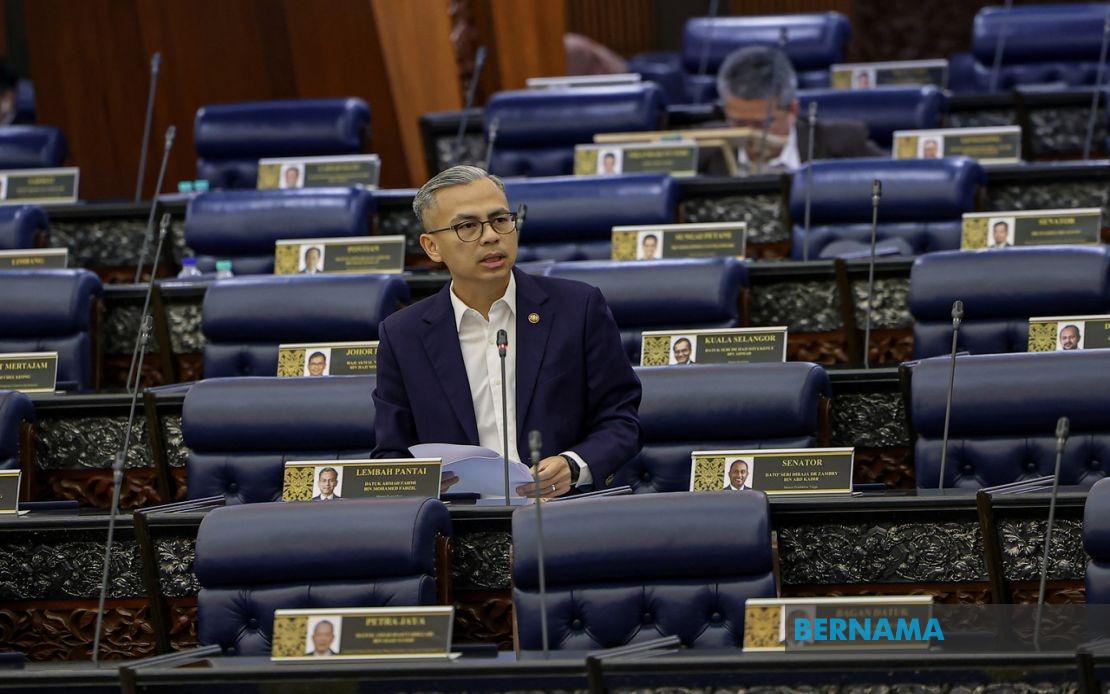
Malaysia has moved to fortify its digital infrastructure governance framework by introducing legislative amendments that weave national security considerations into the universal service provision landscape. On July 13, Communications Minister Datuk Seri Fahmi Fadzil presented the Communications and Multimedia (Amendment) Bill 2026 to the Dewan Rakyat for its first reading, with plans to advance the measure through second reading during the current parliamentary session. The legislation represents a significant recalibration of how Malaysia approaches telecommunications and digital service deployment, reflecting broader regional concerns about technology infrastructure resilience.
The Bill's core innovation lies in its modification of Section 202 of the Communications and Multimedia Act 1998, a foundational statute that has governed Malaysia's communications landscape for over two decades. By introducing new subsections 202(1A) and 202(1B), the amendment grants the Communications Minister explicit authority to instruct the Malaysian Communications and Multimedia Commission (MCMC) to develop and support universal service initiatives centred on network and application services where national security imperatives apply. This represents a substantive expansion of ministerial purview over MCMC operations, placing security considerations on equal footing with traditional universal service obligations such as broadband access and affordability.
The legislative framework establishes a structured process for determining when security interests justify universal service interventions. Rather than leaving such determinations to the Communications Ministry alone, the Bill stipulates that the National Security Council—operating under the National Security Council Act 2016—would make binding determinations on what constitutes a national security matter requiring universal service action. This institutional check reflects Malaysia's desire to balance ministerial flexibility with coordinated governance, ensuring that security-driven communications policies align with broader national strategies. The arrangement also creates a clear audit trail for such decisions, potentially reducing scope for politicised telecommunications policy.
Beyond designation authority, the proposed amendments facilitate practical implementation mechanisms for security-focused universal service work. The legislation explicitly authorises initiatives designed to encourage installation of network facilities and provision of network or application services where such measures serve national security objectives. This could encompass infrastructure development in strategically important regions, mandatory adoption of certain technologies to prevent unauthorised access, or deployment of communication systems capable of supporting emergency response or disaster management. The breadth of permitted activities reflects recognition that modern national security increasingly depends on digital infrastructure resilience rather than traditional military considerations alone.
The second substantive amendment—Subclause 2(b)—empowers the Minister to formulate regulations governing these national universal service initiatives under Section 16 of the Communications and Multimedia Act 1998. This regulatory authority provides the flexibility necessary for rapidly evolving technology landscapes, where legislative amendment cycles cannot keep pace with security threats. Rather than requiring fresh parliamentary action each time security priorities shift or new vulnerabilities emerge, the Minister can adapt implementing regulations to address emerging risks, a pragmatic recognition of how quickly the digital environment transforms.
The Bill imposes important consistency requirements to prevent the security framework from becoming a vehicle for regulatory overreach. Any national universal service provision initiative undertaken under the new provisions must remain consistent with the broader objects of the Communications and Multimedia Act 1998, which include promoting competition, protecting consumers, and ensuring efficient use of spectrum. This guardrail prevents the security rationale from becoming a justification for anti-competitive practices or monopolistic behaviour by incumbent carriers. Malaysian consumers and business users thus retain baseline protections even as security considerations gain prominence in universal service planning.
From a regional perspective, Malaysia's legislative move reflects broader Southeast Asian dynamics surrounding technology governance and digital sovereignty. As regional economies deepen technology integration and face competing great power influences over infrastructure standards, individual countries increasingly seek legislative tools to align telecommunications development with their strategic interests. The amendment positions Malaysia to more actively direct its communications sector toward security-aligned objectives without extensive case-by-case parliamentary debate, a model potentially influential across Southeast Asia where similar security-technology tensions exist.
Financially, the Bill carries no anticipated budgetary implications for the federal government, a significant consideration in Malaysia's current fiscal environment. Rather than requiring new appropriations, the legislation operates through redirected MCMC activities and regulatory adaptation. This fiscal neutrality removes a potential obstacle to passage while clarifying that the measure aims to reorder existing institutional responsibilities rather than expand public spending. The MCMC and industry participants will bear compliance and implementation costs, restructuring rather than enlarging the overall government outlay on communications policy.
The legislative architecture also establishes a distinction between universal service obligations grounded in traditional economic rationales—rural broadband access, affordability requirements, service quality standards—and those rooted in security considerations. By creating separate amendments specifically addressing security-driven initiatives, the Bill preserves the distinction between commercial service obligations and government-directed security measures. This clarity benefits regulated entities seeking to understand their responsibilities and may reduce legal disputes over whether particular requirements flow from economic or security mandates.
The amendment's passage would expand ministerial leverage over telecommunications development in ways Malaysia's political system has previously managed through less formal mechanisms. By codifying security-based authority over MCMC and universal service provision, the Bill formalises arrangements that may have operated de facto but lacked statutory foundation. This transparency could improve governance predictability for industry stakeholders while ensuring that security-motivated interventions enjoy explicit legislative sanction rather than resting on interpretation of existing statutory language.
Implementation of the amended framework will depend on coordination between the Communications Ministry, MCMC, and the National Security Council. The division of responsibilities—with the security council determining whether security interests apply and the minister directing MCMC response—creates potential coordination challenges particularly if those entities reach divergent assessments about specific initiatives. Clear protocols and inter-agency guidelines will likely prove essential to preventing policy gridlock.
Malaysia's move also sits within broader global patterns of governments reasserting influence over telecommunications infrastructure deemed essential to national strategy. From undersea cable governance to 5G equipment standards, countries worldwide increasingly view communications networks as critical national assets requiring active policy management rather than purely market-driven development. The amendment positions Malaysia within this international trend while maintaining localized decision-making authority rather than accepting external prescriptions for its digital infrastructure choices.

