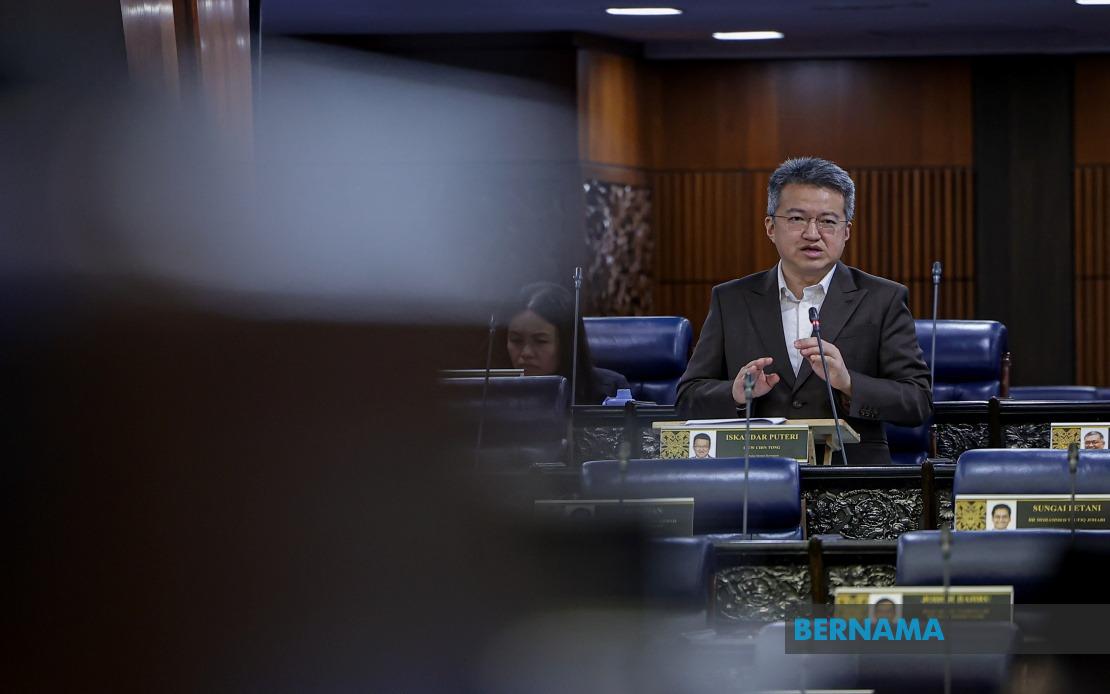
Malaysia's government is pursuing comprehensive institutional and legislative reforms aimed at preventing a repeat of the 1Malaysia Development Berhad scandal that severely damaged the nation's international standing, Deputy Finance Minister Liew Chin Tong told Parliament this week. The strategy, executed under Prime Minister Datuk Seri Anwar Ibrahim's leadership, reflects a deliberate effort to restore confidence among global investors and trading partners who have grown wary of Malaysian governance standards following the high-profile 1MDB crisis.
The 1MDB affair, which unfolded over several years and involved billions of dollars in allegedly misappropriated funds, created lasting reputational damage that extended far beyond Malaysia's shores. The scandal triggered investigations by multiple foreign law enforcement agencies, generated sustained international media scrutiny, and spawned complex cross-border legal proceedings that highlighted fundamental weaknesses in Malaysia's oversight mechanisms and public finance management systems. For a nation heavily reliant on foreign direct investment and international trade, such damage carries concrete economic consequences that persist years after the initial revelations.
To address these systemic vulnerabilities, the government has enacted the Public Finance and Fiscal Responsibility Act 2023, a foundational legislative measure designed to impose stricter discipline on how public resources are allocated and managed across government agencies. This law establishes clearer boundaries around executive discretion in fiscal matters and creates enforceable mechanisms to prevent the kind of financial mismanagement that allowed 1MDB to balloon into a crisis. The legislation represents a fundamental recalibration of how Malaysia approaches accountability in the public sector.
Complementing this primary reform, the government has substantially amended the Audit Act to expand the constitutional authority and investigative reach of the Auditor-General. The revised framework incorporates a "follow the public money" methodology that enables comprehensive tracking of government expenditure across multiple agencies and institutional levels, making it considerably harder for funds to disappear into questionable transactions without detection. This enhanced audit capability serves as a critical early-warning system against future governance failures.
Beyond legislative changes, the government is also developing new procurement frameworks through a proposed Government Procurement Bill designed to introduce greater transparency and competitive discipline into how public contracts are awarded. Simultaneously, officials are overhauling the regulatory landscape governing state-owned enterprises, entities that have historically been vulnerable to political interference and questionable governance practices. These parallel initiatives suggest a recognition that preventing future scandals requires reforms across multiple governmental systems rather than isolated measures.
The financial toll of 1MDB remains a persistent drag on Malaysia's public finances. Since 2017, the government has expended RM18.7 billion drawn from both operating and development budgets to service the scandal's lingering obligations. Following the MADANI administration's assumption of office in March 2023, policymakers were forced to allocate RM13 billion from the development budget specifically to redeem USD3 billion in government-guaranteed bonds that 1MDB had issued, a commitment representing approximately 13.1 per cent of that fiscal year's total development allocation. These substantial financial commitments underscore how deeply the scandal continues to constrain Malaysia's capacity for productive public investment.
The reputational consequences have extended into multiple dimensions of Malaysia's economic positioning. The scandal undermined international confidence in the integrity of Malaysia's public institutions, cast doubt on the competence of financial regulators and oversight bodies, and created lasting skepticism about the reliability of Malaysian fiscal policies among sophisticated international investors. For a middle-income nation competing for capital inflows and premium positioning in global supply chains, such perceptual damage translates directly into higher borrowing costs, reduced foreign direct investment flows, and diminished capacity to attract sophisticated international business ventures.
Liew's presentation to Parliament highlighted an important connection between governance quality and economic outcomes that Malaysian policymakers are increasingly emphasizing. He noted that despite the historical damage from 1MDB, Malaysia has recently achieved record-level approved investments and improved its standing in global competitiveness indices. This apparent contradiction suggests that the governance reforms, combined with Malaysia's underlying economic strengths and regional strategic position, are beginning to generate positive signals to international investors who are reassessing the country's trajectory.
The reform agenda also reflects broader Southeast Asian trends toward enhanced fiscal transparency and institutional accountability. Thailand, Indonesia, and the Philippines have all implemented similar governance improvements in recent years, creating implicit competitive pressure on Malaysia to demonstrate comparable commitment to best practices. For investors evaluating where to deploy capital across the region, Malaysia's governance quality increasingly functions as a differentiating factor in their decision-making calculus.
The challenge facing Malaysia's leadership extends beyond legislative enactment. Successfully rebuilding international confidence requires sustained, visible commitment to implementing these frameworks rigorously over several years. Any perception that reforms are cosmetic or that political networks remain capable of circumventing new controls could quickly reverse the modest gains Malaysia has achieved in restoring investor sentiment. The government's success will ultimately be measured not by the laws it passes but by demonstrable changes in actual practice across government operations and state-owned institutions.

