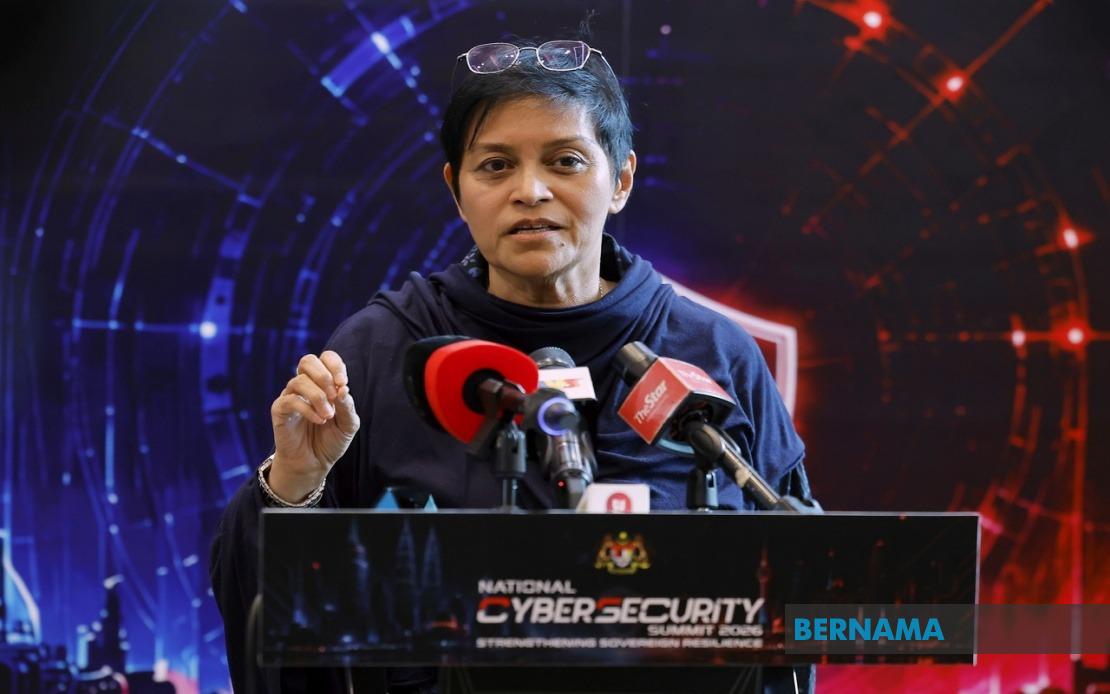
The Malaysian government has initiated a comprehensive examination into strengthening legal protections for individuals victimised by cybercriminals, marking a significant shift towards prioritising victim welfare alongside offender prosecution. Datuk Seri Azalina Othman Said, Minister in the Prime Minister's Department (Law and Institutional Reform), announced the initiative during the National Cyber Security Summit (NCSS) 2026 held in Putrajaya, underscoring the government's commitment to addressing a growing challenge in the digital economy.
The Legal Affairs Division (BHEUU) is spearheading this in-depth investigation, which extends beyond traditional law enforcement approaches to encompass victim recovery mechanisms and enhanced consequences for perpetrators. The study represents a recognition that Malaysia's current legal infrastructure, whilst effective at apprehending and prosecuting offenders, leaves victims with limited recourse for retrieving lost funds. This gap has become increasingly evident as online scams proliferate across the region, affecting individuals across all income levels and demographics.
A key focus of the examination involves analysing how other jurisdictions manage victim protection and fund recovery. Singapore's approach, which incorporates caning as a sentencing option alongside fines and imprisonment, will be evaluated for potential applicability within Malaysia's legal system. However, Azalina clarified that Malaysia's existing penalty framework relies primarily on monetary fines and custodial sentences under legislation including the Penal Code and Criminal Procedure Code. The government must weigh whether introducing more severe physical punishments aligns with Malaysian values and constitutional protections.
International comparisons will also examine sophisticated reimbursement schemes established in developed economies. The United Kingdom and Australia both operate systems wherein banks assume responsibility for reimbursing scam victims under specified conditions, effectively transferring liability to financial institutions rather than leaving victims to absorb losses personally. These mechanisms operate on the principle that banks bear some responsibility for preventing fraudulent transactions and protecting customer funds, a concept that has reshaped victim assistance across those economies.
Bank Negara Malaysia has not yet implemented a comparable mandatory refund system for online scam victims, though discussions regarding such a framework are ongoing. The potential introduction of bank-backed reimbursement schemes could fundamentally alter how Malaysian victims recover from cybercriminal activity. Such a policy would require careful negotiation with the banking sector, which may resist taking on additional financial liability, whilst simultaneously addressing the moral hazard of victims becoming less cautious if losses are guaranteed to be reimbursed.
The BHEUU study simultaneously examines broader victim protection mechanisms beyond financial recovery. This encompasses reviewing how other nations safeguard victim privacy, provide counselling and support services, and facilitate access to legal remedies. Malaysia's existing framework concentrates predominantly on prosecuting offenders under established criminal law, leaving victim support largely to ad hoc arrangements rather than systematic protection protocols. This structural gap leaves many cybercrime victims navigating the aftermath with minimal institutional assistance.
The timing of this investigation reflects escalating public concern across Southeast Asia regarding digital security. As internet penetration deepens and digital payment systems proliferate, cybercriminals have developed increasingly sophisticated methods to defraud unsuspecting individuals. Malaysian victims often discover that their losses are effectively permanent, having exhausted limited reporting options without meaningful prospects of fund recovery. The government's decision to initiate this study signals acknowledgment that cybersecurity policy must evolve beyond criminal justice frameworks to address victim needs comprehensively.
Azalina emphasised that no timeline has yet been established for completing the BHEUU investigation. The absence of a deadline suggests the government intends conducting thorough research rather than rushing implementation of hastily conceived policies. Such deliberation is warranted given the complexity of balancing victim protection with broader legal reform, banking sector interests, and international best practice adaptation. Premature conclusions could generate unintended consequences affecting financial institutions, insurance markets, and victim behaviour.
The study's implications for Malaysia extend beyond individual victim recovery. Enhanced cybercrime protections could strengthen Malaysia's reputation as a jurisdiction increasingly committed to digital security and personal data safety, potentially improving investor confidence and international competitiveness. Conversely, if protections prove inadequate or burdensome for the banking sector, Malaysia may struggle to attract financial technology businesses or retain investor confidence in its digital economy. The government's approach to this study will therefore signal broader commitments to either regulation or innovation within the fintech sphere.
For Malaysian citizens currently experiencing cybercrime victimisation, this study offers tentative hope that legislative frameworks may eventually provide more meaningful remedies than existing options. However, the extended timeframe for completion means immediate relief remains limited. Victims remain advised to pursue recoveries through existing channels including bank dispute processes, criminal complaints, and civil litigation, whilst government institutions deliberate on structural reforms that could eventually provide more systematic protection.

