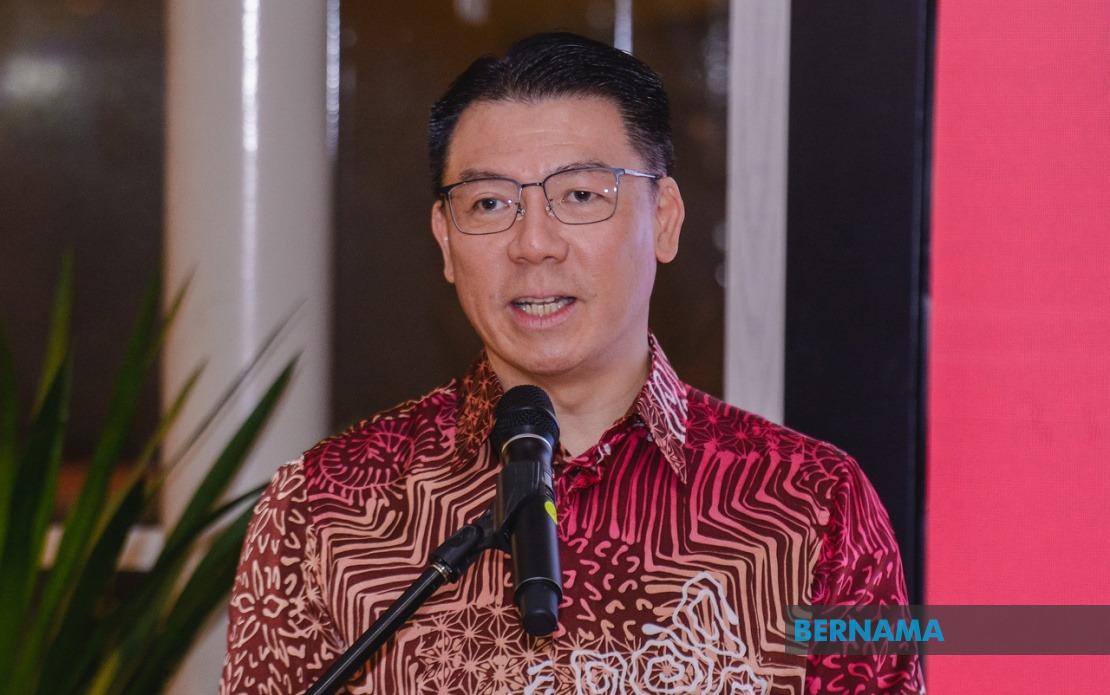
Housing and Local Government Minister Nga Kor Ming has unveiled an ambitious pricing incentive designed to strengthen Malaysia's property sector and reduce barriers to homeownership. During the upcoming ASEAN Real Estate Conference (AREC) 2026, scheduled to run from July 29 to August 1 at the Malaysia International Trade and Exhibition Centre (MITEC) in Kuala Lumpur, participating developers will offer a 10 per cent discount on residential purchases. This initiative emerges from a strategic partnership between the Ministry of Housing and Local Government (KPKT) and the Real Estate and Housing Developers' Association Malaysia (REHDA), with Prime Minister Datuk Seri Anwar Ibrahim set to formally launch the conference and oversee the unveiling of a comprehensive National Housing Policy.
The discount programme directly addresses a persistent challenge in Malaysia's property market: the initial financial hurdle faced by aspiring homeowners. Most housing transactions require buyers to settle a 10 per cent down payment under the Sale and Purchase Agreement (SPA) before securing financing, a threshold that has excluded many middle and lower-income Malaysians from property ownership. By reducing this entry cost, the government aims to make this fundamental deposit more manageable while simultaneously generating market momentum during the four-day conference. Organisers project the event will catalyse approximately RM1.5 billion in property transactions across various residential, commercial and mixed-use segments.
Parallel to the purchase incentive, the ministry has launched the Rahmah Cement initiative, a supply-side intervention targeting construction cost inflation. The programme commits 1.6 million metric tonnes of subsidised cement to developers constructing affordable housing units, acknowledging that material price volatility has compressed developer margins and constrained housing supply at lower price points. This two-pronged approach—simultaneously reducing demand-side barriers and supply-side production costs—reflects a sophisticated understanding that affordability requires intervention across the entire development pipeline. Minister Nga framed the initiative through the government's signature housing slogan, "Rumahku, Syurgaku" (My Home, My Heaven), positioning quality home ownership not merely as a financial transaction but as a fundamental social aspiration.
The timing of AREC 2026 coincides with a significant policy reboot. The National Housing Policy launching on July 30 will set the strategic framework for the sector's next phase, likely incorporating affordability targets, sustainability requirements and inclusivity benchmarks. This policy launch alongside the conference and discount programme suggests a coordinated government effort to reshape market expectations and developer behaviour. Such synchronisation demonstrates that the government views housing policy not as episodic intervention but as an integrated long-term commitment requiring aligned fiscal, regulatory and promotional instruments.
Malaysia's international standing in property development provided the backdrop for Minister Nga's announcement. At the FIABCI World Prix d'Excellence Awards 2026, Malaysian developers captured 14 accolades—eight gold and six silver medals—positioning Malaysia as the overall champion across all competing nations. Gold medallists included Park Regent @ Desa ParkCity in the Residential (High Rise) category, The Mansions @ ParkCity Hanoi in Residential (Low Rise), Merdeka 118 for Best Office and Sustainable Development, Elmina Lakeside Mall for Retail, Sunway Velocity Two (Phase 1) for Mixed-Use Development, Gamuda Gardens for Master Plan, and Diamond Precinct in Vietnam for Residential (Mid Rise). This dominance underscores that Malaysian property firms have matured into world-class competitors capable of executing sophisticated, large-scale projects meeting rigorous international standards.
Cumulatively, Malaysia has accumulated 135 gold medals since the FIABCI awards were established in 1992, a track record that positions the nation among the world's foremost property development ecosystems. This distinction carries strategic significance for Southeast Asia and the broader Indo-Pacific region. It signals to international capital that Malaysian developers possess technical expertise, financial discipline and project execution capability matching or exceeding their counterparts in developed economies. Minister Nga characterised the awards as a "catalyst for global confidence" in Malaysia's property sector, explicitly linking international recognition to investor appetite and market expansion opportunities.
Malaysian developers have already internationalised aggressively, with ParkCity Group establishing major operations in Vietnam, SP Setia penetrating the Australian market, OSK Property operating in Melbourne, and EcoWorld launching projects in London. These overseas ventures demonstrate that homegrown expertise and capital are competing successfully in global markets, generating hard currency returns and enhancing Malaysia's economic profile. The government views this outward expansion as validation of its housing policy framework and as evidence that domestic industry support translates into global competitiveness. For Southeast Asian readers, this pattern suggests that strong domestic property ecosystems can become regional and global economic assets, attracting talent, investment and brand prestige.
The 10 per cent discount initiative at AREC 2026 should be understood within this broader narrative of industry maturation and international ambition. The conference itself functions as both a showcase and a market-making event, combining forums and business matching sessions with an exhibition designed to connect developers, investors, financiers and homebuyers. By offering transactional incentives during the conference, the government aims to generate visible deal flow and media coverage that reinforces perceptions of market vitality and opportunity. For developers, the conference provides a platform to unveil new projects and attract institutional capital, potentially including foreign funds keen to participate in Southeast Asia's housing expansion.
For Malaysian homebuyers, the discount represents a tangible fiscal benefit, though its ultimate impact depends on developer willingness to pass savings through rather than absorb discounts into margin preservation. The deposit relief may prove particularly valuable for first-time buyers in urban markets like Kuala Lumpur and Selangor, where affordability pressures are most acute. However, the discount's effectiveness will likely vary across income segments and geographic locations, with lower-income buyers in peripheral areas potentially gaining less benefit if developers concentrate offerings in premium locations.
The broader policy environment suggests that housing affordability has become a central government priority, reflected in cabinet-level attention from both the Housing Minister and Prime Minister. This elevation reflects demographic realities: Malaysia's urbanisation continues apace, household formation rates remain robust, and homeownership aspirations remain culturally central. However, wage growth has lagged property price appreciation for much of the past decade, creating genuine affordability crises in major metropolitan areas. Policy responses must therefore address both supply constraints and demand-side financial barriers simultaneously, as this initiative attempts through its dual discount and subsidy structure.
Looking beyond AREC 2026, the Rahmah Cement programme and National Housing Policy launch suggest that housing intervention will extend well beyond a single conference event. The government appears committed to sustained industry support, recognising that housing policy generates both immediate social welfare benefits and long-term economic multiplier effects. Construction spending stimulates employment, material demand, and ancillary service sectors, making housing investment an attractive counter-cyclical policy tool during economic slowdowns. For Southeast Asia more broadly, Malaysia's willingness to actively shape its property market through targeted incentives and supply-side support illustrates one model of state engagement with the housing sector, contrasting with more laissez-faire approaches adopted in some regional peers.
The conference itself represents an opportunity for cross-border learning and relationship building. ASEAN property markets face common challenges—rapid urbanisation, financing gaps, affordability pressures, climate adaptation requirements—yet solutions vary based on regulatory frameworks, capital availability and development maturity. Malaysia's hosting of AREC positions the nation as a regional knowledge hub while creating platforms for developers, investors and policymakers to exchange insights and identify cooperation opportunities. For Malaysian firms already operating across Southeast Asia, the conference provides occasions to establish new partnerships and access emerging market opportunities in neighbouring economies at various stages of property market development.
Minister Nga's framing of the initiatives through aspirational language—"My Home, My Heaven" and the desire for Malaysians to access "quality homes"—elevates housing policy beyond technocratic intervention into the realm of social inclusion and national development. This rhetorical positioning matters because it signals government intent to prioritise accessibility over purely profit-maximising outcomes, though actual outcomes will depend on implementation rigour and developer compliance. The test of these policies will emerge in transaction data from AREC 2026 onwards: whether discount participation proves robust, whether Rahmah Cement successfully reduces construction costs, and whether the National Housing Policy framework succeeds in reshaping market dynamics toward genuine affordability across income segments and geographic regions.

