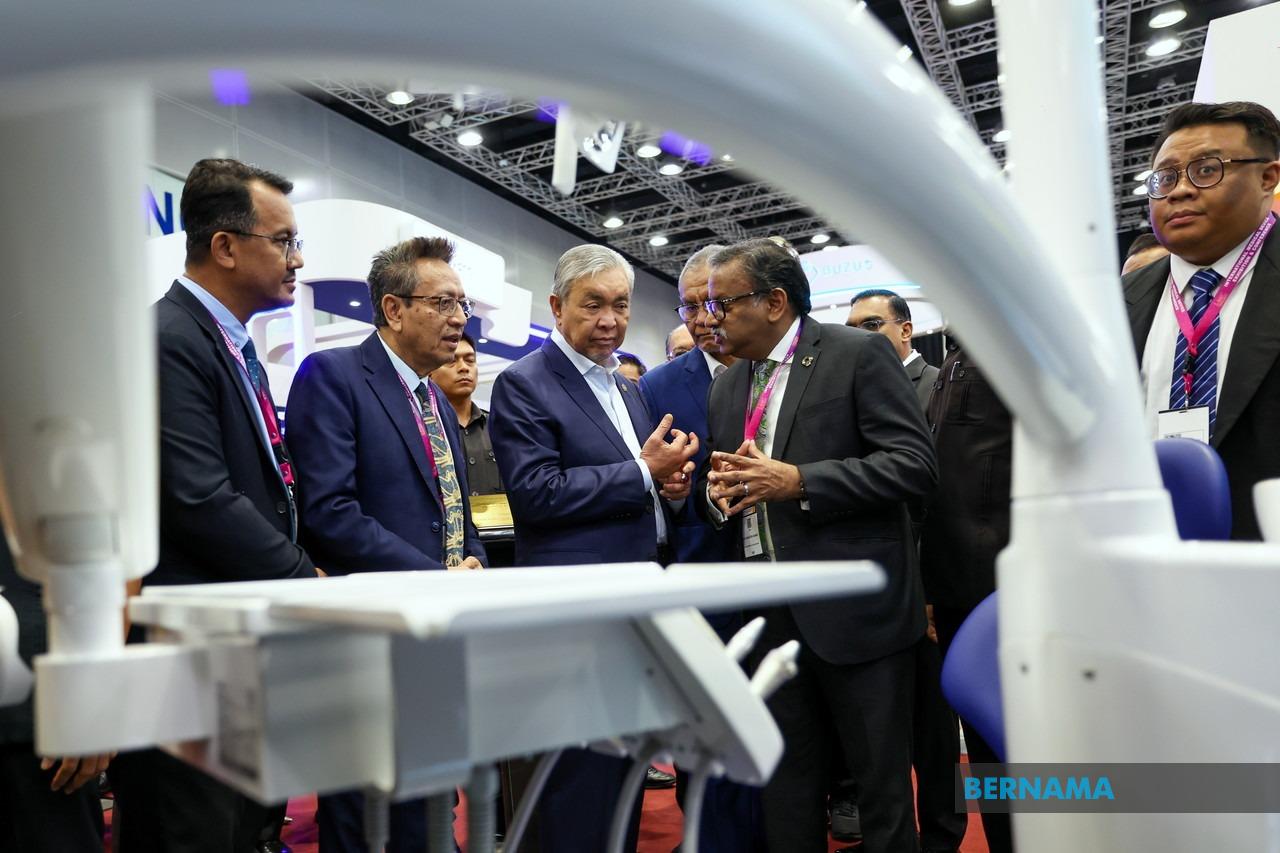
Malaysia has set its sights on substantially expanding its presence in the global medical device market, with Deputy Prime Minister Datuk Seri Dr Ahmad Zahid Hamidi announcing an ambitious target of surpassing RM50 billion in medical device exports by 2030. This represents a significant leap from the RM34.54 billion recorded in the previous year, signalling the government's determination to elevate the country's standing in this strategically important sector. Speaking at the closing ceremony of the International Medical Device Exhibition and Conference (IMDEC) 2026 in Kuala Lumpur, Ahmad Zahid articulated a vision that extends beyond mere export volume, emphasising the quality and sophistication of products that should drive future growth.
The deputy prime minister framed this export goal as one of three interconnected ambitions designed to track Malaysia's advancement in medical technology development over the coming decade. Anchoring his remarks in Malaysia's existing competitive strengths, Ahmad Zahid highlighted the country's solid manufacturing infrastructure, established market access channels, and accumulated international credibility as foundations upon which further expansion can be built. However, he cautioned that simply achieving higher export volumes would be insufficient. Rather, the trajectory must deliberately shift towards premium-value offerings that command higher margins and represent greater technological sophistication than the current portfolio.
Beyond export targets, Ahmad Zahid identified the development of at least 10 Malaysian MedTech champions as a critical second objective. This aspiration reflects a strategic pivot away from pure contract manufacturing towards domestic innovation and intellectual property creation. The government intends to maintain Malaysia's attractiveness to multinational medical device manufacturers while simultaneously nurturing local enterprises that can design, develop, and commercialise original technologies. This dual-track approach aims to ensure that Malaysia captures value across the entire value chain rather than remaining confined to lower-tier manufacturing roles. Such companies would be expected to compete effectively in regional and global markets, contributing not only to export revenues but also to Malaysia's technological reputation.
The third ambition addresses an often-overlooked dimension of industrial development: employment quality. Ahmad Zahid set a target for at least 50 per cent of jobs created by new MedTech investments by 2030 to occupy managerial, technical, and supervisory positions. This emphasis on high-value employment reflects growing recognition that developing economies must prioritise skill development and professional advancement alongside mere job creation. Currently, the medical device sector's proportion of such positions stands at 33.1 per cent, indicating substantial room for improvement. The deputy prime minister articulated a philosophical stance that distinguishes Malaysia's development ambitions from those of lower-cost competitors: capability and expertise must be retained domestically rather than extracted and relocated elsewhere.
Ahmad Zahid's remarks underscored a fundamental tension in attracting foreign investment: companies typically arrive in search of ready-made workforces, yet workforce development requires years of preparation and institutional investment before such demand materialises. He advocated for a reconceptualisation of this relationship, urging international investors to engage earlier in Malaysia's talent-pipeline development rather than waiting until labour shortages force them into recruitment competitions. This forward-looking collaboration would involve multinational firms contributing to skills identification, programme design, industrial training, and apprenticeship expansion. Such partnerships would theoretically align workforce capabilities with emerging industry needs rather than creating perpetual gaps between demand and supply.
In his capacity as National Technical and Vocational Education and Training Council chairman, Ahmad Zahid positioned this industrial strategy within broader vocational development frameworks. The integration of MedTech industry participation into Malaysia's technical education system represents an attempt to create institutional mechanisms for sustained talent development. By embedding industry input directly into educational planning, Malaysia seeks to avoid the reactive pattern in which companies face worker shortages and government scrambles to improvise training programmes. This proactive model requires sustained dialogue between educational institutions, industry stakeholders, and government agencies.
The medical device sector's performance in 2025 provides concrete evidence of industry momentum. That year saw RM4 billion in new medical device investments approved across 46 separate projects, collectively generating nearly 3,400 employment opportunities. While this represents meaningful activity, the emphasis on upgrading the skill composition of future positions suggests that authorities view current employment patterns as insufficiently aligned with high-value industrial development goals. The volume of investment approvals indicates genuine investor confidence in Malaysia's potential, though concerns about job quality suggest this confidence has not yet translated into consistently premium-value employment generation.
Contextualising Malaysia's ambitions within global industry trends underscores both the opportunity and urgency of the 2030 targets. The worldwide medical device market, valued at over USD572 billion in the previous year, is projected to exceed USD1 trillion by 2034, roughly doubling within a decade. This explosive growth reflects ageing global populations, rising healthcare spending in emerging markets, and accelerating technological innovation. For Malaysia, capturing a meaningful share of this expanding market requires not merely maintaining current competitiveness but demonstrably advancing upmarket. Competitors across Southeast Asia, China, and India are pursuing analogous strategies, intensifying pressure on Malaysia to differentiate through innovation and capability rather than cost competition alone.
Imdec 2026, the platform for Ahmad Zahid's announcements, itself illustrated Malaysia's positioning within the MedTech ecosystem. The exhibition attracted more than 160 exhibitors representing diverse segments of the industry and drew over 50 regional and international speakers addressing regulation, innovation, and healthcare transformation. This concentration of industry expertise and commercial activity affirms Malaysia's status as a recognised hub within MedTech development, though it also highlights the competitive intensity of markets in which Malaysian firms must operate. The prevalence of international exhibitors and speakers suggests that Malaysia's development strategy must accommodate sophisticated foreign competition while simultaneously building indigenous capabilities.
The alignment between Ahmad Zahid's three ambitions reveals strategic sophistication in approaching industrial development. Higher export values achieved through premium products would theoretically support the creation of more sophisticated, higher-paying employment opportunities. Simultaneously, developing Malaysian MedTech champions would reduce reliance on foreign direct investment for growth, creating domestically owned vehicles for value creation. These objectives are mutually reinforcing rather than competing. Companies that own intellectual property and compete globally typically employ more professionals in advanced roles than contract manufacturers do. Conversely, maintaining high employment quality standards makes Malaysia attractive to companies seeking not merely labour supply but skilled technical talent.
For Malaysian policymakers and investors, these ambitions raise practical implementation questions. Achieving the export target requires identifying which product categories offer highest-value opportunities and deliberately channelling investment and research capabilities toward those segments. Developing 10 MedTech champions necessitates targeted support for promising entrepreneurs and companies, whether through venture financing, intellectual property protection, or access to specialised markets. Upgrading employment quality within the sector demands coordination across educational institutions, industry associations, and foreign investors. The complexity and interconnectedness of these objectives suggest that successful execution requires sustained institutional commitment and effective collaboration across multiple stakeholders.
Beyond the immediate medical device sector, Ahmad Zahid's framework carries implications for Malaysia's broader positioning as a knowledge economy. The emphasis on capability retention and intellectual property ownership reflects aspirations that extend beyond medical technology to encompassing multiple high-value sectors. If Malaysia can successfully leverage its manufacturing heritage, market access, and international reputation to advance into higher-value medical device production, the institutional arrangements and talent frameworks developed for this transition could potentially serve other technology sectors. Conversely, failure to transition beyond contract manufacturing in medical devices would reinforce concerns about Malaysia's capacity to move decisively into genuinely innovative, ownership-oriented industrial development, potentially constraining ambitions elsewhere in the technology and knowledge economy domains.

