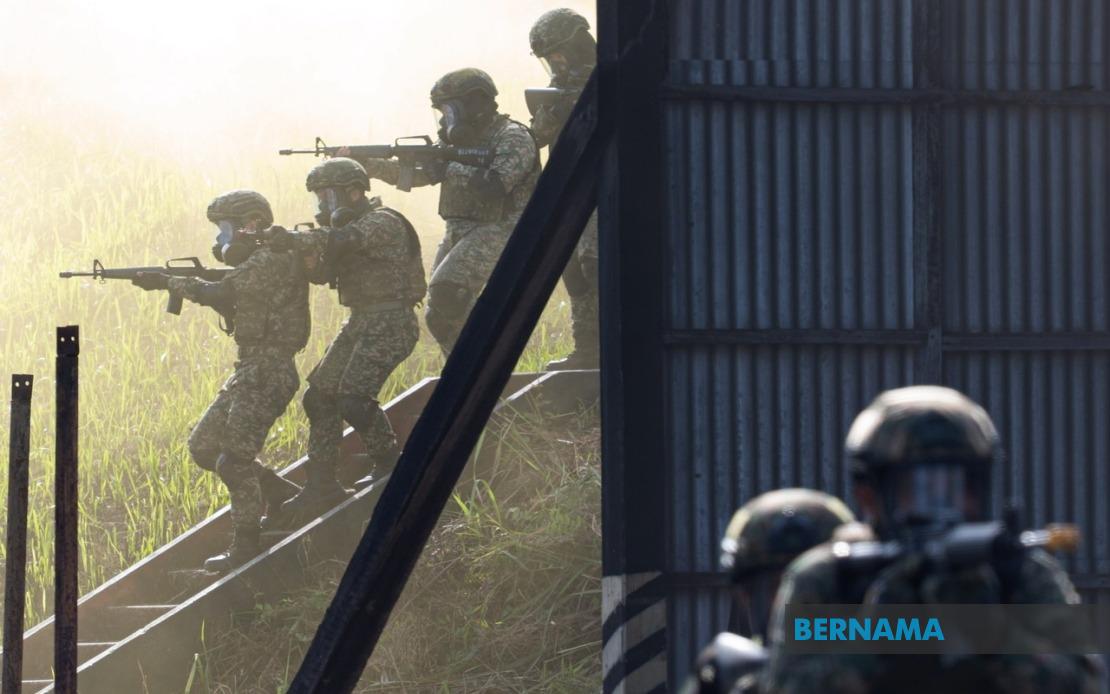
Prime Minister Datuk Seri Anwar Ibrahim has committed to securing a higher defence allocation in Budget 2027 as part of the government's broader strategy to reinforce the Malaysian Armed Forces' operational capability and enhance the welfare of military personnel. Speaking in Melaka, Anwar, who concurrently holds the Finance Minister portfolio, emphasised that increased investment in defence is essential to safeguard national peace—a resource he characterised as Malaysia's most prized possession in an uncertain regional environment.
The pledge reflects a strategic pivot in Malaysia's budgetary priorities at a time when regional geopolitical tensions and transnational security challenges have heightened concerns among policymakers across Southeast Asia. By framing defence expenditure not merely as a military matter but as a cornerstone of national stability, Anwar has positioned the issue within the broader context of economic prosperity and public confidence. His argument that conflicts materialise without warning and that military preparedness cannot be deferred until threats are imminent carries particular weight given the complex security landscape surrounding the South China Sea and growing maritime disputes in the region.
Over the preceding three years, the MADANI Government has already expanded the Defence Ministry's budget by more than 35 per cent—a substantial and deliberate shift in resource allocation. However, Anwar acknowledged that this significant increase has not received sufficient public recognition, partly because infrastructure improvements and procurement adjustments occur gradually and often operate outside the public eye. This transparency gap, he suggested, undermines public understanding of the government's commitment to military readiness and leaves space for misperceptions about whether adequate resources are truly being channelled to defence.
Critically, Anwar stipulated that future weapons and equipment acquisitions must follow stringent protocols emphasising systematic procurement, complete transparency, and elimination of unnecessary intermediaries and commissions. This declaration directly confronts long-standing concerns within Malaysia's defence sector regarding procurement irregularities and the involvement of agents who extract significant margins without adding substantive value. By explicitly condemning profiteering and excessive commissions, the Prime Minister has signalled that the upcoming budget increase will be accompanied by enhanced governance measures designed to ensure funds reach their intended purpose rather than disappearing into supply-chain inefficiencies.
The economic foundation for this defence investment appears increasingly solid. Anwar pointed to Malaysia's strengthening macroeconomic indicators as the enabling factor: a recovering ringgit, rising foreign direct investment inflows, and inflation remaining under control collectively create fiscal space for discretionary spending increases. This framing suggests that higher defence allocation is not a drain on other essential services but rather a sustainable expansion made possible by prudent economic management. For Malaysian taxpayers and policymakers concerned about the opportunity cost of defence spending, this argument attempts to reconcile military modernisation with continued investment in education, healthcare, and social services.
The welfare dimensions of the proposed budget increase encompass concrete improvements to military personnel's quality of life. Planned enhancements include upgrading accommodation facilities, constructing a new military hospital, and ensuring reliable provision of basic services such as water supply—measures that extend beyond hardware procurement to address the human factors underlying military effectiveness. Retention of experienced personnel, recruitment of qualified candidates, and sustained morale all depend substantially on whether the armed forces can offer acceptable living and working conditions. By integrating personnel welfare into the defence budget narrative, Anwar has acknowledged that military strength rests not solely on equipment sophistication but on the motivation and wellbeing of those operating that equipment.
The announcement was made in the presence of senior defence and governmental figures, including Deputy Defence Minister Adly Zahari, Chief Secretary to the Government Tan Sri Shamsul Azri Abu Bakar, and Army chief General Tan Sri Azhan Md Othman. This high-level attendance underscored the significance attributed to the commitment and ensured that military leadership heard directly from civilian government that defence will receive prioritised budgetary consideration in the coming financial year.
Anwar also distributed immediate resource allocations in support of armed forces-related causes. The government announced RM147,000 for the Armed Forces Family Welfare Association, recognising that military families bear particular burdens. Additionally, RM1 million was committed to maintain religious facilities—mosques and prayer halls—at four military installations in Melaka, namely Terendak, Sungai Udang, Masjid Tanah, and Bukit Beruang. These allocations, whilst modest in absolute terms, reflect administrative recognition that military welfare encompasses spiritual and family dimensions alongside material infrastructure.
Budget 2027 is scheduled for presentation to the Dewan Rakyat on October 9, providing Parliament and the public with a formal opportunity to scrutinise the proposed defence allocation and the broader budgetary framework. The timing allows for parliamentary debate and potential amendments before the budget's formal adoption. For defence analysts and regional observers, the specific quantum of the defence increase—when disclosed in the budget document—will signal precisely how seriously the government intends to implement this pledge and will offer concrete data against which to measure Malaysia's defence investment trajectory relative to regional peers and strategic competitors.
The underlying message conveyed by Anwar's remarks is that Malaysia's government views military modernisation and readiness not as discretionary luxury items to be funded only when all other priorities are satisfied, but as essential expenditure intrinsically linked to national economic security and diplomatic credibility. This conceptual reframing may have implications for how Malaysia engages in regional forums, negotiates over maritime boundaries, and positions itself within evolving security architectures involving major powers with competing interests in Southeast Asia. By committing in advance to higher defence spending, the MADANI Government signals resolve whilst also inviting scrutiny regarding how effectively those resources will be deployed.

