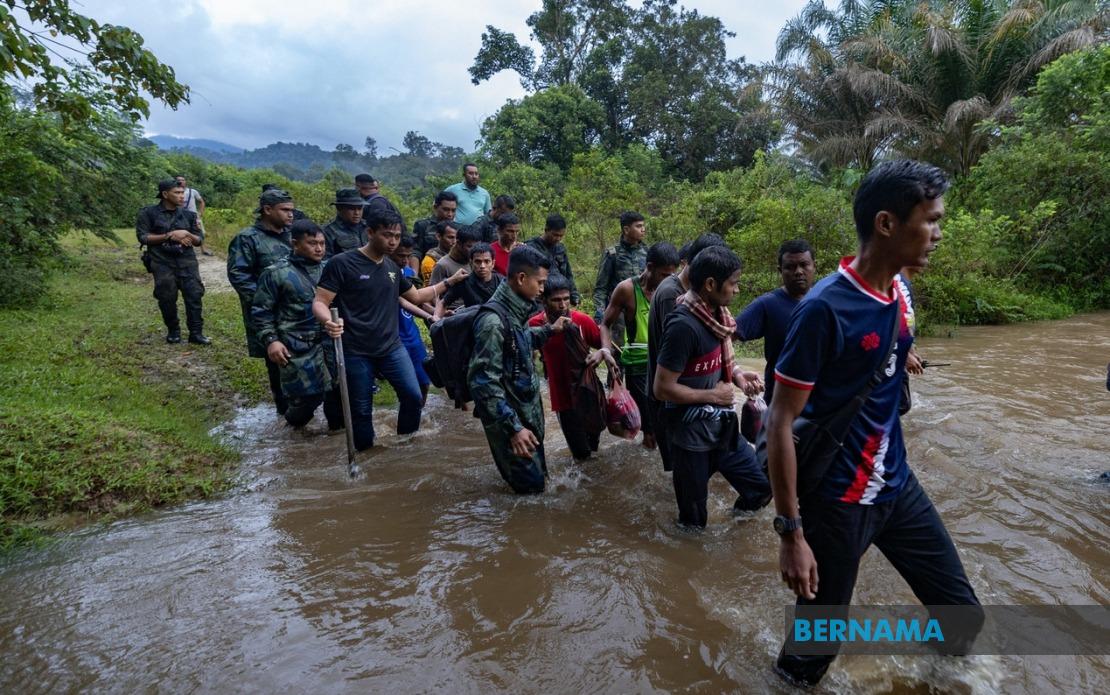
Malaysia is moving to deepen its engagement with ASEAN and the United Nations High Commissioner for Refugees in tackling the protracted Rohingya crisis, Deputy Foreign Minister Datuk Lukanisman Awang Sauni announced on July 7. The commitment reflects Kuala Lumpur's recognition that the displacement of hundreds of thousands of Rohingya from Myanmar demands not merely charitable response but strategic regional collaboration and political intervention.
The deputy minister outlined that Malaysia has consistently leveraged ASEAN forums to advocate for peaceful resolution in Myanmar while simultaneously partnering with UNHCR to ensure vulnerable Rohingya populations within Malaysian territory receive adequate protection and humanitarian services. This dual-track approach underscores the government's understanding that the refugee emergency transcends borders, generating cascading consequences including unregulated human movement, people-smuggling networks, and broader security vulnerabilities that affect multiple Southeast Asian nations. For Malaysia in particular, hosting one of the world's largest undocumented Rohingya populations creates immediate pressures on social services, employment markets, and public order.
Yet Lukanisman acknowledged candid constraints limiting the effectiveness of current multilateral efforts. ASEAN's structural design—rooted in non-interference doctrine and decision-making processes requiring consensus—fundamentally restricts member states from mounting forceful collective pressure on Myanmar to reverse persecution or facilitate refugee repatriation. This diplomatic architecture, designed to preserve regional harmony and respect sovereignty, often becomes an obstacle to decisive action on humanitarian grounds. Simultaneously, the UNHCR's institutional mandate remains circumscribed to delivering protection mechanisms and aid delivery, deliberately excluding authority over political remedies or pressure on origin states. Consequently, the cumulative international response gravitates toward symptom management rather than addressing root causes of displacement.
This structural reality means present interventions emphasise human rights safeguarding and distributing humanitarian resources to affected populations rather than engineering comprehensive resolutions that would genuinely restore stability. The deputy minister's candid assessment—delivered in parliament—signals growing Malaysian frustration with the gaps between stated commitments to refugee protection and the actual capacity of existing institutions to achieve transformative outcomes. For Malaysian policymakers, this recognition carries particular weight given the country's already-strained absorption capacity and the political sensitivity surrounding refugee populations among domestic constituencies.
Looking ahead, Malaysia proposes several concrete initiatives to advance the regional response beyond current parameters. Enhanced responsibility-sharing mechanisms among ASEAN members would distribute refugee hosting burdens more equitably rather than concentrating them in countries such as Malaysia, Bangladesh, and Indonesia. Such burden-sharing requires bilateral and multilateral negotiations but also carries political risks, as some ASEAN governments face domestic opposition to accepting greater refugee populations. Equally important, Malaysia emphasises promoting political pathways enabling voluntary, secure, and dignified repatriation of Rohingya to Myanmar—contingent on fundamental changes in the conditions that forced their exodus.
The repatriation objective implicitly acknowledges that sustainable solutions ultimately depend on transformation within Myanmar itself, including accountability for documented abuses and institutional reforms ensuring minority protection. Malaysia's diplomatic posture here reflects its assessment that indefinite refugee detention undermines both refugee communities and host societies, necessitating resolution rather than perpetual containment. However, Myanmar's military-dominated government has shown minimal receptiveness to such demands, complicating Malaysia's advocacy efforts and limiting realistic timelines for repatriation scenarios.
Malaysia frames its proposed initiatives as integral to its international identity as a nation committed to peace, security, and humanitarian governance. This framing serves multiple audiences: reassuring the international community of Malaysia's principled stance, legitimising domestic expenditures on refugee populations to Malaysian taxpayers, and positioning the country as a responsible emerging power capable of addressing transnational crises. Such positioning matters within Southeast Asia's evolving geopolitical landscape, where humanitarian leadership and middle-power diplomacy offer influence beyond military or economic capacity.
The deputy minister's parliamentary statement also carries implicit messaging about the limits of unilateral Malaysian action. While Kuala Lumpur can expand direct assistance and advocacy, comprehensive resolution requires transforming Myanmar's political trajectory and securing commitment from wealthier nations to support refugee integration or repatriation. This interdependency explains Malaysia's emphasis on ASEAN platforms and UNHCR mechanisms—forums where collective legitimacy can be mobilised and burden-sharing negotiated. Without such multilateral cooperation, Malaysia risks absorbing disproportionate costs for a regional and international problem.
The Rohingya crisis remains one of the defining humanitarian challenges confronting Southeast Asia, with implications extending far beyond the immediate refugee populations to encompass regional migration patterns, trafficking networks, and security architecture. Malaysia's proposed deepening of ASEAN-UNHCR cooperation signals recognition that the crisis demands sustained, sophisticated engagement rather than ad hoc responses. Yet the gap between diplomatic commitment and institutional capacity to deliver transformative outcomes persists, constrained by ASEAN's structural limitations and the absence of political will from Myanmar's leadership to reverse the conditions generating displacement.
For Malaysian stakeholders and regional observers, the deputy minister's remarks represent honest acknowledgment of both progress achieved and persistent obstacles. Malaysia's continued investment in multilateral frameworks reflects pragmatic calculation that incremental improvements in protection and burden-sharing, while insufficient to resolve the crisis comprehensively, remain preferable to withdrawal or unilateral action. This approach balances humanitarian principle with diplomatic realism, though it also indicates that comprehensive resolution may remain elusive without fundamental shifts in Myanmar's governance or substantial pressure from major international powers willing to condition engagement on refugee-related commitments.

