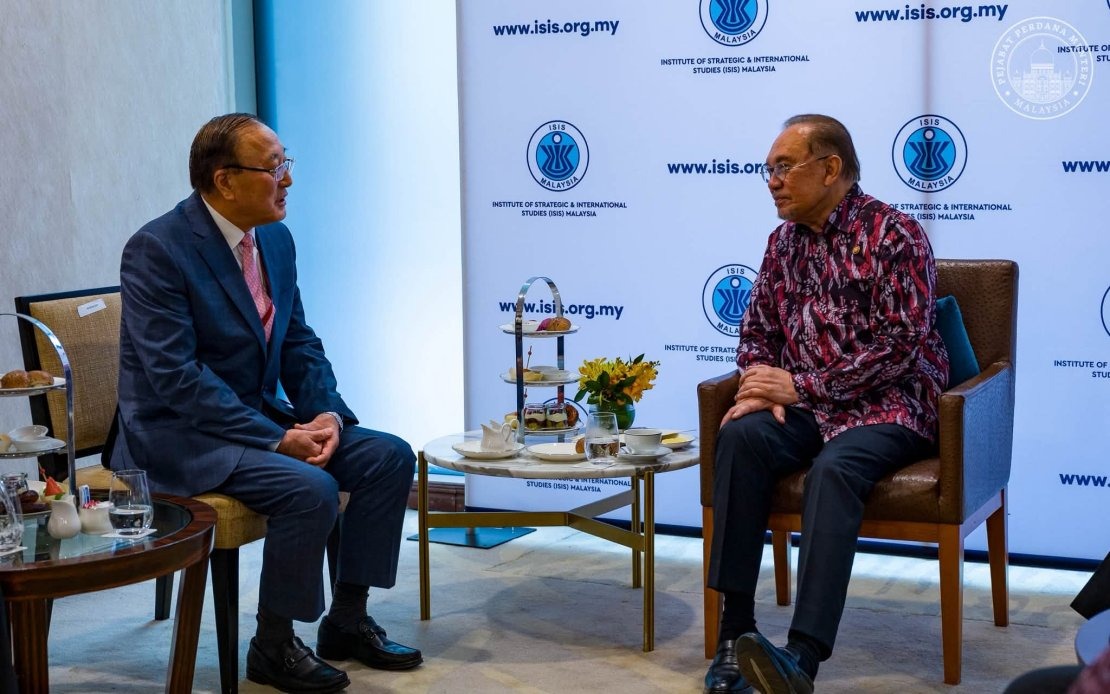
Prime Minister Datuk Seri Anwar Ibrahim has signalled Malaysia's intention to deepen its engagement with the Boao Forum for Asia (BFA) across a broad spectrum of development priorities, ranging from conventional economic domains to cutting-edge technological frontiers. The announcement came during a visit by BFA secretary-general Zhang Jun, highlighting the strategic importance both sides attach to multilateral collaboration in addressing shared challenges facing the Asia-Pacific region.
Anwar, who holds the concurrent portfolio of Finance Minister, outlined an ambitious agenda for bilateral and multilateral engagement that reflects Malaysia's vision for regional prosperity. The envisaged cooperation framework encompasses trade and investment facilitation, digital infrastructure advancement, artificial intelligence integration, energy sector transformation, agricultural sustainability through food security initiatives, and human capital development via education and talent programmes. This multi-faceted approach underscores the administration's recognition that contemporary development challenges require integrated solutions spanning economic, technological and social dimensions.
The timing of this commitment carries particular significance given the prevailing geopolitical and economic headwinds affecting Asia and the broader international system. Regional economies are navigating intersecting crises: intensifying great-power competition between major economies, persistent inflationary pressures constraining growth prospects, and accelerating technological disruption demanding substantial investments in workforce retraining and infrastructure modernisation. For Malaysia specifically, these dynamics underscore the necessity of diversifying partnerships and deepening regional interdependencies that can buffer against external shocks.
The Prime Minister's emphasis on regional resilience reflects a strategic pivot toward what might be characterised as defensive regionalism. Rather than pursuing isolated national strategies, Malaysia is positioning itself within multilateral frameworks like the BFA that facilitate dialogue among Asian stakeholders. This approach recognises that the region's stability increasingly depends on coordinated responses to transnational challenges—whether climate change affecting energy security and food production, or digital disruption reshaping labour markets and investment patterns.
Artificial intelligence emerges as a particularly crucial area within the proposed cooperation agenda. As Southeast Asian nations contemplate AI adoption across manufacturing, services and governance, the absence of coordinated regional standards and ethical frameworks risks creating fragmented ecosystems. Malaysia's commitment to BFA collaboration in this domain suggests receptiveness to collective policymaking that could harmonise AI governance approaches across member economies, potentially establishing the region as a counterweight to AI standards emerging from Western or Chinese spheres of influence.
Energy transition cooperation carries equally weighty implications for Malaysia's economic future. As a petroleum exporter confronting declining hydrocarbon reserves and international pressure to decarbonise, Malaysia faces difficult transitions in both energy production and consumption. BFA collaboration could facilitate knowledge transfer regarding renewable energy deployment, green hydrogen development, and just transition programmes that support workers displaced from fossil fuel sectors. Regional coordination in these areas might also strengthen Malaysia's bargaining position in international climate negotiations.
The food security dimension reflects recognition that Asia remains vulnerable to supply chain disruptions and climate-related agricultural shocks. Malaysia, as a net food importer heavily reliant on regional suppliers, has strategic interest in stabilising agricultural markets and supporting productivity improvements across Southeast Asia. BFA engagement in this sphere could support initiatives in agricultural technology transfer, climate-resilient crop development, and market integration mechanisms that enhance food price stability.
Anwar's invocation of inclusiveness and dialogue-based cooperation carries implicit messaging about Malaysia's preferred regional order. These phrases suggest preference for consensus-driven, non-coercive multilateralism over competitive or hierarchical arrangements. For a middle-power nation like Malaysia, such frameworks offer platforms for influence disproportionate to its size, allowing participation in agenda-setting alongside larger regional powers whilst maintaining institutional autonomy.
The emphasis on bringing tangible benefits to populations acknowledges growing public expectations that international engagement produce concrete improvements in living standards. This framing is particularly pertinent in Malaysia's domestic context, where economic inequality and limited wage growth have become politically salient issues. Development of higher-skilled employment through education and talent initiatives, improved food affordability through agricultural cooperation, and technological advancement creating new economic opportunities all connect international engagement to household welfare.
The BFA itself represents a distinctly Asian institution, founded in 2001 with membership spanning East, South and Southeast Asia. Its forums have become increasingly prominent venues for discussing regional economic integration, investment opportunities, and policy coordination. Malaysia's enhanced engagement reflects the nation's strategic positioning as a Southeast Asian anchor within broader Asian frameworks, capable of bridging ASEAN perspectives with larger regional actors' interests.
This commitment also demonstrates continuity with Malaysia's pre-existing diplomatic strategy. The administration has consistently emphasised regional cooperation, multilateral engagement, and economic interdependence as cornerstones of national strategy. Enhanced BFA cooperation operationalises these principles whilst addressing contemporary development priorities that have shifted from traditional manufacturing and trade toward knowledge-intensive sectors and environmental sustainability.
Looking forward, translating these commitments into concrete institutional arrangements and projects will prove essential. The BFA provides mechanisms for hosting specialised forums and working groups focused on specific sectors. Malaysia's next steps likely involve establishing dedicated bilateral arrangements with BFA secretariat to develop action plans, secure funding for joint initiatives, and embed Malaysian expertise and institutions within BFA's operational networks. Success in these endeavours could position Malaysia as a key participant in Asian institutional architecture addressing twenty-first-century challenges.

