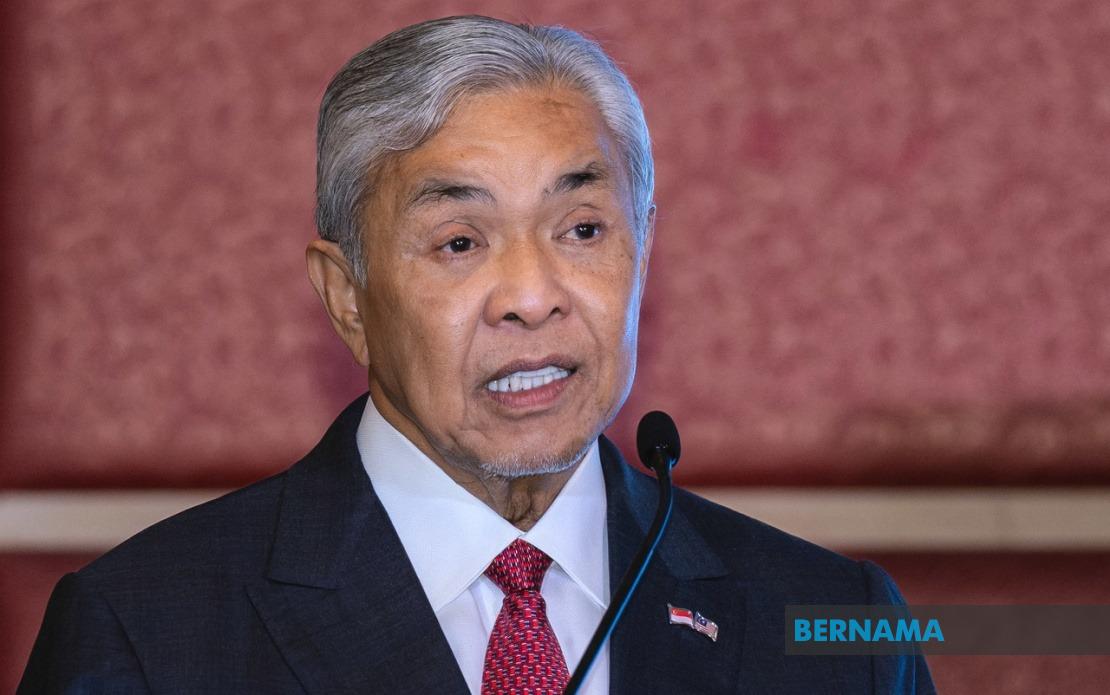
Malaysia is moving forward with plans to establish a self-contained system for managing its refugee and asylum seeker populations, marking a significant shift toward domestic policy independence. Deputy Prime Minister Datuk Seri Dr Ahmad Zahid Hamidi announced that the country would implement its own mechanisms under National Security Council (NSC) Directive No. 23, which was formally signed by Prime Minister Datuk Seri Anwar Ibrahim on June 14, 2023. This development represents a deliberate effort to address the complexities of refugee management without outsourcing responsibility to international bodies, a particularly relevant approach given Malaysia's hosting of over 126,000 registered Rohingya refugees alongside thousands of other asylum seekers from various nations.
The strategic framework underpinning this initiative encompasses three interconnected pillars that reflect Malaysia's multifaceted approach to the refugee question. First, the system prioritizes efficient management and rigorous enforcement of existing laws and regulations governing the presence of non-citizens. Second, it emphasizes policy coordination across multiple government agencies to ensure that eligible refugees can access essential services including healthcare, education, and employment opportunities. Third, the framework places paramount importance on protecting national security and upholding Malaysia's sovereignty, acknowledging that population movements and the integration of foreign nationals require careful oversight to maintain public order and protect citizen interests.
Ahmad Zahid highlighted that successful refugee management demands equilibrium between strict law enforcement and community responsibility, a nuance often overlooked in polarized debates on migration. He pointed to a persistent challenge undermining government efforts: the presence of local enablers who facilitate irregular employment and housing arrangements for undocumented migrants and asylum seekers. These individuals, driven by profit motives such as rental income from overcrowded housing or access to below-market labor costs, inadvertently create environments where migrants remain outside formal systems and beyond regulatory oversight. This informal economy not only complicates enforcement but also enables exploitation of vulnerable populations and distorts local labor markets.
The NSC Directive No. 23 itself represents comprehensive legislative architecture designed to clarify roles and responsibilities across Malaysia's bureaucratic apparatus. Rather than concentrating refugee management in a single ministry, the framework distributes functions among various departments and agencies, each contributing specialized expertise. This distributed approach reflects international best practices while adapting them to Malaysia's institutional structures and constitutional arrangements. The involvement of the NSC, operating under the Prime Minister's Department, ensures coordination at the highest levels of government and prevents fragmentation that could otherwise undermine policy coherence.
For Malaysia's context, this independent mechanism addresses longstanding concerns about external pressure and conditionality that often accompany reliance on international refugee frameworks. By developing domestic capacity, Malaysia maintains flexibility in policy implementation while remaining aligned with humanitarian principles. The country's decision carries particular significance for Southeast Asia, where other nations grapple with similar pressures from refugee populations fleeing Myanmar, Afghanistan, and other conflict zones. Malaysia's approach may influence regional discussions about burden-sharing and self-determination in migration policy.
The implementation of the Refugee Registration Document (DPP) serves as a cornerstone of this management system, providing documentary evidence of status that enables access to services while simultaneously improving security screening and population tracking. This documentation mechanism represents a middle ground between complete formal integration and informal marginalization, allowing authorities to monitor populations while progressively incorporating eligible individuals into social welfare systems. The system theoretically reduces the informal economy by creating incentives for compliance with registration requirements.
Malaysia's substantial refugee population, concentrated primarily among Rohingya communities from Myanmar, reflects both regional instability and Malaysia's geographic position as a transit and settlement destination. The country's development of an independent framework acknowledges this demographic reality while signaling that management will be determined by Malaysian priorities rather than external agendas. This distinction matters significantly in a region where great powers and international organizations sometimes promote divergent approaches to migration governance.
The challenge of balancing enforcement with service provision remains the practical crux of the directive's implementation. Providing healthcare, education, and employment access to asylum seekers creates expenses that Malaysian taxpayers bear, a reality that generates political sensitivity particularly when resources appear constrained for citizen populations. Ahmad Zahid's acknowledgment of this tension suggests the government recognizes that public support for refugee policies depends on demonstrating that management is orderly, that nationals retain priority access to resources, and that security risks are minimized. These considerations often conflict with humanitarian objectives, necessitating careful communication and transparent policy rationale.
The involvement of multiple ministries and government agencies in implementing NSC Directive No. 23 introduces both opportunities and risks. Coordination failures could create gaps that undermine the system's effectiveness or generate inconsistent treatment of refugee populations. Conversely, successful inter-agency collaboration could establish a model demonstrating how Malaysia manages complex cross-cutting policy challenges. The directive's success ultimately depends on adequate funding, staff training, institutional capacity, and political commitment sustained across electoral cycles and changes in government composition.
Regional implications of Malaysia's framework extend beyond bilateral relationships with neighboring countries. Thailand, Indonesia, and Bangladesh all manage substantial refugee and migrant populations without formal international refugee convention adherence, creating a regional consensus around sovereignty-focused management approaches. Malaysia's development of comprehensive domestic mechanisms aligns with this regional trend while potentially establishing standards that neighboring countries might emulate or reference in their own policy debates. The approach also reflects ASEAN's emphasis on non-interference and national determination, values that resonate across the region's diverse political contexts.
Looking forward, the effectiveness of Malaysia's independent refugee management system will be assessed not merely by policy documents but by outcomes: whether refugee populations are humanely treated, whether communities experience improved security and reduced exploitation, whether labor markets function fairly, and whether social cohesion is maintained. This multidimensional evaluation framework suggests that Malaysia recognizes refugee management as fundamentally a governance challenge requiring simultaneous attention to humanitarian, security, economic, and social dimensions rather than privileging any single objective.
The government's emphasis on combating local enablers suggests recognition that top-down enforcement alone cannot succeed without changing incentive structures throughout society. Educational campaigns, business regulation, and enforcement action targeting those profiting from irregular migration must operate in concert with service provision systems that offer legitimate alternatives to informal arrangements. This comprehensive approach distinguishes Malaysia's framework from purely restrictive models while maintaining operational control that protects national interests.

