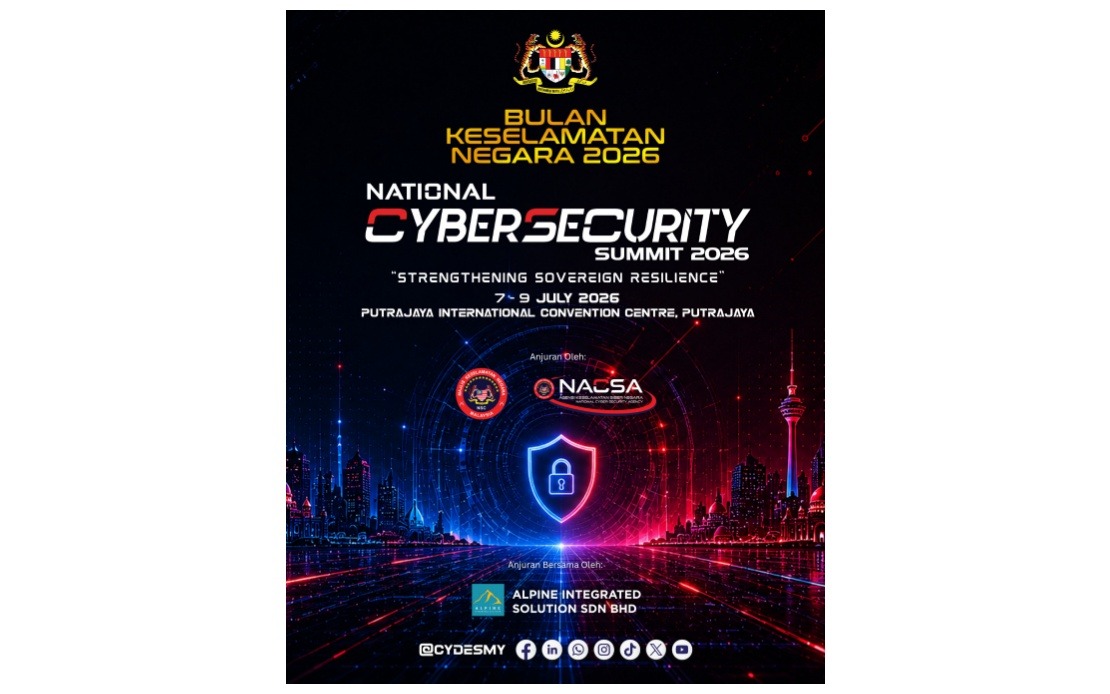
The National Cyber Security Agency (NACSA), operating under the Prime Minister's Department through the National Security Council (MKN), will convene the National Cyber Security Summit (NCSS) 2026 at the Putrajaya International Convention Centre (PICC) from July 7 to 9. The three-day gathering represents a significant milestone in Malaysia's ongoing efforts to consolidate its cyber security posture and forge stronger partnerships across governmental and commercial sectors.
The timing of the summit carries particular significance, arriving just days after the Dewan Rakyat passed the Cybercrimes Bill 2026 on July 1. This legislative milestone represents the culmination of extensive groundwork undertaken through the Malaysian Cyber Security Strategy (MCSS) 2025-2030, a comprehensive national framework that establishes the strategic direction for the nation's cyber defence initiatives over the coming years. The convergence of these developments signals a deliberate acceleration of Malaysia's cyber security agenda at both policy and operational levels.
Under the overarching theme "Strengthening Sovereign Resilience," the summit will concentrate on establishing a more robust, trustworthy and adaptable national cyber security infrastructure. This thematic focus reflects growing recognition that cyber threats have evolved beyond technical challenges into matters of national sovereignty and economic security. By emphasizing resilience, organisers are signalling that Malaysia's approach extends beyond reactive incident response to proactive systemic strengthening across all sectors of the economy and society.
The summit is being coordinated with National Security Month (BKN), amplifying its reach and impact. This strategic alignment allows the government to communicate its commitment to cyber awareness, inter-agency cooperation and collective preparedness against increasingly sophisticated digital threats. For Malaysian organisations, the concurrent messaging underscores the urgency of treating cyber security as a shared national priority rather than an isolated IT department concern.
The event programme is notably comprehensive, comprising 41 high-impact sessions that address diverse aspects of cyber security practice and policy. These range from discussions centred on the MCSS framework itself to specialised forums addressing cyber crime, dedicated tracks for Information and Communications Technology Security Officers, initiatives promoting women's participation in the cyber security profession, technical cryptography sessions branded as KRYPTECH, and hands-on technical workshops. This diversity of offerings ensures relevance for participants across the cybersecurity maturity spectrum, from strategic policymakers to frontline technical professionals.
The speaker roster and exhibitor participation reflect the breadth of Malaysia's cyber security ecosystem. The summit will feature 96 speakers and panellists drawn from government agencies, private industry, law enforcement bodies, technology firms, academic institutions and the broader cyber security community. Concurrently, 122 companies will exhibit, comprising 78 organisations based in Malaysia and 44 international firms representing seven countries. This composition demonstrates both the maturity of Malaysia's domestic cyber security sector and its growing integration into regional and global cyber security networks.
Projected attendance figures underscore the summit's anticipated significance within Malaysia's policy and business communities. The organisers expect approximately 3,000 total participants, encompassing trade visitors and conference delegates, with an additional 250 distinguished local guests expected to attend. These numbers position NCSS 2026 as a major gathering within Southeast Asia's cyber security calendar and a flagship event for Malaysia's year of cyber security engagement.
The summit will serve as the formal launch venue for three significant policy instruments, all to be unveiled by Prime Minister Datuk Seri Anwar Ibrahim. The National Security Policy (DKN) 2026-2030 will provide the overarching strategic context for national security efforts across all domains, including cyber. Simultaneously, the National Cryptography Policy and accompanying MyKriptografi Action Plan 2026-2030 will establish Malaysia's position on cryptographic standards, usage and governance—an increasingly critical domain as both state and non-state actors invest in quantum computing capabilities. Additionally, the Artificial Intelligence Systems Cybersecurity Framework (AISCF) will address the emerging challenge of securing AI-powered systems, reflecting awareness that artificial intelligence introduces novel attack surfaces and vulnerabilities requiring distinct defensive approaches.
For Malaysia and the broader Southeast Asian region, the summit reflects a maturing understanding that cyber security extends beyond technical implementation to encompass policy coherence, strategic partnerships and whole-of-nation coordination. The heavy participation of international exhibitors and speakers indicates Malaysia's positioning as a regional cyber security hub and trusted partner for international technology vendors and security practitioners. Malaysian enterprises attending will gain exposure to global best practices while signalling to international peers their commitment to cyber hygiene and resilience.
The emphasis on public-private collaboration embedded in the summit's structure addresses a structural vulnerability in many developing economies' cyber security postures. By bringing government agencies, private sector leaders and academic institutions into dialogue at the summit, Malaysia attempts to break down institutional silos that frequently impede effective cyber threat information sharing and coordinated response. For Malaysian CIOs and security leaders, the summit offers rare opportunities to engage directly with policymakers and peers on strategic cyber security challenges facing the nation.
The NCSS 2026 represents Malaysia's most substantial investment to date in demonstrating its cyber security commitment to both domestic constituencies and international observers. As cyber threats continue evolving in sophistication and as geopolitical competition increasingly manifests in digital domains, Malaysia's signals of serious engagement—through legislative action, policy frameworks, and high-visibility summits—help establish the country as a responsible steward of critical digital infrastructure within a challenging regional security environment.

