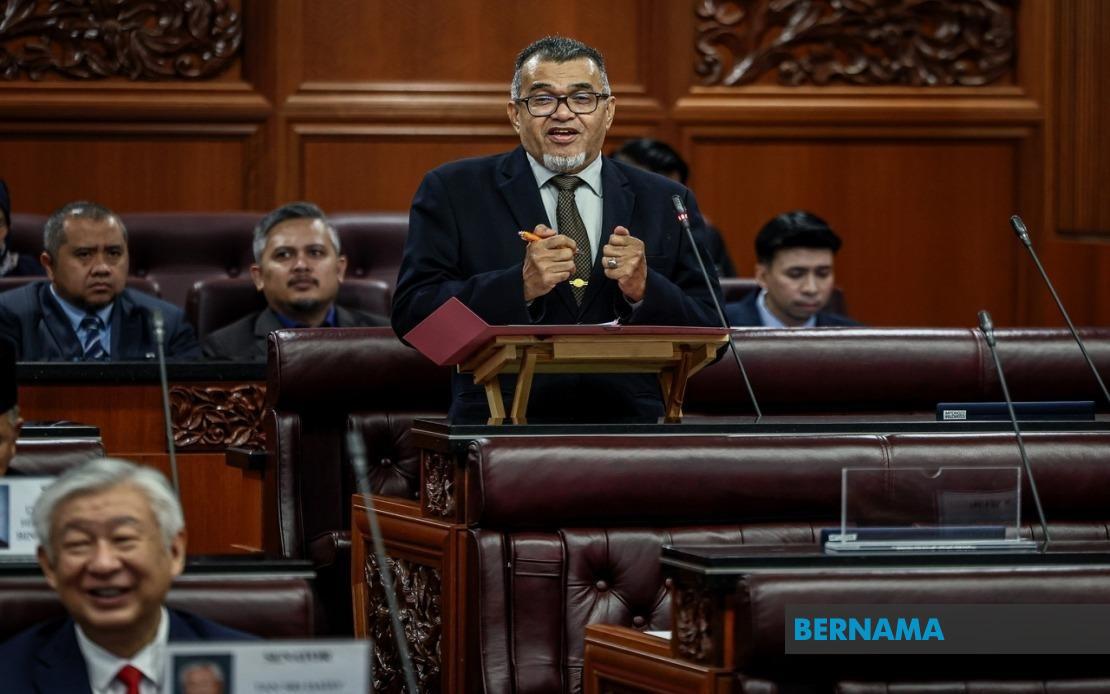
The Malaysian government is moving to dramatically strengthen its response to railway cable theft by proposing legislation that would impose penalties up to RM100,000 per offence, marking a hundred-fold increase from existing penalties. Deputy Transport Minister Datuk Hasbi Habibollah announced during a parliamentary question-and-answer session at the Dewan Negara that the amendment to rail transport law is in its final stages and is expected to be presented to Parliament by the end of the year. The significant jump in fines reflects the government's acknowledgment that current deterrents have proven inadequate in addressing a problem that has spiralled into a national infrastructure challenge affecting multiple rail operators.
The urgency of legislative reform is underscored by the staggering financial toll cable theft has inflicted across Malaysia's rail network. According to Hasbi, the cumulative losses across Keretapi Tanah Melayu Berhad (KTMB), Prasarana Malaysia Berhad, and the East Coast Rail Link (ECRL) project have reached RM50 million. This figure demonstrates not merely a law-and-order problem but a systemic threat to the viability of rail infrastructure investment and operational efficiency. The scale of these losses has prompted authorities to reconsider whether the RM1,000 maximum fine previously imposed on offenders represents any meaningful deterrent, particularly when measured against the broader damage to public services and national infrastructure development.
The East Coast Rail Link project has emerged as a particularly vulnerable target for criminal activity, with 71 documented cable theft incidents resulting in estimated losses of RM4.06 million during the construction phase alone. While the project remains under development and has not yet commenced revenue-generating operations, the theft pattern has already begun jeopardising the implementation timeline. Hasbi warned that ongoing criminal activity threatens to delay critical phases including equipment installation, system testing, commissioning procedures, and operational readiness. Beyond the ECRL project itself, an additional RM0.69 million in losses stemmed from theft and damage to other equipment and materials across the broader network, bringing total documented losses from the ECRL initiative to RM4.75 million. This situation is particularly troubling given that the project represents a significant national investment and strategic infrastructure development designed to enhance regional connectivity.
The prevalence of cable theft reflects broader vulnerabilities in physical security across Malaysia's rail infrastructure. The cables targeted by thieves serve critical functions in train signalling, power distribution, and communication systems—their removal creates cascading operational disruptions that extend far beyond the immediate theft location. Disruptions cascade through the entire network, affecting scheduling, passenger services, and freight operations that depend on reliable rail connectivity. The cumulative effect of these individual incidents has become impossible to ignore, particularly as public frustration with service interruptions mounts and investor confidence in rail infrastructure reliability comes into question.
In response to the escalating crisis, authorities have implemented a multi-layered security enhancement strategy that operates alongside the proposed legislative changes. The government is currently installing 1,146 closed-circuit television cameras positioned strategically along railway corridors extending from Johor northward throughout the country. This surveillance infrastructure represents a substantial capital investment in deterrence and evidence collection, acknowledging that visible monitoring can discourage criminal activity while simultaneously providing evidentiary support for prosecution of offences that do occur.
Beyond surveillance technology, operational security has been strengthened through human and canine resources. Keretapi Tanah Melayu Berhad has acquired twenty scrambler motorcycles equipped for use by the Auxiliary Police force, enabling rapid-response patrols that provide continuous twenty-four-hour security coverage across vulnerable sections of the rail network. This ground-level presence serves a dual purpose—both immediate intervention capability and visible deterrence of criminal activity. The deployment of sniffer dogs trained to detect and alert officers to suspicious activity adds another sensory dimension to security operations.
Physical infrastructure modifications complement surveillance and patrol measures. Railway authorities have implemented enhanced access controls, including the sealing of high-security manholes that previously provided easy entry points for thieves attempting to access underground cable runs. These engineering-based security measures address the root accessibility issues that have enabled criminals to operate with relative impunity. By systematically closing the easiest routes of access, authorities force would-be offenders to expend greater effort and risk in conducting theft operations.
For Malaysian and Southeast Asian observers, this legislative push reflects a pattern increasingly visible across the region: the recognition that critical infrastructure theft has become a organised criminal enterprise requiring proportionately serious legal consequences. The RM100,000 fine threshold, while substantial by regional standards, represents what government analysis suggests is necessary to create genuine financial deterrence. The amendment's passage would signal to criminal networks that infrastructure crime carries consequences comparable to other serious offences, potentially triggering a reassessment of risk-reward calculations that currently favour targeting rail systems.
The governance implications of this initiative extend beyond simple penalty enhancement. The proposed amendment represents an implicit government acknowledgment that previous legislative frameworks failed to anticipate or adequately address the scale of organised infrastructure crime that has emerged in recent years. As Malaysia's rail networks—particularly ambitious projects like the ECRL—represent substantial national investments designed to generate long-term economic returns, protecting these assets from criminal predation has become integral to project viability. The legislative response demonstrates alignment between judicial, security, and transport policy authorities in treating infrastructure theft as a matter of genuine national concern.
Implementation of the enhanced penalties will require coordination across multiple institutional layers. Prosecutors will need to pursue cable theft cases with new vigour, law enforcement agencies must maintain investigative focus on what some consider low-priority street crime, and courts must apply the enhanced penalties consistently to establish deterrent credibility. If successfully implemented, the legislative framework could serve as a template for addressing similar infrastructure vulnerabilities across other sectors, from telecommunications to electrical distribution networks that face comparable predatory pressures.
The timeline for parliamentary presentation remains ambitious but achievable, with Hasbi suggesting presentation by year's end. Once tabled, the amendment will enter the standard legislative process, where debate may refine specific provisions while maintaining the core objective of dramatically elevating consequences for rail infrastructure crime. For rail passengers, operators, and infrastructure investors, passage of this amendment represents a potentially meaningful turning point in the government's commitment to protecting the assets and services upon which modern Malaysia's connectivity and economic integration depend.

