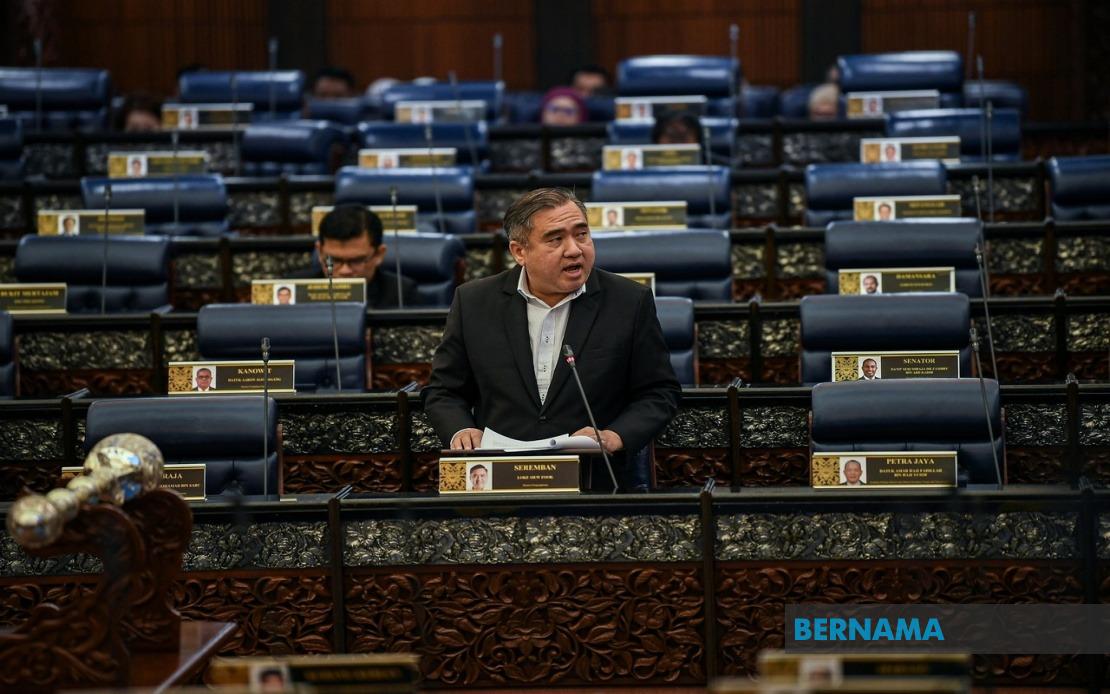
Transport Minister Anthony Loke has introduced legislation that marks a significant shift in how Malaysia tackles the persistent problem of illegal street racing and unauthorized speed testing on public roads. The Road Transport (Amendment) Bill 2025, tabled for its second reading in Parliament today, carves out illegal racing as a distinct criminal offence rather than relying on existing dangerous driving provisions, a move that enforcement agencies believe will streamline prosecution efforts and deter dangerous behaviour more effectively.
The centrepiece of the legislative package is the proposed Section 42A, which establishes racing or speed testing as a standalone transgression under the Road Transport Act 1987. This distinction matters considerably because it allows traffic authorities and police to intervene at the point of illegal activity without requiring evidence that an accident has occurred, someone has been injured, or worse. Under current legislation, enforcement action typically depends on proving dangerous driving elements that result in actual harm—a high evidentiary bar that often leaves street racing activities unchecked until tragedy strikes.
First-time offenders caught engaging in illegal racing will face financial penalties ranging from RM2,000 to RM10,000, imprisonment lasting up to two years, or a combination of both penalties. The graduated penalty structure reflects the seriousness with which lawmakers now regard the issue, moving beyond what many consider lenient existing frameworks. For individuals convicted a second time or more, the consequences escalate sharply: fines climb to between RM5,000 and RM20,000, with potential imprisonment extending to five years or both punishments imposed together. This escalation acknowledges that repeat offenders often ignore initial court sanctions and require more substantial deterrence.
The practical enforcement advantage of the new provision cannot be overstated for Malaysian traffic authorities operating in major urban centres. Under current law, if motorcyclists engage in speed competitions or test acceleration against one another on city streets or highways, police struggle to establish the specific elements required for dangerous driving charges, even when the behaviour creates manifest risks to other road users. The amendment allows authorities to take direct action the moment two or more vehicles race one another, regardless of whether damage or injury has materialized. This preventive enforcement stance shifts the legal framework from reactive to proactive intervention.
Beyond targeting the racers themselves, the Bill introduces Section 110B, which addresses the ecosystem supporting illegal racing activity. The provision criminalizes obstruction of enforcement officers, physical interference with patrol vehicles, assault, intimidation, following enforcement personnel, and critically, the sharing of information designed to help street racers evade police action. Such support activities will face fines between RM10,000 and RM50,000, imprisonment from one to five years, or both. Making these offences arrestable gives officers greater flexibility to detain supporters and information-sharers who enable the racing community to organize events and circumvent law enforcement.
For Malaysian motorists accustomed to relatively light financial penalties for traffic violations, the scaling of maximum compound offers represents another enforcement evolution. The Bill seeks to raise the standard minimum fine and compound ceiling from the long-standing RM300 threshold to RM500, though Loke clarified that this does not constitute an automatic flat charge. Rather, enforcement officers will exercise discretion based on violation severity, offender cooperation, applicable procedures, and settlement timing. The new maximum compound rates are scheduled to take effect on January 1, 2029, allowing a transition period for public awareness and administrative preparation.
This graduated penalty approach responds to longstanding complaints from traffic enforcement agencies that existing maximum compound amounts do not provide sufficient incentive for offenders to pay settlements. With compounds capped at RM300, many middle-class road users viewed the sums as negligible inconveniences, particularly compared to court fines and potential jail time. By elevating compound authority to RM500, authorities hope to increase voluntary settlement rates and reduce court caseloads while capturing deterrent value proportionate to the infraction.
The amendment package specifically addresses non-compliant vehicles, overloading violations, and commercial transport breaches, categories that have proven difficult to police given resource constraints across Malaysian enforcement agencies. The enhanced penalties for obstructing enforcement operations recognize that many commercial vehicle operators and racing enthusiasts actively work to evade detection, monitor enforcement checkpoints through mobile networks, and coordinate avoidance strategies. By penalizing the information-sharing infrastructure that enables such evasion, lawmakers attempt to dismantle the logistical support systems that make organized illegal racing possible at scale.
Contextually, the Bill arrives amid growing public concern over street racing incidents in Malaysian cities, particularly in the Klang Valley and around major urban conurbations where nighttime and early-morning racing events have attracted substantial participant and spectator numbers. Traffic fatalities involving young riders have generated sustained media attention and parental advocacy, creating political momentum for stronger legislative responses. The amendment reflects recognition that existing laws have proven insufficient to suppress the activity or its associated risks to innocent road users.
For regulatory compliance specialists and commercial vehicle operators, the enhanced enforcement focus on vehicle standards and loading violations carries practical implications. The expanded penalty structure and assertive enforcement posture telegraph that authorities intend sustained crackdowns on commercial transport non-compliance, suggesting companies should prioritize vehicle maintenance audits and driver training programs to avoid escalated penalties. The emphasis on obstructing enforcement also signals zero tolerance for facilitating driver evasion or tampering with vehicle tracking systems.
The Bill's passage through Parliament would position Malaysia alongside other Southeast Asian jurisdictions implementing stricter penalties for street racing, reflecting regional concern over transportation safety and public order. Singapore, Thailand, and the Philippines have each recently enhanced sanctions for illegal racing activities, suggesting a coordinated regional approach to road safety governance. Malaysian lawmakers appear mindful of comparative legislative trends and the reputational imperative of demonstrating governmental capacity to maintain public highway safety.
During parliamentary tabling, Loke emphasized that the legislative framework balances punishment with prevention, allowing authorities to intervene before harmful consequences materialize rather than prosecuting only after accidents occur. This philosophical shift represents meaningful movement in Malaysian road safety policy toward harm-reduction principles increasingly adopted across developed transport systems. The provisions collectively attempt to establish that illegal racing constitutes inherent public danger worthy of criminal sanction independent of actual accident outcome, aligning with contemporary understanding of systematic risk assessment in transportation regulation.