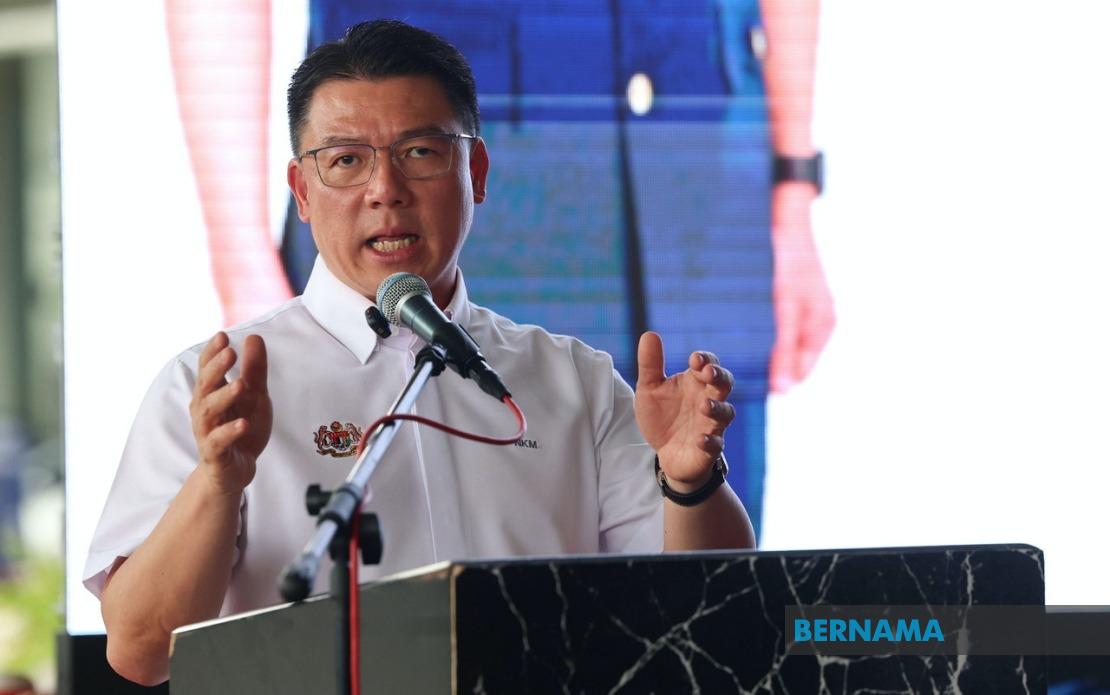
Housing and Local Government Minister Nga Kor Ming has signalled that Malaysia intends to emulate Japan's approach to waste management and recycling as part of a broader strategy to establish a circular economy across the country. The announcement reflects growing recognition among Malaysian policymakers that sustainable waste practices require both systemic change and cultural transformation—lessons that Japan's decades-long commitment to environmental stewardship offers in concrete form.
Nga outlined Japan's most notable contribution to waste management: the practice of source separation, whereby households and businesses sort refuse at the point of generation before collection. This approach has become deeply embedded in Japanese society, functioning not merely as a regulatory requirement but as an ingrained cultural norm. The minister stressed that Malaysia could benefit significantly from understanding how Japan has successfully woven environmental responsibility into the fabric of daily routine, moving beyond compliance-driven waste reduction to voluntary, citizen-led participation.
The foundation for bilateral cooperation is now firmly established through a Cabinet-approved Memorandum of Understanding between Malaysia and Japan. This framework is designed to facilitate the systematic transfer of expertise, technological solutions, and operational best practices in waste and circular economy management. The arrangement moves beyond the exchange of theory and instead focuses on practical knowledge transfer that addresses Malaysia's specific challenges in transitioning from a linear "take-make-dispose" economic model to one where materials are recycled, reused, and recovered throughout their lifecycle.
Nga emphasized that cultivating environmental consciousness must begin in early childhood. Education-driven initiatives that teach waste separation, recycling principles, and personal responsibility for cleanliness create foundations that extend into adulthood and across generations. By positioning these practices as habitual rather than burdensome, Malaysia can avoid the widespread resistance that often accompanies purely enforcement-based environmental policies, instead nurturing what Japan has demonstrated is achievable: a society where environmental stewardship becomes second nature.
Malaysia has already implemented several foundational measures to support its circular economy transition. The National Circular Economy Blueprint provides an overarching strategic framework, while the recently established National Circular Economy Council coordinates implementation across relevant government agencies and private sector stakeholders. Additionally, shopping mall licensing requirements now mandate recycling facility provision, embedding waste management infrastructure into consumer spaces where Malaysians spend considerable time. Simultaneously, phased restrictions on single-use plastic bags represent progress in reducing unnecessary waste at source.
The cooperation discussion took place during a formal courtesy visit between Nga and Noriyuki Shikata, Japan's Ambassador to Malaysia, at the ambassador's official residence in Kuala Lumpur. This diplomatic engagement underscores the strategic importance both nations attach to environmental cooperation and reflects Japan's position as a regional leader in waste technology and circular economy practices. For Malaysia, the partnership offers access to proven methodologies developed and refined over many years in a sophisticated, wealthy economy with comparable urban development challenges.
Japanese Ambassador Shikata extended an invitation for Malaysian officials and delegations to participate in GREEN×EXPO 2027, scheduled for Yokohama. This international exhibition represents a significant opportunity for Malaysia to showcase its emerging circular economy initiatives, learn from global leaders in sustainable development, and identify partnership prospects in allied fields such as smart city technology, renewable energy integration, and sustainable urban planning. The expo's focus on environmental innovation positions Malaysia to accelerate its adoption of cutting-edge solutions.
The broader implications for Southeast Asia are noteworthy. Malaysia's deliberate effort to adopt and adapt Japan's waste management philosophy could establish a regional benchmark and inspire neighboring countries to pursue similar partnerships. As waste generation accelerates across the region alongside economic growth, systematic approaches to circular economy development become increasingly urgent. Malaysia's commitment potentially positions the country as a knowledge hub that can subsequently facilitate circular economy advancement throughout Southeast Asia.
Nga's vision of combining Japanese technological expertise and operational experience with Malaysia's ongoing domestic reforms suggests a pragmatic approach to environmental transformation. Rather than attempting to devise entirely original systems or waiting for grassroots change to occur organically, Malaysia acknowledges that proven models can be adapted to local conditions. This strategy acknowledges that circular economy transitions require simultaneous action across multiple domains: regulatory frameworks, infrastructure investment, technological adoption, and cultural change.
The emphasis on behavioral change and cultural integration, rather than enforcement alone, reflects evolving international thinking on environmental policy. Regulatory mandates alone have demonstrated limited effectiveness in generating sustained behavioral change; instead, combining structural incentives with social norms and educational efforts produces more durable results. Japan's success in making waste separation a normalized practice demonstrates that over time, environmental habits become self-reinforcing, reducing the administrative burden of enforcement.
For Malaysian consumers and businesses, deepening ties with Japan on circular economy issues could yield practical benefits including improved recycling infrastructure, clearer labeling standards, producer responsibility programs, and market opportunities in the growing environmental technology sector. As companies across Malaysia respond to circular economy requirements, demand for Japanese expertise in waste-to-resource conversion, material sorting technology, and sustainable packaging solutions will likely increase, creating new commercial partnerships and employment opportunities in green industries.

