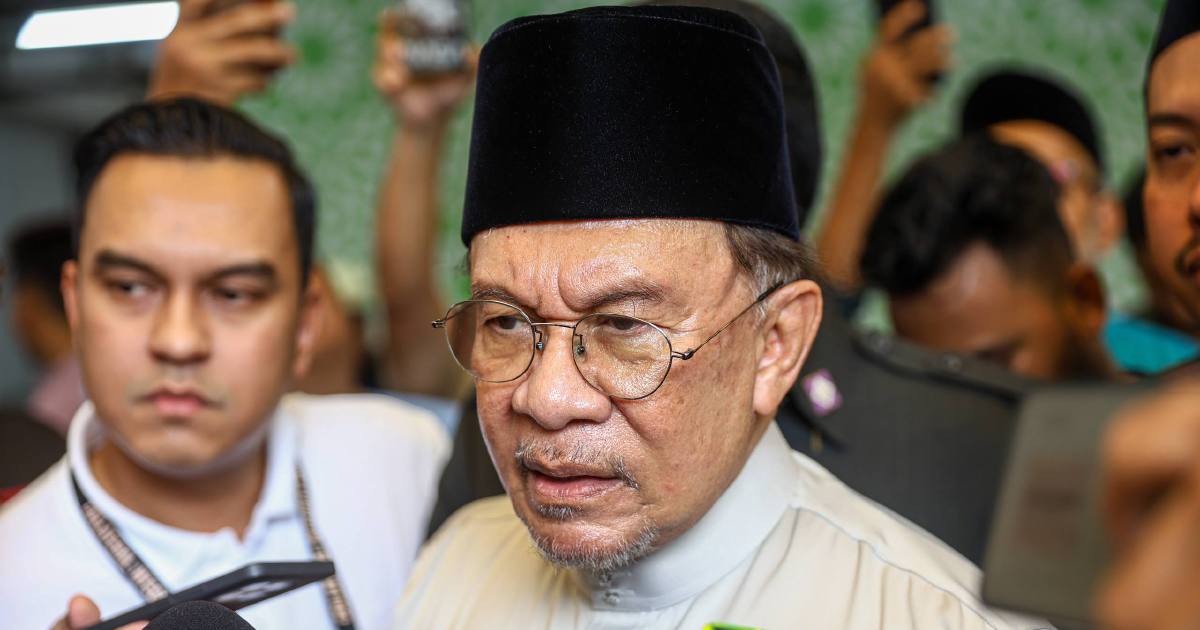
Prime Minister Datuk Seri Anwar Ibrahim has made clear that Malaysia's position on Low Taek Jho—the fugitive financier known internationally as Jho Low—will remain unchanged even if the United States decides to grant him a presidential pardon. The statement underscores Kuala Lumpur's determination to hold the prominent businessman accountable for his alleged role in the 1Malaysia Development Berhad scandal, one of the world's largest cases of alleged grand larceny and money laundering.
Jho Low has become synonymous with the sprawling 1MDB controversy, which involved the disappearance of billions of ringgit from the sovereign wealth fund between 2009 and 2014. The businessman, who once wielded considerable influence over Malaysian business and political circles, has been the subject of international manhunts and legal proceedings across multiple jurisdictions. Despite his prominence and far-reaching connections, he has managed to evade capture and remains at large, believed to be in hiding outside Malaysia.
Anwar's declaration carries particular significance given the evolving political landscape in the United States and the potential for presidential clemency actions. The incoming administration in Washington has been known to consider controversial pardons and commutations, raising concerns among various governments pursuing cases involving their nationals or fund flows. Malaysia's explicit statement demonstrates that Kuala Lumpur does not intend to treat any US pardon as a basis for reconsidering its domestic legal position or investigative efforts.
The 1MDB scandal has had profound repercussions for Malaysia's financial reputation and governance standards. Investigations revealed that approximately US$4.5 billion was misappropriated from the fund through an elaborate network of shell companies, offshore accounts, and complex financial transactions. Jho Low was identified as a central orchestrator in directing the fund's assets toward luxury purchases, real estate investments, and private ventures. The case exposed vulnerabilities in Malaysia's regulatory frameworks and prompted significant reforms in financial oversight.
Anwar's government has maintained an aggressive posture toward holding those responsible for the 1MDB affair accountable. Beyond Jho Low, several high-ranking Malaysian officials have faced prosecution and conviction in connection with the scandal. This sustained commitment reflects the administration's effort to restore public confidence in institutional integrity and demonstrate that no individual, regardless of wealth or connections, stands above the law. The prime minister's statement reinforces this message to the Malaysian public and the international community.
The possibility of a US pardon represents a potential complication in the global pursuit of Jho Low. Various countries have coordinated efforts to locate and bring charges against the businessman. The United States has its own investigations into financial crimes linked to his activities, including money laundering and conspiracy charges. A presidential pardon would not extinguish Malaysia's legal claims or render its courts powerless to prosecute, but it could complicate extradition efforts and signal a shift in US cooperation on the matter.
Malaysia's firm stance also reflects broader considerations about international justice and the accountability gap that can emerge when wealthy individuals exploit cross-border financial systems. The nation has invested considerable diplomatic and legal resources in pursuing cases against those responsible for the 1MDB theft. Officials have coordinated with law enforcement agencies in the United States, Singapore, and other countries to trace stolen funds and gather evidence. Any suggestion that Malaysia might soften its position could undermine these multilateral efforts.
The fugitive's continued evasion represents a frustration for Malaysian authorities who have issued multiple arrest warrants and Interpol red notices. Over the years, reports have placed Jho Low in various jurisdictions, though none have resulted in his capture. His ability to move undetected and maintain access to resources despite his notoriety has raised questions about the adequacy of international mechanisms for apprehending white-collar fugitives with substantial financial means.
Anwar's unequivocal statement also serves a domestic political function. The 1MDB scandal played a central role in the 2018 general election, which swept the previous government from power. For the current administration, demonstrating that it has not abandoned the pursuit of those responsible remains important for legitimacy. By explicitly rejecting any notion that a foreign pardon would alter Malaysia's course, Anwar signals to voters that accountability for the scandal remains a priority regardless of external pressures or developments.
Looking forward, Malaysia's position creates a potential diplomatic complexity if a pardon materializes. The nation may need to navigate tensions between its relationship with the United States and its commitment to pursuing the case. However, Anwar's statement suggests that Kuala Lumpur views this as a matter of principle that transcends diplomatic convenience. The prime minister's remarks also reflect a broader regional concern about ensuring that transnational financial crimes do not go unpunished simply because perpetrators manage to escape to jurisdictions perceived as sympathetic to clemency.
The statement represents continuity with Malaysia's approach to the 1MDB affair since the current government came to office. Despite challenges and setbacks, officials have consistently demonstrated determination to pursue accountability. This resolve extends across different administrations and represents rare consensus that the scandal's perpetrators must face consequences. Anwar's position therefore reflects not merely his personal stance but a broader national commitment that has transcended normal political divisions.

