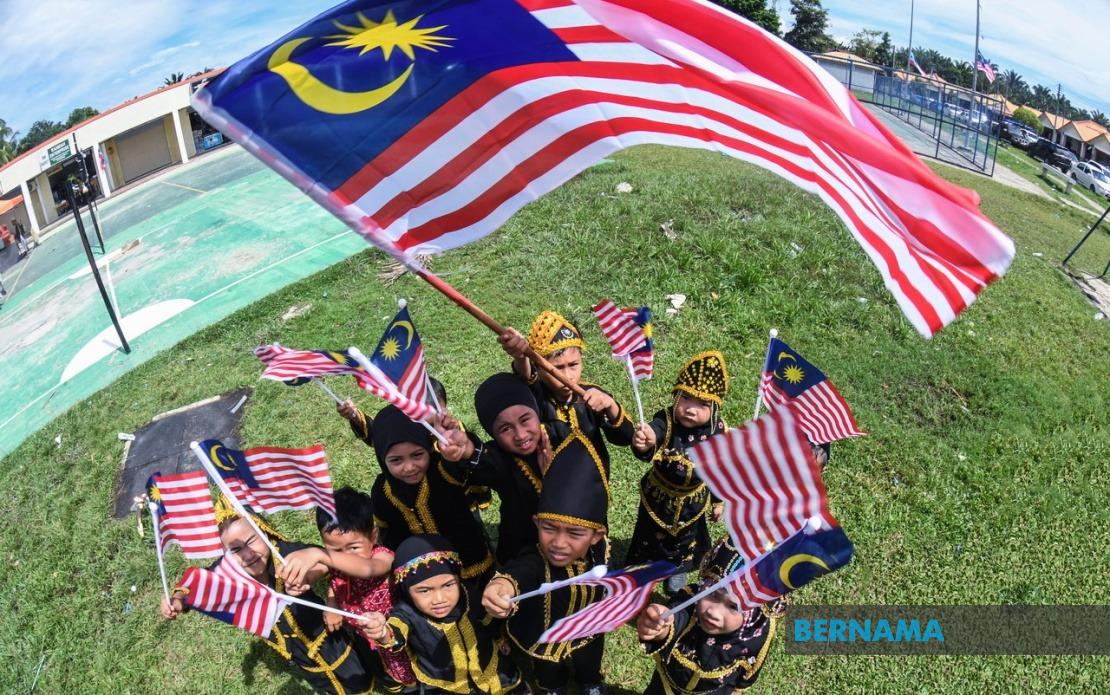
Malaysia's approach to this year's National Month and Malaysia Day festivities will take a noticeably different path, with organisers opting for an understated yet emotionally resonant celebration. The official launch of the National Month and Fly the Jalur Gemilang 2026 campaign will occur at the Ministry of Health Training Institute Sultan Azlan Shah in Tanjung Rambutan, Perak, on July 19, marking a deliberate shift away from the large-scale outdoor events that characterised previous years.
Muhammad Najmi Mustapha, director of communications and community development at the Information Department, articulated the rationale behind this scaled-down approach during an interview with NasionalFM. Rather than viewing the indoor format as a constraint, officials have positioned it as a thoughtful recalibration that acknowledges contemporary global circumstances. The decision reflects broader concerns about energy security and the destabilising effects of international conflicts in West Asia—considerations that have prompted government agencies to reassess their event planning protocols across the region.
Prime Minister Datuk Seri Anwar Ibrahim will formally inaugurate the campaign, with proceedings commencing at 10 am. The ceremony will receive comprehensive media coverage through multiple channels, ensuring that Malaysians unable to attend in person can participate in the symbolic opening. Radio Televisyen Malaysia, the national news agency BERNAMA, and digital platforms including the Facebook Live pages of Merdeka360, the Ministry of Communications, and the Information Department will all broadcast the event simultaneously, democratising access to the patriotic observance.
Official messaging emphasises that scaling back the physical footprint of the launch does not diminish the depth of patriotic commitment underlying these celebrations. Rather, organisers contend that concentrating resources on a more intimate setting allows for greater intentionality and meaning-making around the themes central to Malaysia's national identity. The launch ceremony itself functions as a catalyst, initiating a cascade of programmes and activities throughout the nation designed to sustain momentum around National Month observances during August.
Central to this year's campaign is the continuation and expansion of the "1 Rumah 1 Jalur Gemilang" initiative, a grassroots movement encouraging households to display the Malaysian flag. This deceptively simple concept has evolved into a more sophisticated framework involving nine distinct institutional clusters. Beyond the traditional sectors of education, higher education, health, security, community engagement, industry, and government agencies, the programme now encompasses places of worship and sports organisations. This expansion reflects recognition that patriotic expression operates across diverse social spheres and that mobilising various communities amplifies the resonance of national identity narratives.
The broader thematic architecture for Malaysia Day 2026 celebrations has already been established, with Communications Minister Datuk Seri Fahmi Fadzil unveiling the overarching framework. The chosen theme, "Malaysia MADANI: Kesejahteraan Dinikmati," positions material wellbeing and shared prosperity as central to contemporary Malaysian nationalism. This framing connects patriotism not merely to historical remembrance or abstract principles of national belonging, but to tangible improvements in living standards and social welfare—a strategic pivot that links flag-waving with government policy outcomes.
The Malaysia MADANI logo, which has already become recognisable across the public sphere, will continue serving as the visual identity for celebrations extending through 2026. This consistency in branding represents a deliberate attempt to build cumulative cultural associations between the logo, the national values it represents, and the government's development agenda. For Malaysian audiences and those of neighbouring countries observing Malaysian nationalism, the repeated deployment of consistent imagery and messaging functions as a form of soft power projection.
Digital mobilisation constitutes a significant pillar of this year's campaign strategy. Citizens are being encouraged to harness social media platforms to express patriotism through profile picture customisation featuring the Jalur Gemilang and the creation and sharing of content tagged with specific hashtags. The designated hashtags—#HKHM2026, #MalaysiaMADANI, #KesejahteraanDinikmati, and #Merdeka360—create searchable clusters of user-generated patriotic content, effectively outsourcing promotional work to enthusiastic citizens while creating the appearance of organic, grassroots enthusiasm.
This social media strategy carries particular relevance for regional audiences, as it demonstrates how Southeast Asian governments are increasingly adapting nationalist campaigns to function within digital ecosystems. The approach acknowledges that contemporary patriotic expression frequently occurs through online channels and peer-to-peer sharing mechanisms rather than exclusively through traditional state-orchestrated gatherings. For countries throughout the region grappling with how to maintain national cohesion in digitally fragmented societies, Malaysia's integrated online-offline campaign offers a replicable template.
The principal National Day celebration itself will transition to Dataran Putrajaya on August 31, where organisers have committed to maintaining a balance between modesty and vibrancy. This phasing approach—with the launch occurring in a provincial setting and the climactic celebration in the nation's administrative centre—distributes patriotic observance across geographical and temporal space, potentially expanding reach while maintaining fiscal prudence.
For Malaysian readers and Southeast Asian observers, this recalibration of National Month celebrations reflects broader governance trends. Governments throughout the region face competing pressures to demonstrate patriotic commitment while responding to economic constraints and international crises. Malaysia's decision to reimagine rather than cancel major commemorative events suggests that national identity construction remains a governmental priority even amid resource limitations. The emphasis on grassroots flag-flying and digital participation further indicates a shift toward mobilising citizen participation as a cost-effective yet symbolically powerful alternative to state-provided spectacle.

