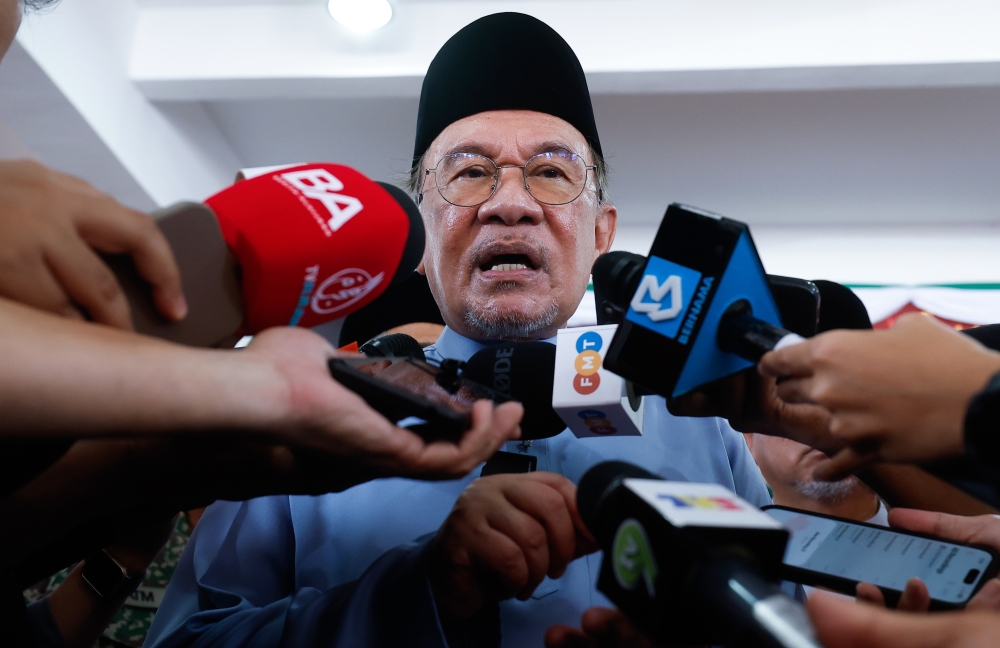
Prime Minister Datuk Seri Anwar Ibrahim declared on July 24 that Malaysia remains committed to ongoing negotiations with the United States regarding tariffs, while expressing measured relief that the rate under discussion falls considerably below the more stringent measures being imposed elsewhere. Speaking in Port Dickson, Anwar signalled the government's determination to maintain constructive engagement with Washington even as trade friction escalates across multiple fronts in Southeast Asia.
The Malaysian government's approach reflects a delicate balancing act. As a major export-dependent economy with significant manufacturing and trade ties to America, Malaysia cannot afford to allow relations to deteriorate, yet must also protect domestic interests and maintain strategic flexibility. The fact that Anwar chose to characterise the proposed tariff level as relatively restrained suggests the administration sees room for further negotiation rather than viewing the talks as a final showdown.
Context matters considerably here. The United States has been systematically reviewing trade relationships across Asia, with some nations facing substantially higher tariff proposals. Malaysia's position as a technology manufacturing hub—particularly in semiconductors and electronics—makes it both valuable and vulnerable to American trade pressure. The country's economy depends heavily on exports to the US market, with electronics and electrical machinery forming the backbone of bilateral trade flows.
Anwar's public reassurance about continuing talks carries implicit messaging to both domestic audiences and international investors. Domestically, it signals the government is actively working to minimise economic disruption. To foreign firms operating in Malaysia, it offers confidence that the investment environment will remain stable despite broader trade uncertainties. The measured tone also suggests the administration believes tariff negotiations can be resolved through dialogue rather than tit-for-tat escalation.
The regional dimension adds another layer to Malaysia's strategic calculus. Vietnam, Thailand, and Indonesia all face their own trade pressures from Washington, creating opportunities for coordinated ASEAN responses if necessary. However, individual countries also compete for preferential treatment, meaning bilateral negotiations remain the primary avenue. Malaysia's willingness to engage continuously—rather than adopting a confrontational stance—may position it favourably relative to more antagonistic trading partners.
Economically, the difference between a relatively low tariff rate and a higher one translates into billions of ringgit in potential costs across Malaysia's industrial base. Manufacturing companies already operating on thin margins would face significantly compressed profitability if tariffs spike. This reality underpins Anwar's apparent optimism; a lower rate, while still painful, remains manageable for most exporters compared to double-digit percentage increases that could trigger relocation decisions.
The government's emphasis on continuing negotiations rather than accepting existing proposals suggests room for movement remains. International trade talks rarely conclude after a single exchange of positions. Malaysia's diplomatic approach—signalling both openness to dialogue and appreciation for relatively moderate terms—creates space for eventual compromise. The message essentially tells the American administration that Malaysia is a reasonable partner willing to work through differences.
Investor sentiment will hinge significantly on how these negotiations unfold over coming months. Companies making decisions about manufacturing locations, supply chain reconfiguration, and expansion plans need certainty. Anwar's public statements help stabilise expectations by indicating the situation is manageable rather than spiralling toward a damaging trade war. This psychological dimension of trade diplomacy often matters as much as the actual numbers being negotiated.
Southeast Asia's broader trade environment has shifted markedly in recent years. The region increasingly finds itself caught between competing great power interests, with trade negotiations becoming vehicles for geopolitical positioning. Malaysia's pragmatic approach—maintaining dialogue without surrendering core interests—represents the strategy many ASEAN nations have adopted. This collectively cautious orientation reflects the reality that no single Southeast Asian economy can afford isolation from major global trading powers.
The semiconductor and electronics sectors particularly deserve attention when considering tariff implications. Malaysia hosts numerous multinational manufacturing facilities that feed into global supply chains. Tariffs that disrupt these chains risk triggering broader market inefficiencies that could affect consumers worldwide. American policymakers understand these interconnections, which may explain why Malaysia faces relatively moderate pressure compared to countries in more adversarial trading relationships.
Anwar's remarks also reflect a broader recognition that trade relationships in the contemporary global economy operate within dense networks of mutual dependence. Pure protectionism inevitably produces countermeasures that harm the imposing nation's own interests. This economic reality constrains how aggressively either Malaysia or the United States can push tariff demands without suffering collateral damage.
Looking ahead, the trajectory of these negotiations will significantly influence Malaysia's economic outlook for the remainder of this year and beyond. Manufacturing confidence, investment flows, and employment levels all depend partly on achieving acceptable tariff arrangements. Anwar's steady messaging helps maintain psychological stability in markets that otherwise might flee the country in response to trade uncertainty. The coming weeks and months will reveal whether the government's cautious optimism proves justified or whether American trade posturing escalates regardless of diplomatic engagement.

