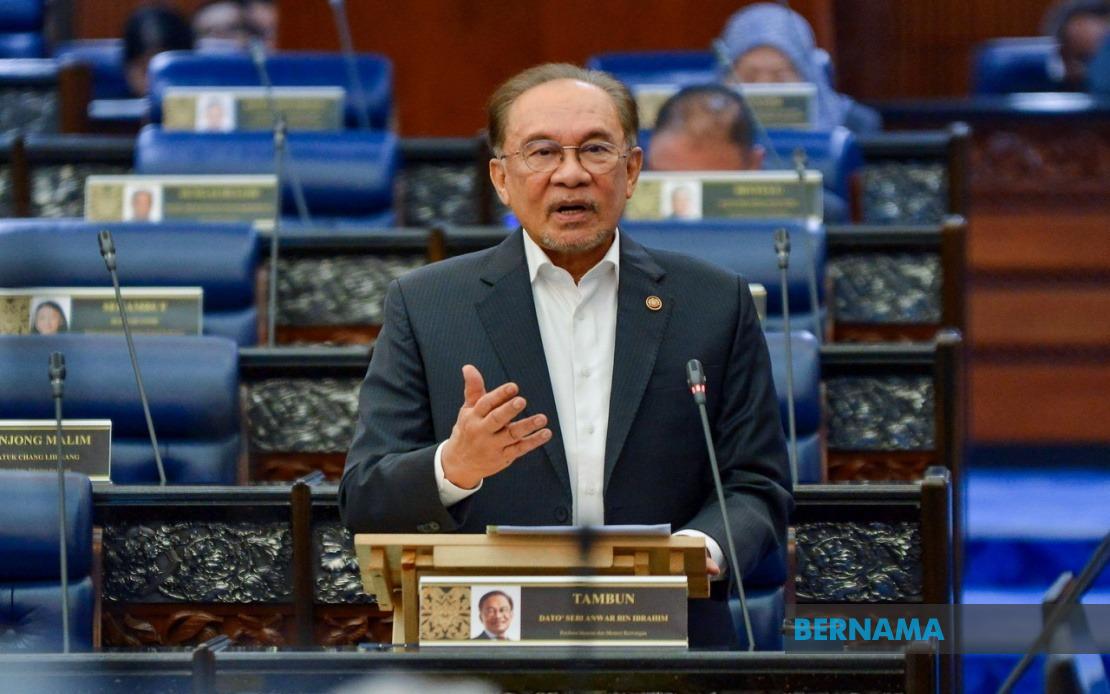
The Malaysian government intends to maintain its focus on creating employment opportunities for local workers whilst conducting a thorough examination of which sectors genuinely require foreign labour, Prime Minister Datuk Seri Anwar Ibrahim declared in Parliament on July 14. Speaking during a debate in the Dewan Rakyat, Anwar emphasised that any recruitment of foreign workers would follow established legal channels and be subject to rigorous scrutiny, with existing foreign workers already in Malaysia being given first consideration for available positions before new hiring takes place.
Anwar's comments came in response to concerns raised by Khoo Poay Tiong, the member of Parliament for Kota Melaka, about labour shortages affecting small and medium enterprises and the parallel challenge of creating sufficient job opportunities for young Malaysians. The Prime Minister acknowledged that certain sectors of the economy do genuinely require foreign workers to function effectively, yet argued that this reality must be balanced against the government's commitment to maximising local employment and addressing systemic issues within the foreign labour framework.
A key concern highlighted by Anwar was the long-standing problem of foreign worker syndicates, which he characterised as both a financial burden on the economy and a mechanism through which individuals accumulate illicit wealth. He signalled that tackling these organised networks would form part of the government's broader approach to labour policy, suggesting that reform of the foreign worker system cannot be separated from addressing corruption and criminal elements within the recruitment and management of migrant workers.
The government has indicated that any expansion in foreign worker quotas will require coordinated study between the Ministry of Human Resources and the Ministry of Home Affairs, reflecting the multifaceted nature of labour migration policy in Malaysia. This inter-ministerial approach signals that security considerations will weigh heavily alongside economic and labour market factors when determining whether additional foreign workers should be permitted to enter the country. Such coordination is particularly important given Malaysia's geographic position and the complex security environment throughout Southeast Asia.
Anwar made clear that enforcement action against foreign workers who breach local laws would intensify, irrespective of their nationality or ethnic background. He specifically mentioned the Rohingya population, indicating that protections afforded under Malaysian law apply equally to all workers—documented and undocumented—who comply with regulations, but that those who violate legal requirements face consistent consequences. This positioning reflects the government's attempt to balance humanitarian concerns with the rule of law and national security imperatives.
A particular focus of the government's approach involves tightening approval processes for bringing in foreign professional workers, particularly in high-skill sectors such as artificial intelligence and digital technology. Anwar revealed that some employers have exploited the visa approval system by recruiting workers under professional expertise categories when those individuals do not actually perform the specialised roles they were ostensibly hired to fill. This abuse of the professional worker pathway undermines both labour market integrity and the government's ability to attract genuine expertise needed for economic development.
The Prime Minister's statements reflect growing recognition that Malaysia's foreign worker policy has become overly complex and subject to manipulation by unscrupulous employers and recruitment syndicates. By explicitly linking the issue of youth employment to foreign labour controls, Anwar positioned the government as taking seriously the concerns of younger Malaysians who feel disadvantaged in a labour market where employers sometimes prefer cheaper, more compliant foreign workers over local workers. This framing acknowledges that the foreign worker question is not merely an economic issue but also a social and political one affecting voter sentiment.
The emphasis on tightening controls for foreign professional workers, particularly those claiming expertise in cutting-edge sectors like artificial intelligence, suggests the government recognises that Malaysia cannot simply restrict all foreign hiring without damaging its competitiveness. Instead, the strategy appears to involve distinguishing between legitimate skills gaps that foreign workers can address and illegitimate employer preferences for foreign labour that could be filled by trained Malaysians. This nuanced approach requires more sophisticated regulatory capacity than currently exists in some parts of the bureaucracy.
For Malaysian businesses, particularly small and medium enterprises that have relied heavily on foreign labour, Anwar's statements indicate that the path forward will involve greater scrutiny of their workforce plans and potentially higher barriers to foreign worker recruitment. However, the acknowledgement that some sectors do need foreign workers suggests that the government is not pursuing a blanket prohibition policy. Instead, sectors demonstrating genuine labour shortages and compliance with regulations will likely continue to have access to foreign workers, albeit under stricter conditions.
The broader context of this policy discussion includes Malaysia's demographic challenges, with an ageing population and declining birth rates that may eventually constrain labour supply in certain sectors. Anwar's framing suggests the government is attempting to thread a difficult needle: maximising employment for young Malaysians today while acknowledging that future demographic trends may necessitate continued foreign worker reliance. This long-term perspective distinguishes the current approach from more populist labour nationalism that ignores structural economic realities.
Regionally, Malaysia's revised approach to foreign workers carries implications for neighbouring countries that depend on Malaysian job opportunities for their workers. Thailand, Myanmar, the Philippines, and Indonesia have historically provided significant numbers of migrants to Malaysia, and stricter controls could affect remittance flows and employment patterns throughout Southeast Asia. However, other regional economies facing similar pressures to prioritise local employment may view Malaysia's policy as establishing a precedent worth following.

