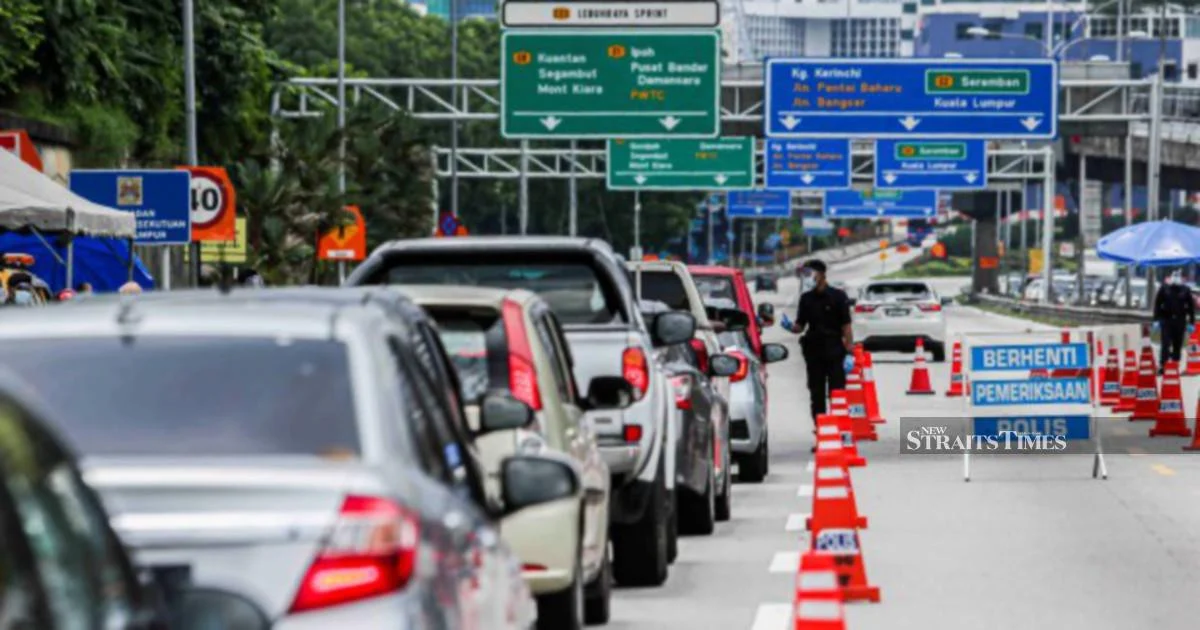
The Malaysian government is moving closer to implementing a substantial increase in traffic penalties, with proposed amendments to the Road Transport Act 1987 set to elevate maximum compound rates to RM500 for over 700 distinct road traffic offences. The legislative changes, pending parliamentary approval, represent one of the most comprehensive adjustments to the nation's traffic enforcement regime in recent years and signal a renewed commitment to road safety through stricter financial deterrents.
The current framework governing traffic compounds has remained relatively static, with many penalty levels failing to keep pace with inflation or the evolving nature of road safety risks. By raising the ceiling to RM500, authorities aim to make financial penalties more meaningful as a deterrent against repeat offenders and reckless driving behaviour. This approach reflects a broader regional trend across Southeast Asia where countries are tightening enforcement mechanisms to combat rising traffic incidents and fatalities on increasingly congested road networks.
The scope of the proposed increase is notably expansive, affecting over 700 different traffic violations under the comprehensive Act 333 framework. These infractions span multiple categories, from minor regulatory breaches such as improper parking or faulty vehicle documentation, to more serious transgressions including dangerous lane changes, excessive speeding, and driving without proper licensing. The tiered approach embedded within the amendments suggests that not all offences will attract the maximum RM500 penalty, with the legislation likely establishing proportionate sanction levels based on violation severity.
For Malaysian motorists, the implications are immediate and substantial. Regular commuters in urban centres like Kuala Lumpur, Selangor, and Penang—where traffic density and enforcement intensity are highest—can expect notably higher financial exposure for violations they might previously have dismissed as minor inconveniences. A motorcycle rider caught without a helmet, traditionally facing relatively modest fines, could now face a significantly steeper penalty, fundamentally altering the cost-benefit calculus for road users who previously viewed compounds as negligible expenses.
From a revenue perspective, the amendments present considerable implications for federal and state transport agencies responsible for traffic enforcement. Enhanced penalty levels typically generate increased compound collections, funds potentially earmarked for road infrastructure improvements, safety initiatives, or policing expansion. However, this revenue dimension remains sensitive politically, as aggressive enforcement coupled with higher penalties can invite public criticism regarding whether authorities prioritise safety objectives or fiscal collection targets.
The legislative initiative also addresses practical enforcement challenges faced by traffic police across Malaysia. Inflation has eroded the deterrent value of penalties set years ago, with some maximum compounds remaining fixed despite substantially increased operating costs and living standards. By recalibrating penalty structures, lawmakers seek to restore proportionality between violations and financial consequences, ensuring that deterrence remains effective across all socioeconomic demographic groups rather than becoming negligible for higher-income offenders.
Industry observers anticipate that insurance companies and vehicle financing institutions will closely monitor parliamentary proceedings, as enhanced traffic penalties could influence risk assessments, premium calculations, and loan terms offered to Malaysian motorists. Commercial vehicle operators managing fleet insurance and maintenance budgets will face genuinely higher compliance costs, potentially influencing insurance renewal strategies and driver training expenditures across logistics and transportation sectors.
The timing of these amendments reflects accumulated pressure from road safety advocates and transport authorities responding to persistent traffic fatality statistics and injury trends across Malaysian highways and urban arteries. Recent years have witnessed recurring campaigns highlighting preventable accidents attributable to driver negligence, inadequate vehicle maintenance, and regulatory non-compliance. Enhanced financial penalties represent one complementary enforcement tool alongside education initiatives, technology deployment such as automated enforcement cameras, and infrastructure improvements designed to systematically reduce accidents.
International experience suggests that penalty escalation alone yields diminishing deterrent returns without accompanying public awareness campaigns and consistent enforcement deployment. Singapore, for instance, maintains aggressive traffic enforcement with substantial penalties, yet combines these measures with extensive public education and integrated safety approaches. Malaysian authorities will likely need to coordinate the legislative changes with comprehensive public communication strategies to maximise compliance rather than simply implementing higher fines in isolation.
The parliamentary timeline remains critical, as amendments require formal debate, scrutiny through legislative committees, and ultimately majority approval. Industry stakeholders including vehicle associations, transport companies, insurance providers, and motoring advocacy groups have opportunities during consultation periods to submit representations regarding implementation implications. Their feedback could influence final penalty structures, transitional provisions, and enforcement protocols accompanying the legislative changes.
Once enacted, the amendments will establish new baseline expectations for Malaysian road safety culture. The financial consequences of traffic violations will become substantially more material for everyday motorists, potentially catalysing behavioural adjustments across driving practices, vehicle maintenance compliance, and overall regulatory adherence. The success of these reforms ultimately depends not merely on penalty magnitude but on consistent enforcement, public acceptance, and integration within broader, holistic road safety frameworks addressing infrastructure, vehicle standards, and driver behaviour comprehensively.