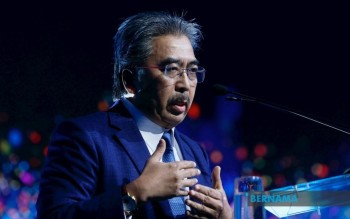
The Malaysian government is charting a new course to reassess how the country sources its imports and will introduce targeted policies aimed at reducing reliance on external suppliers, particularly for capital goods. Speaking at an industry conference in Kuala Lumpur, Minister of Investment, Trade and Industry Datuk Seri Johari Abdul Ghani outlined plans to develop strategies that enable Malaysia to capture greater value from its considerable trade and investment activities. This pivot reflects a broader shift in thinking about how the nation can transition from a volume-based trading model to one emphasising domestic capability and technological advancement.
The urgency of this recalibration became apparent against the backdrop of Malaysia's record-breaking trade performance. Last year, total merchandise trade exceeded RM3 trillion for the first time in the nation's history, demonstrating the sheer scale of commercial activity flowing through Malaysian ports and borders. Exports grew by 6.5 per cent to reach RM1.61 trillion, while imports climbed 6.2 per cent to RM1.45 trillion, generating a comfortable trade surplus of RM151.8 billion. Yet despite these impressive headline figures, Johari highlighted a uncomfortable reality: the value being created within Malaysia itself remains insufficient to support the nation's long-term development aspirations.
Central to this challenge is Malaysia's persistent gap in achieving high-income nation status. According to World Bank metrics, nations are classified as high-income when gross national income per capita reaches US$14,375. Malaysia currently sits at US$12,380, placing it approximately 16 per cent below the threshold. What complicates matters further is that this benchmark itself continues to shift upwards over time, meaning Malaysia must achieve productivity gains not merely to close the existing gap but to maintain pace with the moving target. This structural challenge demands more than incremental improvements; it requires sustained advances across productivity, innovation, and the sophistication of economic activities.
Johari articulated a crucial distinction between passive economic management and strategic positioning. The minister argued that continuing with business-as-usual policies would inevitably leave Malaysia trailing its aspirations. Instead, policymakers must demonstrate strategic flexibility, cultivate diverse partnership options, and make deliberate choices that protect national interests over the long term. This framing suggests frustration with an approach that has treated imports as a mere cost variable to be minimised rather than as a lever for strategic industrial policy.
The government's emerging strategy involves a fundamental reconsideration of which products and inputs Malaysia should continue importing versus which categories warrant domestic production investment. Johari warned that an over-reliance on importing lower-cost goods creates a dangerous dynamic: it provides short-term affordability benefits but erodes the domestic industrial base over time. Once manufacturing capacity and technological expertise wither from disuse, recovering them becomes exponentially more difficult and expensive. Policymakers must therefore craft incentives and regulations that nurture local manufacturing and build technological capabilities, even if initial costs exceed imported alternatives.
The iron and steel sector illustrates this principle starkly. Malaysia once possessed a self-sufficient iron and steel industry capable of meeting domestic demand. However, following the entry of larger foreign competitors offering comparable products at lower prices, the domestic sector contracted significantly. Johari used this cautionary tale to explain why Malaysia cannot simply welcome all foreign investment indiscriminately. Rather, the country should actively encourage foreign firms to complement the local ecosystem by introducing products and technologies that do not yet exist domestically. This differentiated approach would simultaneously reduce import requirements while creating growth opportunities for both foreign and domestic enterprises operating within Malaysia.
The broader context for these policy discussions involves Southeast Asia's competitive positioning in an increasingly fragmented global economy. Regional nations face mounting pressure to develop distinctive competencies and higher value-added activities rather than competing primarily on cost. Vietnam, Thailand, and Indonesia have each pursued different strategies to climb the value chain. Malaysia's approach, as articulated by Johari, emphasises building indigenous technological capacity and reducing external dependencies—a sensible strategy given the nation's existing sophistication in certain sectors and its relatively advanced institutional framework.
Concrete implementation of these import review and domestic strengthening policies remains underdeveloped in Johari's public statements. The review process itself will likely require detailed sector-by-sector analysis, identifying which imports are genuinely necessary versus which could be substituted with domestic alternatives. Policymakers will need to balance genuine industry protection with maintaining Malaysia's reputation as an open trading nation. The transition must unfold gradually enough to avoid supply chain disruptions or sudden cost increases that could harm Malaysian businesses and consumers.
Parallel to these industrial policy discussions, the financial sector is also evolving to support domestic business needs. RHB Bank unveiled RHB Pay, described as Malaysia's first bank-owned unified online payment gateway, addressing a gap in Malaysia's digital commerce infrastructure. The platform enables businesses to accept card payments, FPX transfers, and DuitNow Pay through a single integration, with plans to expand to e-wallets and QR payments by the fourth quarter of 2026. Designed for mid-sized enterprises and corporates, RHB Pay reflects growing recognition that strengthening domestic industries requires not just manufacturing policy but also financial infrastructure supporting business operations and cash flow management.
The convergence of import policy review, domestic industry strengthening, and digital financial infrastructure suggests Malaysian policymakers are pursuing a coordinated approach to economic transformation. Rather than isolated interventions, these initiatives form complementary elements of a broader strategy to shift Malaysia's economic model towards higher complexity and greater domestic value capture. Success will depend on sustained political commitment, effective coordination across government agencies, and willingness to make difficult choices about which industries warrant protection or support. The coming months will reveal whether these policy intentions translate into concrete mechanisms capable of reshaping Malaysia's economic trajectory.

