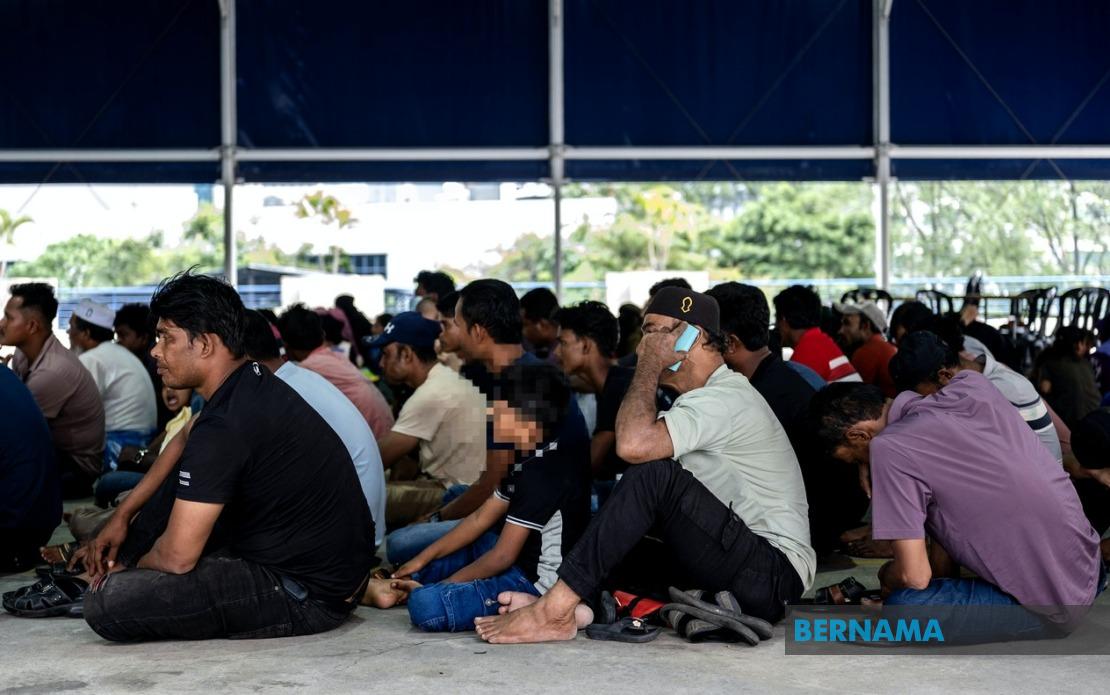
Home Minister Datuk Seri Saifuddin Nasution Ismail has signalled that Malaysia will obtain its first comprehensive dataset on Myanmar refugees by the fourth quarter of this year, marking a significant milestone in the country's efforts to systematically manage one of Southeast Asia's most pressing displacement crises. Speaking at a press conference in Putrajaya, the minister confirmed that the Home Ministry's Immigration Department is actively collecting data through the Refugee Registration Document (DPP) programme in coordination with relevant government agencies.
The timing of this data collection represents an important step forward for Malaysia, which has long grappled with managing large populations of undocumented migrants and refugees. With over 180,000 Myanmar nationals currently in the country—many having fled military conflict and political upheaval since the 2021 coup—the need for accurate, verifiable information has become increasingly urgent. The DPP programme was established to address this information gap by gathering comprehensive biometric data and identity verification on individuals classified within the refugee category, enabling the government to move beyond estimates toward concrete figures that can inform policy decisions.
Saifuddin Nasution emphasised that the preliminary results, to be shared publicly once compiled, will provide the foundation for subsequent government actions. The minister acknowledged the inherent challenge of the exercise: reaching out to refugees and encouraging voluntary registration when many live in informal settlements and harbour legitimate fears about government intervention. The Home Ministry's strategy involves publicising the data collection initiative widely, reassuring potential registrants that the process is designed to help rather than hinder their circumstances, while simultaneously preparing the machinery for managing verified refugee populations.
The DPP programme's scope extends beyond Myanmar nationals to encompass all individuals identified as refugees in Malaysia, reflecting a broader approach to refugee management that transcends any single country of origin. This inclusive framework suggests the government's intention to develop comprehensive policies applicable across its refugee population rather than ad-hoc measures targeting specific nationalities. Such an approach could establish important precedents for how Malaysia handles future displacement crises in a region prone to conflict and natural disasters.
Legitimate refugees identified through the registration process will receive priority consideration for repatriation, with Wisma Putra—Malaysia's Foreign Ministry—taking the lead on diplomatic negotiations and coordination with third countries and international organisations. This division of labour between domestic registration and international diplomacy acknowledges that repatriation requires not merely identifying who should leave, but securing agreements from destination countries and ensuring safe passage. The repatriation framework becomes particularly significant given the volatile security situation in Myanmar, where certain regions remain unsafe for returnees despite the passage of time since the coup.
The initiative aligns with National Security Council Directive No. 23 (Revision 2023), which establishes the government's security and administrative framework for managing non-citizens and displaced populations. This regulatory alignment ensures that the DPP programme operates within established legal parameters and connects to broader national security considerations, though it also underscores how refugee issues intersect with sovereignty and border management in Malaysia's policy thinking. The directive's 2023 revision suggests evolving government thinking about how to balance humanitarian obligations with security imperatives and domestic labour market concerns.
For Malaysia's significant refugee and migrant communities, the announcement carries both promise and uncertainty. Those who register will gain documented status and potential pathways to repatriation, but questions remain about what interim support structures exist for the extended period between registration and actual departure. The lack of detailed information about temporary protection, employment rights, and humanitarian assistance during the transition phase reflects ongoing ambiguity in Malaysia's refugee policy architecture.
Regionally, Malaysia's data collection exercise gains importance given the interconnected nature of displacement in Southeast Asia. Myanmar's crisis has created knock-on effects across Thailand, Bangladesh, and other neighbouring countries, with Malaysia serving as a secondary destination for those seeking to escape camps or inadequate conditions elsewhere. The Malaysian government's attempt to develop accurate refugee statistics could eventually facilitate better regional coordination on burden-sharing and durable solutions, though such cooperation has historically proven elusive among Southeast Asian governments.
The fourth quarter timeline provides a window during which international observers and humanitarian organisations will likely scrutinise both the data collection process and the subsequent government response. How many individuals actually register, which nationalities and circumstances predominate, and how quickly verified refugees transition toward repatriation will all shape assessments of whether the DPP programme succeeds as a management tool or becomes another example of refugee policy stalling without meaningful resolution. For Myanmar nationals in Malaysia, the coming months will determine whether registration represents genuine progress toward safety and dignity or merely a bureaucratic exercise that leaves fundamental uncertainties unresolved.

