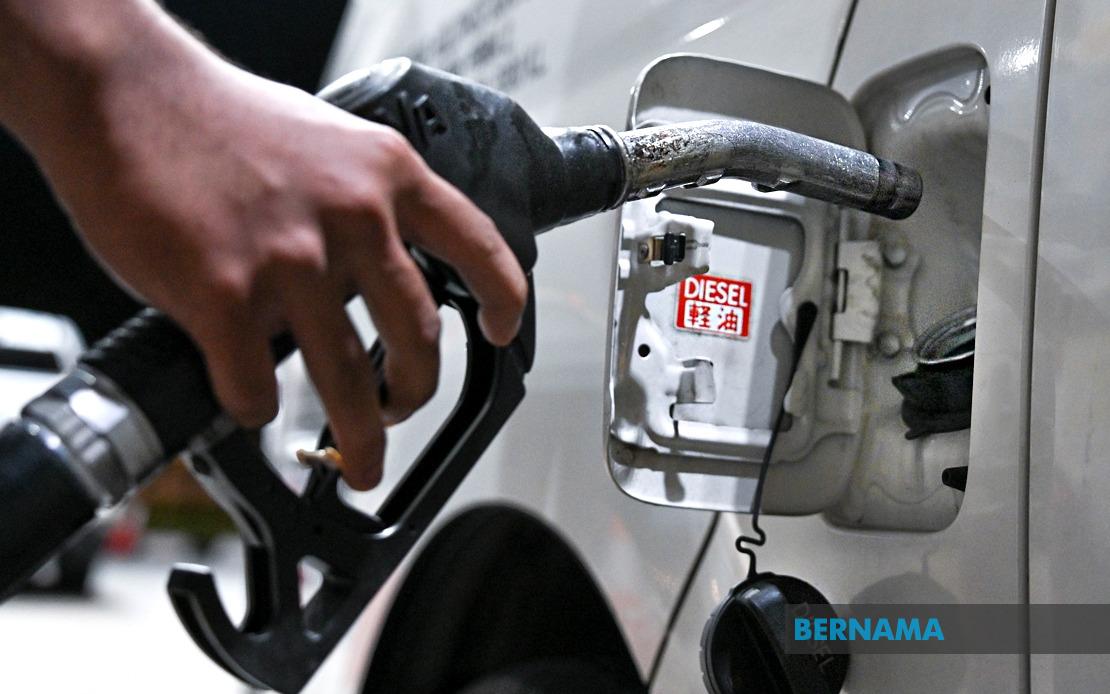
Malaysia's government is embarking on an ambitious fuel subsidy overhaul designed to recoup up to RM2 billion annually in lost revenue whilst maintaining affordable diesel prices for legitimate users. The BUDI MADANI Diesel programme, set for full rollout on July 1, represents a watershed moment in how Kuala Lumpur manages one of its most sensitive fiscal challenges—controlling fuel costs whilst plugging pervasive leakages that have drained public coffers. Second Finance Minister Datuk Seri Amir Hamzah Azizan outlined the initiative at a press conference in Putrajaya, positioning it as a strategic intervention to stabilise domestic fuel markets and redirect subsidy benefits toward genuinely eligible Malaysians.
The fiscal pressure underpinning this reform has become acute. The government's routine monthly subsidy burden for petrol and diesel hovered around RM800 million during normal market conditions, but surged dramatically to nearly RM4.7 billion in March and RM4.9 billion in April as global crude oil prices climbed. Such volatility exposes the vulnerability of Malaysia's current subsidy architecture, which lacks the precision mechanisms needed to target assistance effectively. The unprecedented spike revealed a structural weakness: without proper oversight, subsidised fuel becomes susceptible to exploitation, diverting government resources away from those most in need whilst simultaneously creating unforeseen fiscal liabilities that destabilise budget forecasts.
Evidenced consumption data paints a stark picture of systemic leakages. Monthly diesel consumption jumped from approximately 624 million litres to nearly 1.2 billion litres—a near doubling that defies normal demand patterns and points squarely toward unauthorised diversion channels. This anomaly signals that significant quantities of subsidised diesel are being siphoned away through cross-border smuggling networks and fraudulent access schemes, where ineligible purchasers exploit poorly secured subsidy mechanisms to obtain fuel at below-market rates. The financial impact compounds over time: such leakages not only drain government finances but simultaneously create supply bottlenecks that threaten domestic availability and destabilise fuel distribution infrastructure.
The situation grows particularly concerning when examining East Malaysia's consumption patterns. Sabah and Sarawak together now consume roughly two billion litres annually, nearly double their estimated legitimate requirement of one billion litres. This divergence suggests approximately one billion litres annually vanish through unaccounted channels—a haemorrhage that demands immediate structural intervention. The scale of these losses underscores why targeted, technology-enabled reform has become not merely a fiscal preference but an operational necessity for maintaining fuel security across the nation.
The BUDI MADANI Diesel framework addresses these vulnerabilities through a MyKad-based verification system mirroring the successful BUDI RON95 model. This mechanism restricts subsidised diesel access to 700,000 registered private diesel vehicle owners, creating a transparent, auditable distribution chain that is considerably more resistant to fraud. By tethering diesel subsidy entitlements directly to individual identification, the government introduces accountability at the point of sale, making it substantially harder for smugglers and unauthorised buyers to exploit subsidised channels. The standardised, nationwide system replaces a patchwork of regional approaches with uniform rules, simplifying administration whilst enhancing compliance monitoring.
Diesel will be capped at RM2.10 per litre for eligible beneficiaries accessing the programme. Existing recipients currently receiving RM400 monthly cash assistance will be automatically transitioned to direct point-of-sale subsidies without requiring fresh applications, easing the administrative burden on users whilst reducing processing delays. This migration preserves the real value of support whilst shifting delivery from cash transfers to direct fuel cost reductions—a change that may actually improve effectiveness by eliminating leakages in the cash distribution process itself. Early access commences on June 27 across Peninsular Malaysia, providing a phased implementation runway that allows petrol station networks to adapt their systems and troubleshoot technical issues before nationwide activation.
The RM2 billion annual savings projection derives from eliminating the estimated leakage volume whilst normalising consumption patterns to reflect genuine demand. Officials contend that by restricting access through MyKad verification, consumption should contract substantially from current artificially inflated levels toward sustainable baselines. These recovered resources represent real fiscal room that the government can redirect toward other pressing priorities—infrastructure, healthcare, education—or deploy toward further targeted relief for genuinely vulnerable households. From a macroeconomic perspective, reducing subsidy expenditure also improves fiscal discipline, potentially enhancing Malaysia's debt sustainability metrics and reducing pressure on the ringgit through improved current account dynamics.
The programme's architecture reflects lessons learned from subsidy reform experiences across Southeast Asia. Thailand, Indonesia, and the Philippines have all grappled with ballooning fuel subsidy costs, and most discovered that uniform pricing without targeting mechanisms inevitably generates leakages and fiscal crises. Malaysia's approach of combining price caps with identity verification represents a middle path—maintaining affordability for intended beneficiaries whilst introducing technological guardrails against abuse. However, implementation success hinges entirely on execution: petrol station systems must operate reliably, MyKad verification databases must function seamlessly, and monitoring mechanisms must identify and prosecute fraud swiftly and transparently.
From a consumer perspective, the RM2.10 diesel price represents a meaningful commitment to affordability. Compared to regional peers and global market rates, this level provides substantial protection against oil price volatility whilst incentivising conservation behaviour. Eligible commercial operators, transporters, and private vehicle owners benefit from predictable fuel costs that facilitate budgeting and operational planning. The transparency of the mechanism—clear eligibility criteria, uniform pricing, verifiable system operations—also builds public confidence that subsidy resources are being deployed fairly rather than captured by well-connected elites or lost to administrative bloat.
Nevertheless, critics may argue that the programme's success remains contingent on several fragile assumptions. Technological systems must perform flawlessly across thousands of petrol stations; smuggling networks may adapt by targeting other fuel products or developing counterfeit verification methods; and political pressure to expand eligibility could erode the targeting discipline that underpins fiscal savings. Regional implications also warrant consideration: if Malaysia successfully plugs diesel leakages, cross-border smuggling patterns may shift, potentially complicating fuel management in neighbouring jurisdictions. Thailand and Brunei, both significant sources of arbitrage-driven fuel flows, may experience altered smuggling pressure.
The initiative also carries deeper policy implications beyond immediate fiscal recovery. It signals Kuala Lumpur's willingness to undertake politically sensitive subsidy reform whilst maintaining protective safety nets for designated constituencies—a balancing act that many developing nations struggle with. Successful execution could provide a template for reforming other subsidy programmes and expand the principle of identity-verified, targeted assistance to domains like electricity, cooking oil, or rice. Conversely, implementation failures could undermine public confidence in digital governance and technologically-mediated welfare delivery, potentially hampering future reform efforts.
As Malaysia navigates commodity price cycles and fiscal pressures, the BUDI MADANI Diesel programme represents a crucial test of institutional capacity and political commitment. The government's ability to recover RM2 billion annually whilst maintaining affordable fuel for eligible users will depend not on the elegance of the policy design, but on meticulous execution, robust monitoring, and sustained resistance to the inevitable lobbying pressures that accompany subsidy reallocation. For Malaysian policymakers and businesses dependent on fuel affordability, the next six months will prove decisive in determining whether targeted subsidy reform can succeed at scale—or whether systemic leakages remain an intractable feature of Malaysia's fuel landscape.