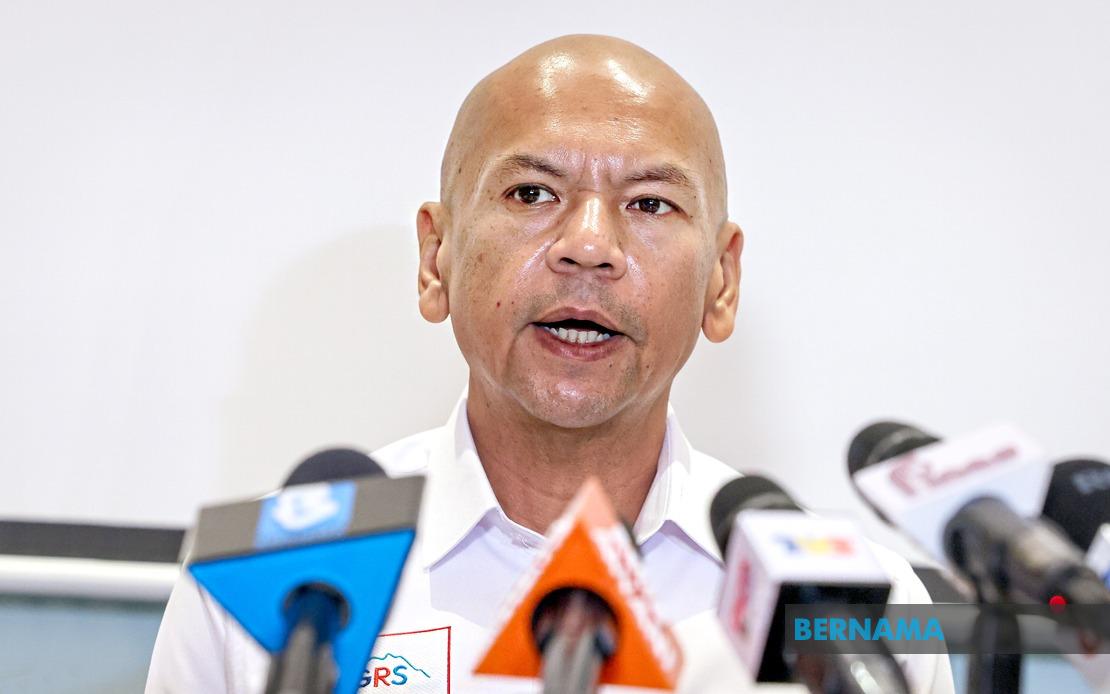
Malaysia's Domestic Trade and Cost of Living Ministry plans to significantly ramp up its Rahmah MADANI Sales Programmes as a strategic response to persistent consumer pressure over essential goods pricing. Domestic Trade and Cost of Living Minister Datuk Armizan Mohd Ali confirmed during a visit to Labuan on July 19 that the government remains committed to deploying these subsidised retail initiatives more intensively across the country, adapting the schedule to match local economic conditions and purchasing patterns.
The Rahmah MADANI Sales Programmes represent a cornerstone of the government's cost-of-living mitigation strategy, delivering essential commodities at substantial discounts ranging from 10 to 30 per cent below standard retail prices. Currently, these sales are conducted nine times monthly at carefully selected venues throughout states and districts nationwide. The frequency mechanism is deliberately designed to remain flexible, allowing the ministry to respond dynamically to emerging consumer demand in specific localities where pricing pressures have become most acute.
Armizan emphasised that the expansion is not uniform but rather calibrated to regional circumstances. Areas experiencing disproportionately high prices for basic necessities will receive priority consideration for increased programme frequency. This approach acknowledges the reality that purchasing power and price variations differ significantly across Malaysia's diverse geography, from urban centres to remote districts where supply chain challenges inflate consumer costs substantially.
Labuan presents a particularly instructive case study highlighting why flexibility in programme deployment matters. The island territory consistently faces elevated commodity prices compared to mainland Sabah, a phenomenon Armizan attributed directly to additional transportation expenses required to ferry goods across the Limbang strait. The ministry recognises this structural cost disadvantage and is exploring targeted mechanisms to provide Labuan residents with more consistent access to subsidised essential goods. Similarly, Limbang in Sarawak faces comparable logistical and pricing challenges that warrant dedicated investigation and medium to long-term solutions.
The proposed solutions, however, require coordination extending beyond the trade ministry's immediate purview. Finance Ministry involvement will be necessary to determine sustainable subsidy mechanisms for these geographically disadvantaged areas. This multi-agency approach reflects understanding that simply increasing programme frequency without addressing underlying supply-chain economics may prove insufficient. The government appears committed to developing comprehensive rather than superficial remedies for isolated communities experiencing systematic price discrimination based on location.
Yet the ministry's policy calculus must simultaneously account for perspectives of Malaysia's retail community. Grocery merchants and independent retailers have raised legitimate concerns that overly frequent subsidy programmes could erode their profit margins and customer traffic. These traders, who form a vital part of local employment and community infrastructure, depend on steady daily revenues. Pushing subsidised sales too aggressively risks creating unintended economic damage within small business sectors that lack the scale to absorb margin pressures.
This tension between consumer relief and retailer protection demands sophisticated programme design. Armizan stated explicitly that KPDN must carefully choreograph both the frequency and geographical placement of Rahmah MADANI Sales initiatives to strike sustainable equilibrium between competing objectives. The strategy cannot sacrifice merchant viability in pursuit of consumer affordability, yet simultaneously must demonstrate tangible progress in addressing cost-of-living anxieties that have accumulated among Malaysian households over successive years of economic headwinds.
The existence of a publicly accessible Rahmah MADANI Sales Programme Calendar on the KPDN portal represents an attempt to improve programme transparency and consumer awareness. Malaysian shoppers can now anticipate sale locations and timing, enabling better household budget planning. This informational accessibility reflects broader governmental recognition that cost-of-living relief depends not merely on policy implementation but on effective communication ensuring target beneficiaries possess timely knowledge of available opportunities.
For regional observers, Malaysia's emphasis on expanded subsidy mechanisms rather than structural price controls or aggressive retail regulation offers insight into how middle-income economies navigate inflation challenges while preserving market functionality. Unlike price ceiling approaches that historically distort supply, the Rahmah MADANI model attempts direct consumer support through temporary retail interventions. This methodology potentially carries fewer efficiency costs than traditional price controls, though measuring its macroeconomic impact requires sustained analysis.
The programme expansion also reflects political sensitivity surrounding consumer welfare in Malaysia's competitive electoral environment. Cost-of-living remains a dominant voter concern, particularly among lower and middle-income households. Government demonstrations of concrete action through expanded retail initiatives serve immediate relief purposes while simultaneously signalling responsiveness to constituent anxieties. Opposition parties have consistently highlighted inflation's impact on ordinary Malaysians, creating political imperative for the ruling coalition to demonstrate tangible commitment to mitigation.
Looking forward, the success of expanded Rahmah MADANI programmes will depend on logistical execution matching rhetorical commitment. Consistent delivery across diverse geographical zones, coordination between federal and state authorities, and retailer cooperation all represent implementation challenges. The ministry's willingness to acknowledge retailer concerns and incorporate them into programme planning suggests some awareness of these complexities, yet translating acknowledgement into effective operational integration remains the substantive test ahead.

